


EuroTier 2026 takes place at the Hanover Exhibition Grounds from Tuesday 10 November to Friday 13 November 2026, and is open to visitors daily from 9:00 am to 6:00 pm. You will find free farrowing pens at EuroTier 2026 mainly in Halls 15, 16 and 17, alongside exhibitors specialising in pig farming. Choose your day according to what you want to achieve: Tuesday if you want to arrange follow up meetings later that same week, Wednesday if you also want to attend the programme for pig farmers, and Friday if you prefer to compare suppliers at a quieter pace with a finalised shortlist.
Why does it take so long to find the right hall at EuroTier 2026?
The exhibition grounds are vast. According to Bauernzeitung (2026), EuroTier 2026 spans 13 halls and around 220,000 square metres under the theme ‘Intelligence in Animal Farming’. Cattle, poultry, feed, climate systems and manure technology all have their own areas. Without a plan, you can easily spend half a day simply walking around and trying to find the right suppliers.
For pig farmers, the main route is fortunately straightforward. According to top agrar (2026), exhibitors focused on pig farming are located in Halls 15, 16 and 17. This is where you will find farrowing accommodation, slatted flooring, feeding systems and free farrowing pens relatively close together.
That said, not every manufacturer will be located in exactly these three halls. Some stands are in a double numbered hall or in a neighbouring hall. In the exhibitor directory, the stand number usually begins with the hall number. Check the floor plan or exhibition app before you travel to confirm where the suppliers on your list are located.
Time is the second challenge. Four days with nine opening hours may sound generous, but a meaningful discussion about your own farrowing house can easily take 45 minutes to an hour at each stand. If you have five or six suppliers on your list, one exhibition day is already full without visiting a single other hall.
What can you see at the free farrowing pen stands in Halls 15, 16 and 17?
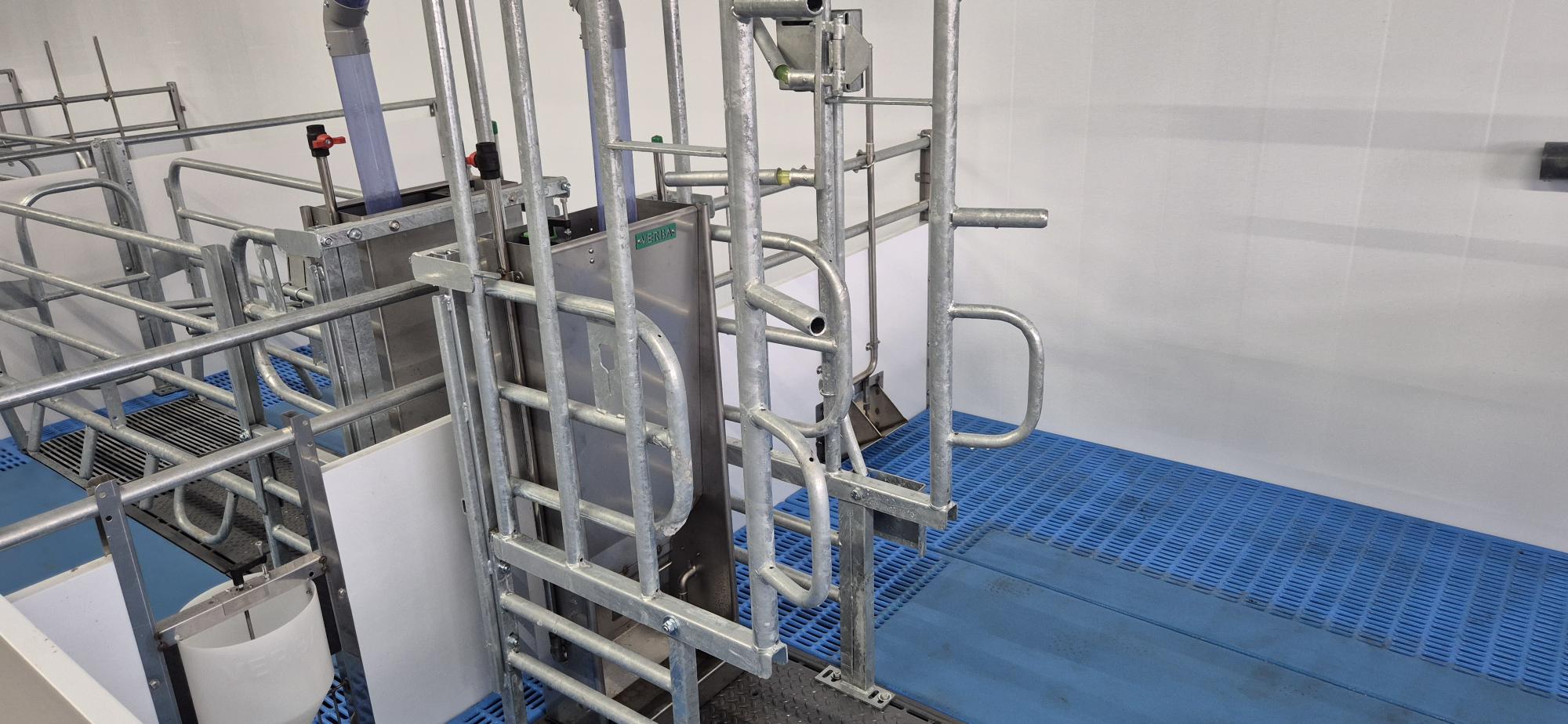
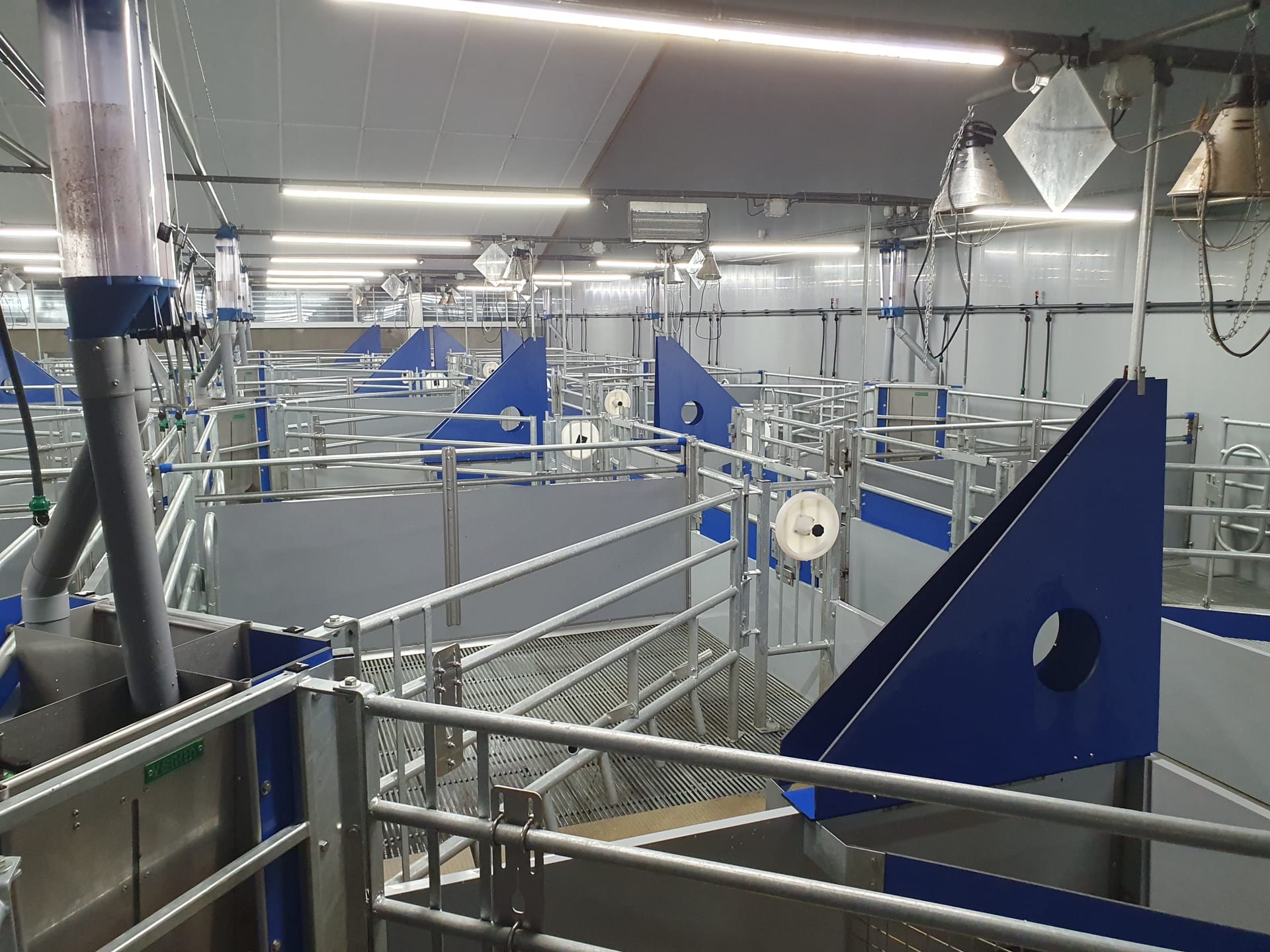
The pig farming halls typically feature fully assembled farrowing pens that you can open, close and inspect at close range. That is the real value of the exhibition: in one afternoon, you can see how different manufacturers translate the same legal requirements into steel, stainless steel and plastic. Pay attention to the following points at every setup:
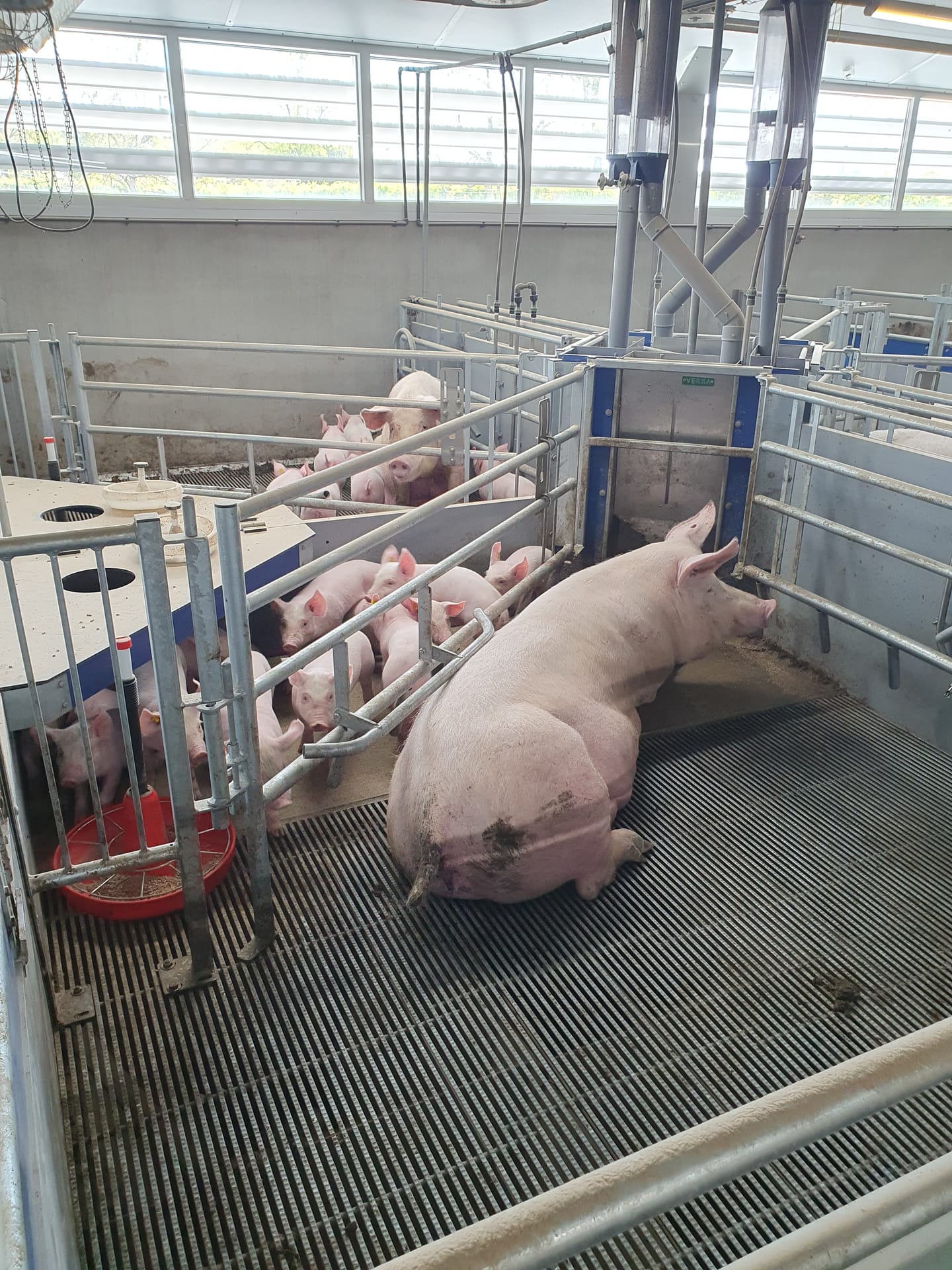
- Piglet protection. According to the Flemish Government Pig Information Centre, Directive 2008/120/EC requires protection for piglets where sows can move freely, for example through a sow protection rail. Part of the floor must also allow all piglets to rest at the same time. Count how many actions are needed to open and close the rail.
- Pen size and layout. According to Nieuwe Oogst (2026), all participants in the Beter Leven animal welfare scheme will be required to use free farrowing pens of at least 7.5 square metres by 2035. Existing pens that do not meet this size requirement will have a transition period until 2045.
- Space within the pen. According to Nieuwe Oogst (2024), these criteria require at least 4.5 square metres for the sow, a turning circle of at least 2 metres, and a bedded piglet nest of at least 1 square metre.
- Access and ease of use. Check whether you can reach the feed trough, drinker and piglet nest without having to work over the sow.
Most visitors overlook one important point. An exhibition pen stands freely on a level floor, without pillars, pit walls or an existing slurry pit below it. In your own building, the width of the room, slat dimensions and location of slurry channels determine whether a 7.5 square metre pen will fit. A setup that looks spacious at the show could mean one fewer pen per row in an existing farrowing room. Never compare only what you see. Always ask how the pen would work with your own dimensions.
If you want to review the standards and available designs beforehand, first read which requirements, dimensions and designs apply to free farrowing pens in 2026. That way, you can use your time at the stand to discuss your own situation rather than information you could have read at home.
How do you plan your visit to the pig farming halls step by step?
A productive exhibition visit starts at your kitchen table. These five steps will keep your day focused:
- Choose your day. Tuesday 10 November gives you the rest of the week for follow up meetings. According to top agrar, Wednesday includes a Pig Event where you can speak with fellow professionals and specialists. Friday 13 November is a good choice if you have largely made your decisions and only need to compare options.
- Write down your building details. Take the layout of your farrowing section with you, including room width, the number of pens per row, slatted flooring and slurry pit layout. With this information, a manufacturer can immediately tell you whether and how a specific design will fit your building.
- Book meetings in advance. Email the stands on your shortlist one or two weeks before the exhibition and request a fixed appointment with an adviser. The manufacturer can then arrange for someone who has already reviewed your building information.
- Follow a set route. Start in Hall 15, then continue through Halls 16 and 17, using the same checklist of questions at every stand. Take photos with the stand number visible, so you know exactly which setup belonged to which manufacturer when you get home.
- Agree a specific next step. Do not ask for a rough price alone. Request a sketch or quotation based on your own dimensions. The manufacturer can develop this after the exhibition, often followed by a visit to your farm.
Arrange your entry in good time. Top agrar recommends buying a cheaper ticket online in advance, and children up to the age of 12 receive free entry. If you are bringing a successor, colleague or farm manager, decide in advance who will cover which stands. For the practical side of visiting a stand, there is a separate article on how to prepare for a meaningful conversation at an exhibition stand.
Which pig farmers benefit most from a focused visit to Halls 15, 16 and 17?
Not everyone will get the same value from a day in Hanover. A focused visit is particularly worthwhile for four groups.
The first is the sow farmer planning to renovate or build a farrowing house within the next few years. Before applying for permits, they want to know which designs fit within a 7.5 square metre pen size and what this means for the number of farrowing places in each section.
The second is the farm successor preparing an investment and needing to justify the eventual choice to parents, the bank or an adviser. For this visitor, it is valuable to see different setups side by side and experience the practical differences in operation first hand.
The third is the farm manager of a larger business with multiple sites. They are mainly looking at everyday tasks: how quickly the protection rail opens, how easily staff can reach the piglets, and how simple it is to keep the floor clean.
The fourth is the dealer or installer comparing systems for multiple customers. They need a manufacturer that contributes during the design stage and remains available to support the end customer after delivery.
For two groups, a focused visit is less useful. If you have recently replaced your farrowing house and have no plans for the coming years, trade publications can keep you well informed. And if you only want to hear a price per pen without bringing your building details, you are unlikely to return with anything useful. The cost of a farrowing house depends on the number of pens, dimensions, material choices for each component, and whether the project is a new build or renovation. Without this information, no manufacturer can provide a serious estimate.
What questions should you ask before choosing a free farrowing pen?
Asking the same questions at every stand makes it much easier to compare the answers when you are back home. These six questions deliver the most useful information:
- Can this design be made to fit my room width and slatted floor? Ask how many pens per row will fit your dimensions, not the dimensions of the exhibition setup.
- Do you design and manufacture the system yourselves, or are some parts supplied by third parties? This affects how quickly modifications and replacement parts can be arranged.
- How does the pen comply with Directive 2008/120/EC and the 7.5 square metre Beter Leven requirement? Ask the supplier to show you where the piglet protection is located and how the piglet resting area is designed.
- Which materials are used for each component, and why? Stainless steel, galvanised steel, plastic and cast iron all have their place. A manufacturer should be able to explain what each choice means for cleaning and service life.
- What happens if something is not right after installation? Ask for a specific commitment, such as a set callback time, rather than a general assurance.
- Do you supply in my region directly or through a dealer, and which reference farm can I visit? A farm where the system has already been in use for several production cycles tells you far more than an exhibition display.
Still deciding between a conventional farrowing crate and a free farrowing pen? Review the six key differences between the two systems in advance. You can then ask targeted questions about the factors that matter most to your farm.
Frequently asked questions
Is one day enough to see all the free farrowing pens at EuroTier 2026?
One exhibition day is enough if you arrange appointments in advance and limit your visit to Halls 15, 16 and 17. If you also want to explore other parts of the farm setup, such as climate control or feeding, a second day is far from excessive. Many pig farmers combine Tuesday or Wednesday with an overnight stay in the area.
Do pen dimensions at a German exhibition also apply to Dutch farms?
Not automatically. According to Nieuwe Oogst (2024), the 7.5 square metre Beter Leven standard is higher than the 6.5 square metre requirement in Germany. A display built for the German market may therefore be smaller than what you need. Always ask which dimensions the pen has been built to.
What should you bring to the exhibition besides a floor plan?
Photos and a short video of your current farrowing section will help an adviser more quickly than a drawing alone. Also make a note of your working routine: how many people look after the farrowing house, and which tasks currently take the most time. This makes the discussion about daily operation much more concrete.
Can you order a free farrowing pen directly at EuroTier 2026?
Ordering at the exhibition is rarely wise for a bespoke system. A farrowing house needs to be designed around your dimensions, slatted floor and slurry pit, which usually requires a drawing and a farm visit. Use the exhibition to select two or three manufacturers, then request detailed quotations afterwards.
Can you still see free farrowing pens in real working conditions after EuroTier?
Reference farms and showrooms are often more valuable after the exhibition than the display itself. There, you can see a pen in use with sows, piglets and everyday dirt, and hear directly from the farmer how it performs in practice. Ask at the stand for a suitable farm visit.
Where should you start with your exhibition plan?
Choose your day, put your building dimensions on paper and decide in advance which stands you want to visit in Halls 15, 16 and 17. You will return with answers about your own farrowing house, rather than a display designed for an exhibition floor.
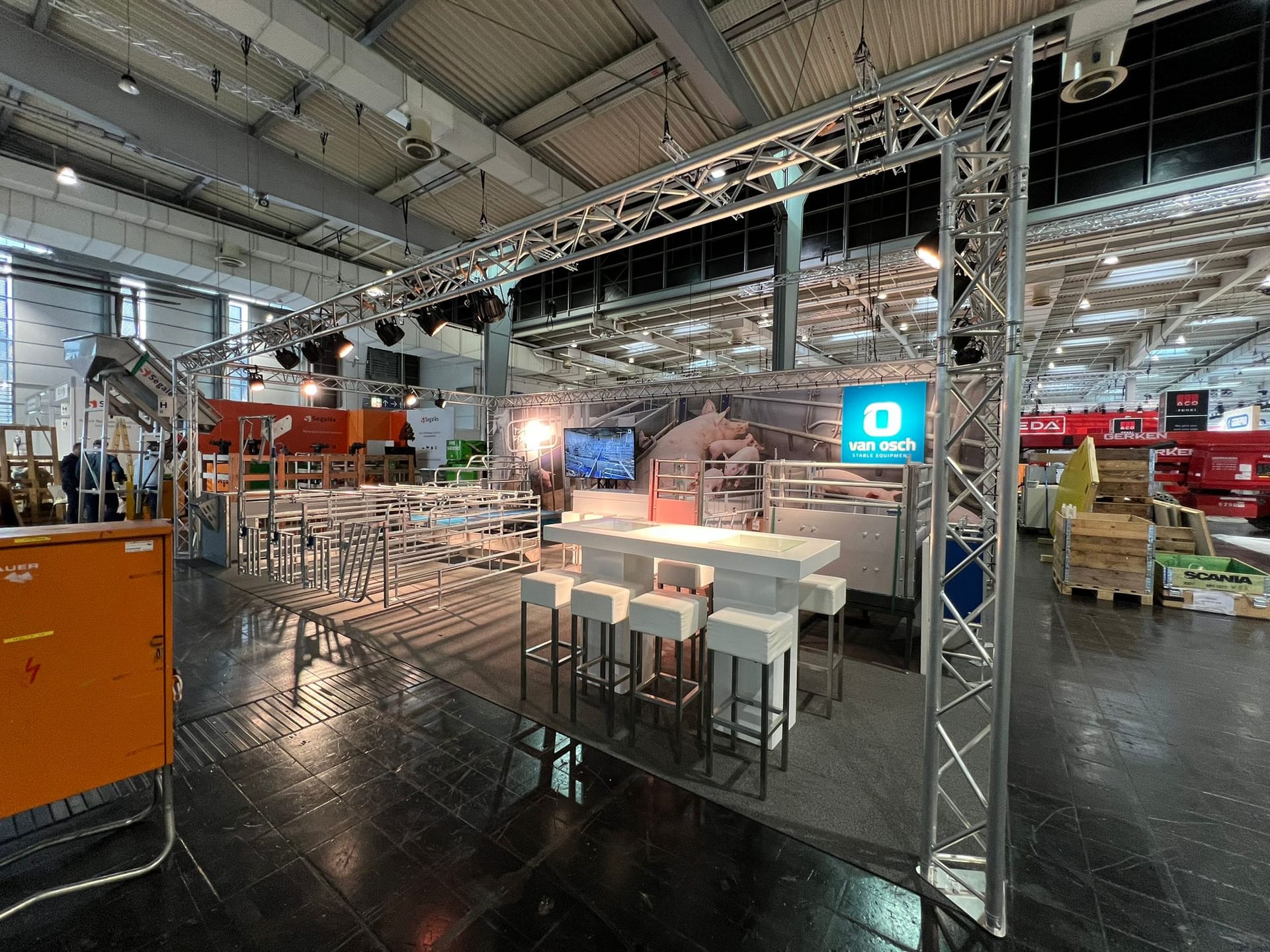
Van Osch B.V. will be exhibiting at EuroTier 2026 in Hall 14/15, stand 15J26, with bespoke free farrowing pens designed and manufactured in Uden. Bring your floor plan and section dimensions to discuss which design will suit your farm. To prepare for free farrowing pens at EuroTier 2026 in Halls 15, 16 and 17, explore our farrowing accommodation for sows and arrange a conversation about your own project.
Sources
- Nieuwe Oogst (2024) — Nieuwe Oogst
- Bauernzeitung
- top agrar — Topagrar
- Nieuwe Oogst — Nieuweoogst
- Dates and prices – EuroTier 2026 — DLG / EuroTier
- KI im Schweinestall: EuroTier zeigt neue Überwachungssysteme — top agrar
- EuroTier 2026: Diese Hallen lohnen sich — Bauernzeitung
- Normen voor (vrijloop)kraamhokken — Varkensloket, Departement Landbouw en Visserij (Vlaamse overheid)