


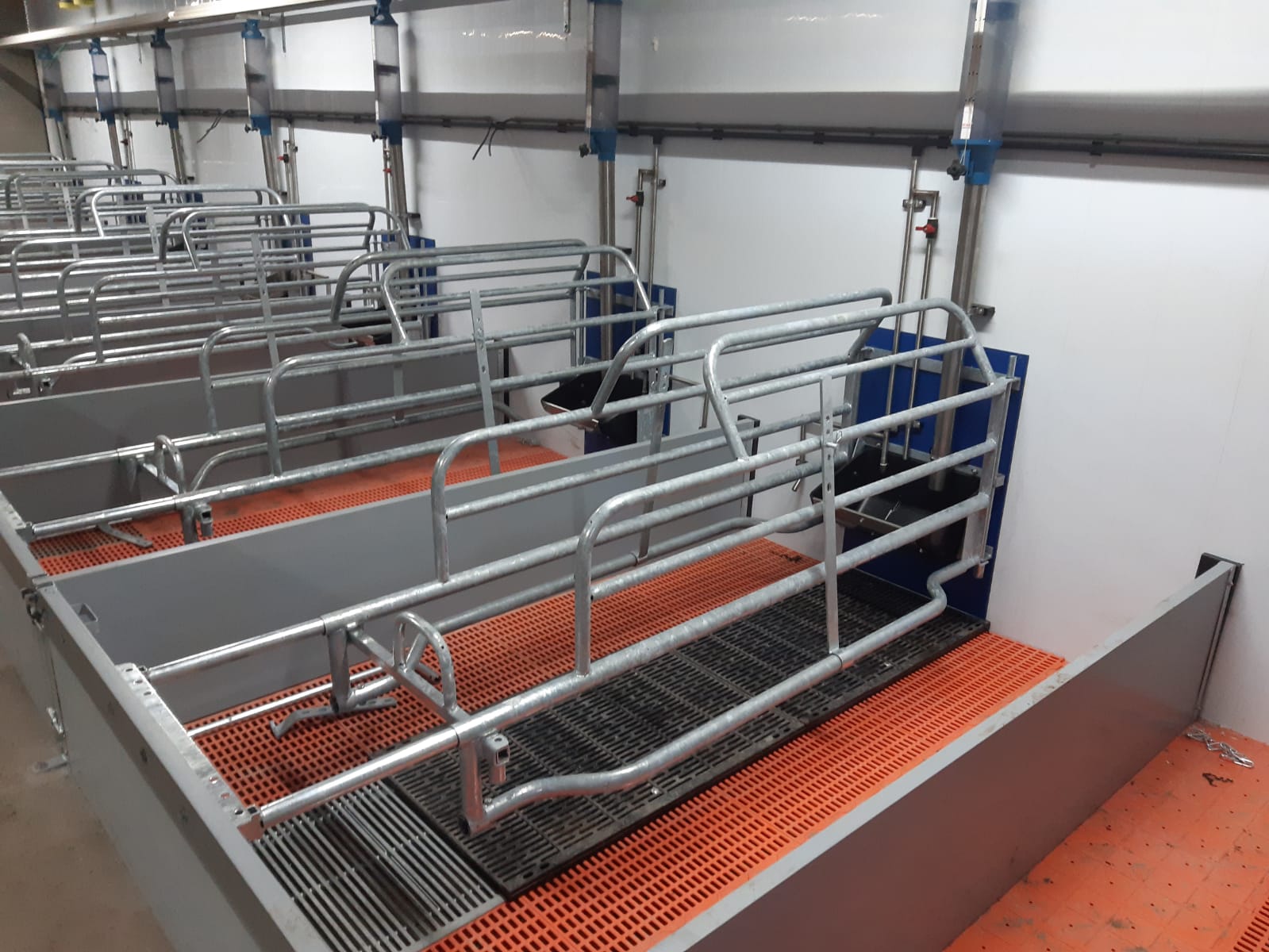
As a trainee metalworker, you will typically spend most of your week in a production hall. On a work based vocational programme, you will usually attend college one day a week as well. Your day might start with a job sheet and technical drawing. Depending on your placement, you could be cutting, bending, welding or assembling steel and stainless steel parts. When considering a placement, ask whether you will have a dedicated supervisor and the chance to gain experience in sheet metalwork, tube processing, welding and assembly. Once you have mastered the basics, you can gradually take on more independent tasks. Components for livestock housing need to be made to exact measurements.
What Does a Typical Day Look Like for a Trainee Metalworker?
Imagine that the schedule includes a batch of side panels for farrowing crates. The sheets have already been cut to size on the laser cutter. Your job that morning is to remove burrs from the parts, bend them on the press brake according to the drawing, and check the angle and dimensions after every few pieces. A colleague will check the first items with you. After that, you complete the batch independently and report anything that does not look right straight away.
That is what a week in metalworking can look like. Before you start, ask whether you will work on real customer orders from day one or begin with practice pieces. A typical day often follows this pattern:
- Start of the shift: there is often a short meeting about the schedule, followed by a review of the job sheet and drawing. You then put on the required protective equipment.
- Morning: you may read drawings, collect materials, measure parts and make your first components with guidance.
- Afternoon: you might complete a batch, inspect it and prepare it for the next production stage.
- End of the day: common tasks include tidying your workstation, cleaning the machine and separating leftover materials by type.
At some placements, you will not programme machines or complete an order from start to finish during your first few months. You can earn more independence step by step as you become confident reading drawings and working accurately.
If you are on a work based vocational programme, you will usually spend one day a week at college. Find out how college fits alongside work on the shop floor in this article about combining a vocational programme with metalworking. You will quickly notice that what you learn in class comes up in the workshop too, from material science and reading technical drawings to working safely with machinery.
Trainee Roles at Van Osch Uden: Which Work Areas Will You Experience?
“They felt like a number.”
Bas
A metalworker at a livestock housing manufacturer does not spend all day operating one machine. A farrowing crate, feed trough or gate passes through several pairs of hands before it is ready for delivery. As a trainee, you can get to know the different stages in that process.
Sheet Metalwork
Sheet metalwork is often one of the first stages of production. Flat sheet metal is cut on the laser cutter and then bent on the press brake. In this role, it is important to understand how bends are shown on a technical drawing and why the order of bends matters. You also need to allow for the material springing back after bending. You can find out which machines you may use in this overview of machines and techniques for sheet metalworkers.
Tube Processing
A large part of livestock housing is made from tubing, including gates, frames and fittings. A tube laser can cut holes, slots and lengths in a single operation. Tube processing tasks may include loading tubes and checking the first finished pieces. A hole in the wrong position can mean a gate does not fit later in the process.
Welding and Fabrication
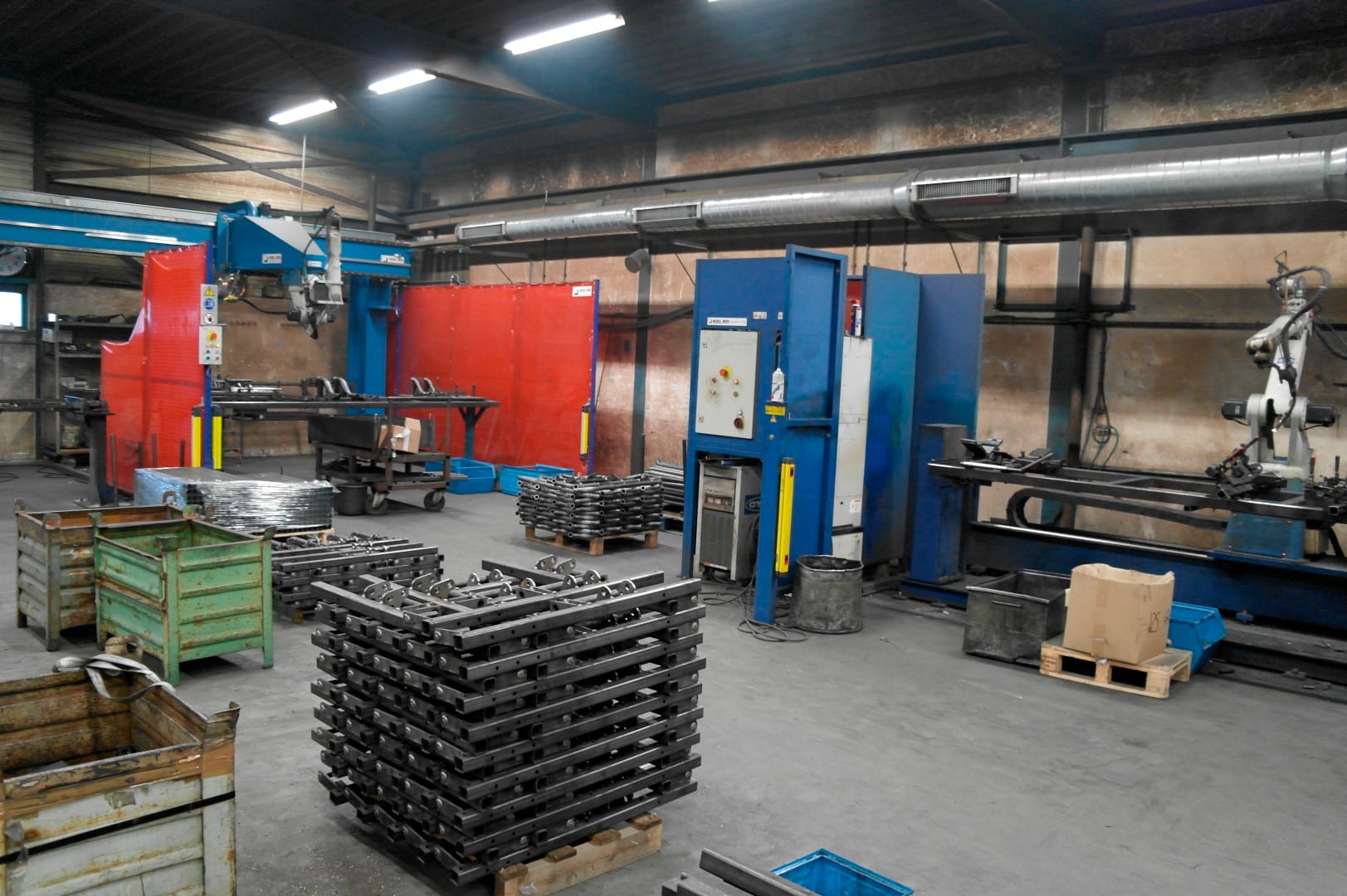
Welding and fabrication turn separate parts into one finished component. In a welding and fabrication placement, you may learn how to secure parts in a jig, tack weld and weld. Welding stainless steel is different from welding standard steel. On larger runs, a welding robot takes care of part of the work. When working with a welding robot, your tasks might include loading the robot, positioning the workpiece in the jig and inspecting the weld. See how these stages fit together in the journey from laser cutter to welding robot at the Uden factory.
Assembly and Final Inspection
In assembly and final inspection, components may be put together, measured again and prepared for transport. This is where you see the finished result of the parts that were cut or bent earlier in the process.
With custom work, you are likely to switch between products more often than you would in a factory making the same part all day. Every livestock building has different dimensions, so today’s order may only partly resemble yesterday’s. The learning curve can be steeper at first, but you will develop your drawing reading and precision measuring skills faster than you would on repetitive production work. Those skills will serve you well in any future metalworking role.
Sheet Metalwork, Welding or Assembly: How Do the Roles Differ?
On a press brake, a measurement error of a few millimetres may barely be noticeable. In a livestock building, that same error could cause a gate to stick or prevent a panel from fitting the slatted floor. That is why every role teaches you something different about precision. This table shows the key differences.
| Aspect | Sheet Metal and Tube Processing | Welding and Fabrication | Assembly and Final Inspection |
|---|---|---|---|
| Main machines | Laser cutter, press brake, tube laser | Welding equipment, jigs, welding robot | Measuring and hand tools |
| What you learn first | Reading drawings, bending | Securing parts, tack welding | Measuring again, assembling |
| Materials | Steel and stainless steel sheet and tube | Steel and stainless steel | Finished components |
| Typical mistake | Incorrect bending sequence | Heat distortion | Missing a component |
| Independent work | ✅ often fairly quickly | ⚠️ usually takes longer to practise | ✅ often fairly quickly |
| A good fit if | You are precise and patient | You enjoy practical, hands on work | You like keeping an overview |
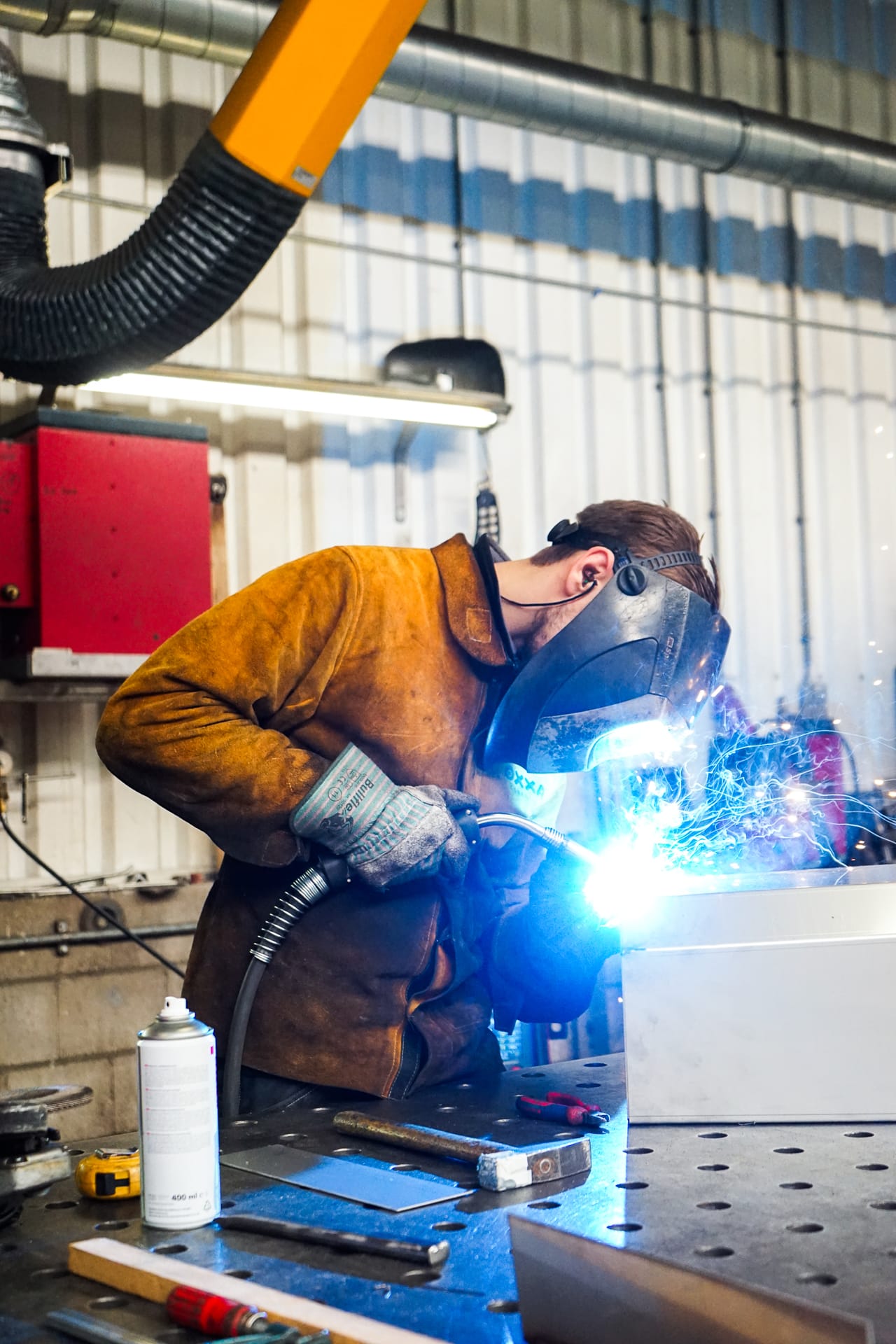
Welding generally requires the most practice, especially with stainless steel. Heat can distort a workpiece, so you will learn the right order for tack welding and welding to keep the part straight. Stainless steel also requires extra care. If it comes into contact with tools or grinding dust used on standard steel, small rust marks can later appear on the surface. That is why stainless steel materials and tools are kept separate. These working practices may seem minor, but they determine whether a component will still perform well after years in a damp livestock building.
With sheet metalwork, you can see immediately whether each piece is right. That makes it a logical place to start. Assembly, on the other hand, teaches you how every part comes together. It is often where you discover why a measurement on a drawing needs to be so exact.
Do you see a role that appeals to you in the table? Bring it up in your first interview. Rotating through different areas is still valuable, because a skilled metalworker who understands the entire process makes fewer mistakes in their own role.
Which Work Area Suits You, and What Skills Do You Need?
Whether you need previous experience depends on the requirements of the placement. Useful qualities for metalworking include technical aptitude, attention to detail and a serious approach to safety rules. If you have repaired a moped at home or built something yourself, you may have more relevant experience than you think.
The quality of supervision matters too. In the Netherlands, a company can only train students if it is an approved training company. Under the Regulation on the Recognition of Training Companies, a company must provide work that matches the processes involved in your profession and offer a socially safe environment. In practical terms, that means you receive tasks relevant to your course and are not left sweeping the workshop all day.
Supervisors can also continue developing their skills. Koninklijke Metaalunie, together with OOM, offers a free programme for practical trainers and workplace supervisors who support vocational students. In addition, approved training companies may receive up to €2.700 per placement in funding towards supervision costs, according to the Dutch government. For you, that means the company has a real incentive to invest time in your development.
There is a good reason for that investment. According to Consultancy.nl, based on a Crowe report, there were more than 30.500 vacancies in industry in mid 2025. The proportion of workers aged 55 and over was also growing across the sector. Learning the trade now means entering a market where skilled metalworkers will continue to be in demand.
Not sure which area to choose? Use this rule of thumb. If you enjoy immediate results and precision, start with sheet metalwork. If you like building things with your hands and are patient enough to practise, consider welding and fabrication. If you want to know what a placement involves, read the trainee metalworker job vacancy. It sets out the tasks and training route clearly.
Frequently Asked Questions
Do you need experience for a trainee metalworker placement?
Check the experience requirements for each placement. On a work based vocational programme, you learn both on the job and at college. It is still worth asking what prior knowledge is expected. Technical aptitude and a willingness to work accurately are often important topics during an introductory meeting.
Do trainee metalworkers get paid?
Work based training means a salary. On a work based vocational programme, you have an employment contract and receive a salary under the collective employment agreement that applies to the company. The amount usually depends on your age and year of study. On a college based placement, you will generally receive only a placement allowance.
How long does metalworker training take?
The duration varies by level. A Dutch vocational course at level 2 typically takes one to two years, while level 3 usually takes two to three years. Ask your college about the exact duration, as your entry route and any exemptions may shorten it.
Is working in a livestock housing production hall physically demanding?
It is physical, but manageable. You will often be on your feet for much of the day. Heavy components can be moved using suitable lifting equipment or with help from a colleague. Machinery and welding can be noisy, so appropriate hearing protection and other protective equipment may be needed.
What can you do after qualifying as a metalworker?
Build your career in the trade. Many trainees progress into roles as sheet metalworkers or welder fabricators. Others continue to level 3 or 4 training, for example to learn machine programming or eventually supervise trainees themselves.
What Should You Take to Your First Workshop Meeting?
Beforehand, decide which work area appeals to you most. Also ask how rotation and supervision are organised, and whether the company is an approved training company. With those three answers, you will quickly know whether the placement is right for you.
At a placement with a livestock housing manufacturer, you could make components for products such as farrowing crates and feed troughs. This takes place in an in house production facility with sheet metalwork, tube processing and welding robots. This family business has specialised in livestock housing since 1939. Wondering whether a placement at Van Osch is right for you? Join Van Osch and view the current vacancies.
Sources
- Regeling erkenning leerbedrijven SBB — Wetten
- Rijksoverheid
- Consultancy.nl op basis van een rapport van Crowe — Consultancy
- Kunnen werkgevers subsidie krijgen als zij een leerplaats aanbieden? — Rijksoverheid
- Acht trends die de Nederlandse metaal- en machinebouw vormgeven — Consultancy.nl (op basis van rapport Crowe)