


The short answer
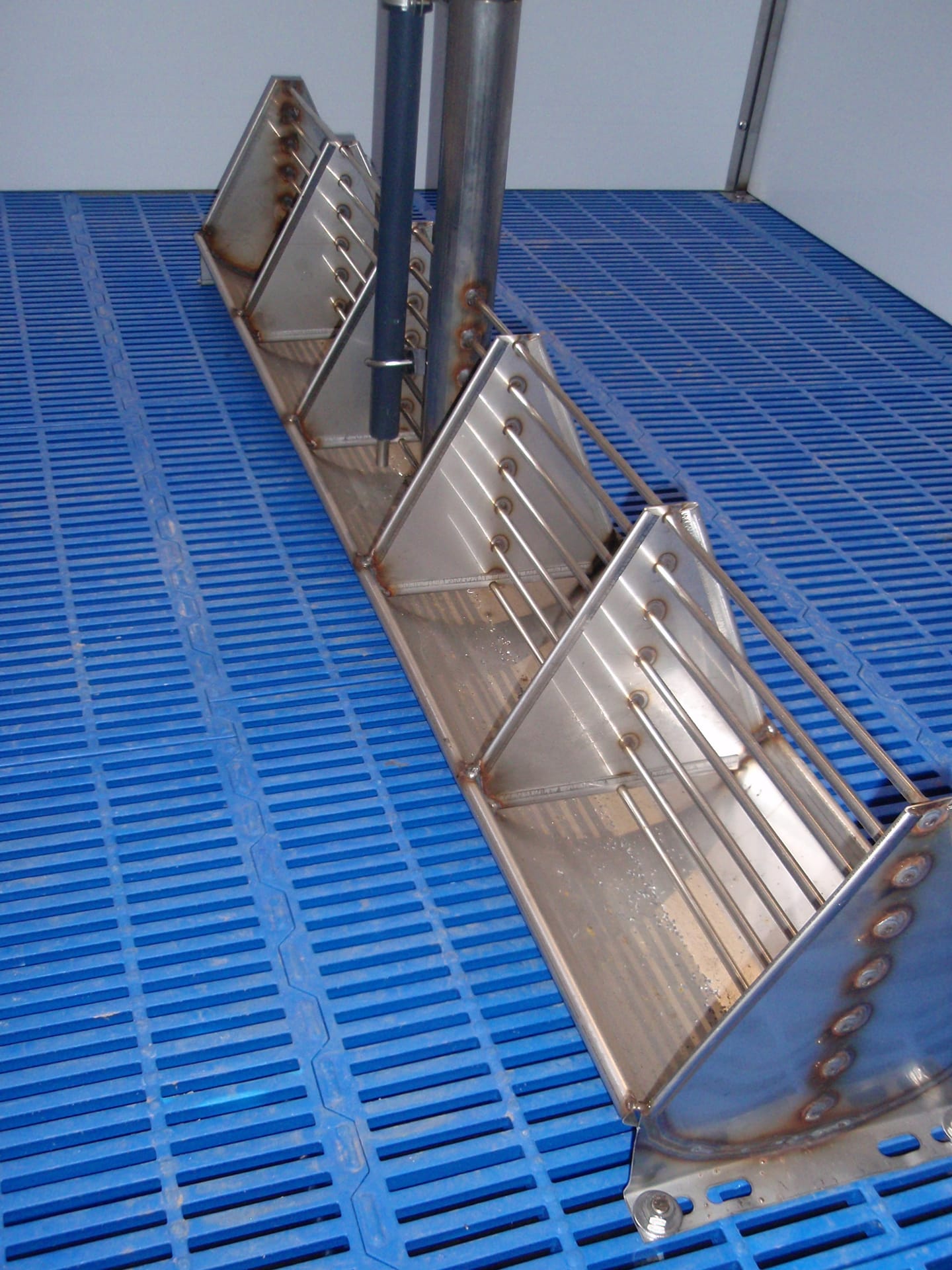
Stainless steel drinkers in farrowing units have a long service life because stainless steel itself is highly resistant to wear. When a drinker needs replacing, the issue is usually elsewhere: the wrong grade of steel for chlorinated water, a mounting bracket loosened by a sow, or iron particles and discoloured welds where pitting corrosion begins. Van Osch, a family business in Uden that has manufactured custom pig housing equipment since 1939, regularly finds during farrowing unit refurbishments that the stainless steel bowl itself is still perfectly usable. The brackets, valves and water supply components, however, may need replacing. Choose your drinkers based not only on the material, but also on the steel grade, mounting system and cleaning routine.
Key takeaways
- Stainless steel 304 (A2 or 18/8) contains around 18% chromium and 8% nickel, according to the Wikipedia page on stainless steel (accessed 2026).
- Stainless steel 316 contains around 2% molybdenum and offers better resistance to chlorine and pitting corrosion. Choose 316 if your drinking water is routinely treated with chlorine based products.
- According to RVO (2026), pigs over two weeks old must have continuous access to sufficient fresh water, 24 hours a day.
- Rule of thumb: inspect brackets, bolts and valves whenever a unit is empty. The bowl itself is rarely the weak point.
Why are drinkers in farrowing pens often replaced too soon?
The farrowing room is empty, it has been pressure washed, and there is brown staining around the weld on several drinkers. It is easy to assume the stainless steel has reached the end of its life. In many cases, it has not.

Those brown marks are usually surface rust. They are iron particles from ordinary steel, often caused by grinding, tools or damaged galvanised components, that have settled on the stainless steel and started to rust. The stainless steel underneath is normally still intact. In most cases, a suitable pickling agent will remove the staining, provided the metal has not already developed pits.
The real problem is treating a drinker as one item. The bowl, mounting system, valve and water line each have a different lifespan. Replacing everything when just one component fails means discarding stainless steel that could have lasted for years. Find out how to assess each component in what to consider when replacing pig drinkers.
Reliable drinkers matter even more in farrowing accommodation. Researcher Anita Hoofs of Wageningen Livestock Research notes in Nieuwe Oogst (2025) that piglets learn to drink properly while still in the farrowing unit. So when is a drinker genuinely beyond repair?
What shortens the life of a drinker in a farrowing pen?
Pitting corrosion is localised damage to stainless steel. The protective chromium oxide layer breaks down in small areas, creating tiny holes in the metal. This is the type of corrosion that can genuinely write off a stainless steel drinker. In farrowing units, it is usually caused by one of three things.
Chlorine in drinking water and disinfectants
Chromium gives stainless steel its corrosion resistance, but chlorides can attack that protective layer. According to the Wikipedia page on stainless steel, grades containing molybdenum, such as 316 and 316L, are more resistant to chlorine and pitting corrosion than 304. Many pig producers treat water with chlorine based products or use them for cleaning between batches. If residues remain in seams and corners, the steel can sit in a concentrated solution for days. Thorough rinsing is therefore essential.
A sow using the drinker as a toy
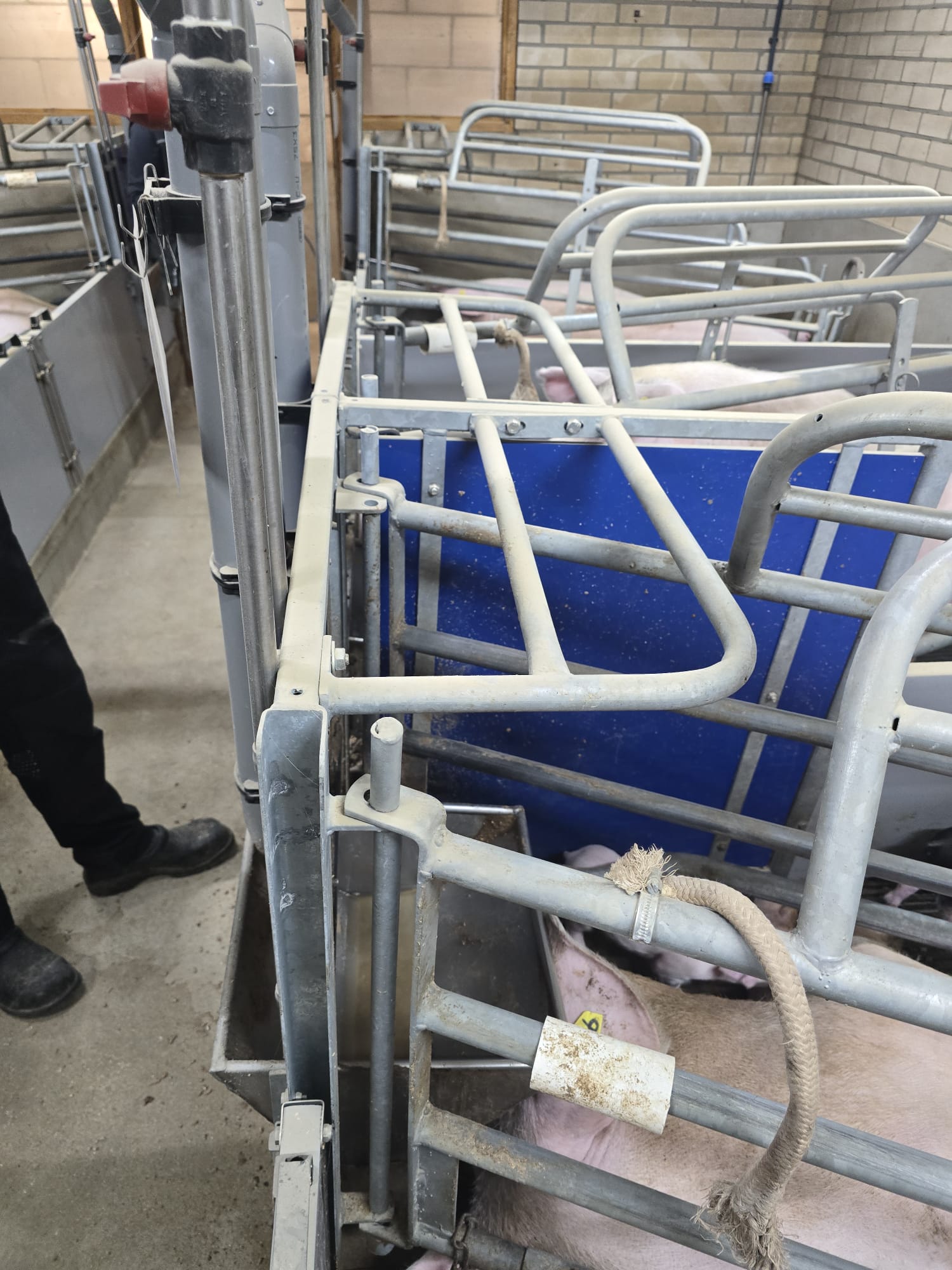
In a conventional farrowing crate, the sow has limited movement and the piglet drinker is positioned out of her reach. In free farrowing pens, the sow can walk and turn freely, giving her access to more parts of the pen. A bowl she can lift or push with her snout is exposed to forces it was never designed to handle. The stainless steel rarely cracks first. The bolts, bracket or bracket weld usually fail before the bowl does.
Welds and iron contamination
Stainless steel discolours around a weld during welding. As a rule of thumb, this heat tint reduces corrosion resistance in that area unless the weld is subsequently pickled or passivated. Iron particles deposited on the surface during installation have a similar effect. This can leave a drinker with weak points from day one.
Check:
- Inspect welds and corners after every cleaning cycle. A stain that keeps returning in the same location may indicate early pitting corrosion.
- Ask your water treatment provider which product and dosage you use. If chlorine is added routinely, 316 is the safest starting point.
- In free farrowing pens, check whether the sow can reach the piglet drinker, both while standing and turning.
- Replace damaged galvanised bolts with stainless steel bolts immediately, so rust does not run onto the bowl.
How can you extend the life of stainless steel drinkers in farrowing units?
Should you start with the bowl or the water? To get the most from a drinker, first assess the water and the drinker location in the pen, then select the right specification.
304 or 316: your water treatment determines the choice
For farrowing units supplied with untreated or lightly treated mains water, stainless steel 304 is generally a sensible choice. If you regularly dose chlorine based products, the molybdenum in 316 becomes more important.
| Material | Chromium | Nickel | Molybdenum | Performance with chlorine | Suitable use in farrowing units |
|---|---|---|---|---|---|
| Stainless steel 304 (A2, 18/8) | around 18% | around 8% | 0% | susceptible to pitting corrosion with routine chlorine exposure | piglet drinkers supplied with untreated or lightly treated water |
| Stainless steel 316 / 316L | around 16 to 18% | around 10 to 14% | around 2% | better resistance to chlorine and pitting corrosion | units with chlorine dosing or intensive disinfection |
| Plastic | not applicable | not applicable | not applicable | does not rust, but is vulnerable to biting and scratches | locations without mechanical pressure from sows or piglets |
Mounting and positioning for each farrowing pen design
A stainless steel bowl is only as strong as its weakest mounting point. Bolts, brackets and valve holders made from the same steel grade prevent galvanised components from rusting and staining the bowl. Van Osch addresses this at the design stage for each pen. Engineering, welding robots and tube laser processing are all based under one roof in Uden, allowing the bowl, bracket and pen partition to be produced as one integrated solution in the same stainless steel grade. For unusual dimensions in existing units, custom stainless steel components are available.
This sequence works well in practice:
- Map out your water treatment programme and the disinfectants in use.
- Choose 304 or 316 for both the bowl and its mounting hardware.
- For each pen type, select a position that piglets can reach but the sow cannot.
- Specify the bowl, bracket and bolts in the same steel grade.
- Make rinsing with clean water mandatory after every chlorine based treatment.
The pipework behind the drinker needs its own approach. Read this guide to keeping drinkers and water lines hygienic to learn how to prevent biofilm.
What does drinker replacement involve during a farrowing unit refurbishment?
Illustrative scenario: a typical farrowing unit refurbishment
The following example is fictional, but based on situations commonly seen during refurbishments.
The starting point
Imagine a pig producer with around 300 sows converting one unit from conventional farrowing crates to free farrowing pens. The stainless steel piglet drinkers have been in use for years, and the water is treated with a chlorine based product. Inspection shows that most bowls are in good condition apart from some surface rust. The galvanised brackets are corroded, several valves are leaking, and the old drinker position is accessible to a freely moving sow in the new pen layout.
The approach and outcome
Not everything is replaced. Bowls that show no pitting after pickling are relocated to the piglet area of the free farrowing pen. The brackets and bolts are replaced with stainless steel versions, and the valves are renewed. Additional drinkers are ordered in 316 because of the chlorine dosing. The result is less new material, no more rust staining and a drinker that the sow cannot reach. The exact savings will vary from one farm to another.
In a partial refurbishment, a supplier’s response time matters, especially if something does not fit after installation. Van Osch has set this out in its Five O’s, including a callback guarantee within one working day. If you are replacing the entire farrowing sow housing system, include the drinkers in the pen drawing from the outset.
Check:
- Pickle one test bowl before deciding to replace it. If pits remain visible, the bowl needs to be removed.
- Record the condition of the bracket, bolts and valve separately for every drinker.
- Check the new pen layout to confirm that the sow cannot reach the piglet drinker.
- Ask for written confirmation of the steel grade used for both the bowl and mounting hardware.
Is a stainless steel drinker more cost effective than plastic over time?
Plastic often costs less upfront. Stainless steel is more often a purchase you make only once. The calculation changes when you consider the service life of the housing equipment rather than the initial price. Plastic can withstand cleaning, but it becomes damaged where piglets bite or a sow pushes against it. Dirt can remain trapped in those scratches. Stainless steel in the correct grade stays smooth and can be thoroughly cleaned after every batch. For a detailed comparison, see which drinker material lasts the longest.

What mistakes do pig producers make with drinkers in farrowing units?
When problems arise, a drinker in a farrowing pen rarely fails for just one reason. It is often a combination of an incorrect mounting height, insufficient water pressure, worn valves and a drinker that is not properly included in the cleaning routine.
Common mistakes include:
- Mounting the drinker too high or too low. A sow should be able to drink without stretching, while piglets need their own low level water point.
- Only checking whether water comes out. Flow rate matters too. A bowl that refills slowly can limit the sow’s water intake.
- Leaving a worn valve in place. Dripping causes wet floors, more slurry and a greater risk of slipping.
- Underestimating the mounting system. A drinker in a farrowing pen is exposed to considerable sideways force. Loose bolts or thin metalwork quickly lead to damage.
- Ignoring cleaning requirements. Corners, sharp edges and hard to reach fixings trap dirt.
- Adding the piglet drinker as an afterthought. It often ends up in an impractical location, such as too close to the sow or out of reach for the smallest piglets.
- Keeping no spare parts on site. A valve, seal or bracket may be inexpensive, but can cause considerable downtime if it is not immediately available.
Do not inspect drinkers only when there is a fault. Make checks standard practice between batches. It is the best time to spot wear, leaks and damage before the farrowing pen is occupied again.
Frequently asked questions about drinkers in farrowing units
How high should a sow drinker be mounted?
The right height depends on the farrowing pen design, the size of the sow and the shape of the bowl. The sow should be able to drink with a natural head and neck position, without pushing against the bowl or bracket. Mount the drinker high enough to avoid contamination from slurry or straw, while keeping it accessible when the sow is lying down or standing.
When replacing a drinker, always consider the sow’s actual position in the pen. A measurement on paper matters less than adequate free space around her head.
Do piglets need a separate drinker?
Yes. Piglets need to learn to drink independently at an early age. A water point intended for the sow is usually too high, too deep or too difficult for them to reach. A dedicated piglet drinker or nipple drinker helps piglets get used to drinking water alongside the sow’s milk.
Position the water point low enough for the smallest piglets and check daily that water is genuinely available.
Why is a drinker leaking in the farrowing pen?
Leaks are usually caused by a dirty or worn valve, a damaged seal, excessive water pressure or a bowl that has been fitted out of level. A sow may also repeatedly push the bowl against the wall, loosening bolts or putting stress on connections.
If there is a leak, turn off the water first. Then check the valve, couplings, bracket and water pressure. Replacing only the seal will not solve the problem if the bowl is crooked or the mounting is loose.
Which material is best for a farrowing unit?
For intensive use, stainless steel is often the most durable choice, provided the steel grade and finish are suitable for barn cleaning and slurry exposure. It stays smooth, is easy to clean and withstands knocks well.
Plastic can be a cost effective option in less demanding locations, but it is more easily damaged by biting, rubbing and cleaning. Whatever material you choose, look for robust mounting, rounded edges and readily available spare parts.
How often should a drinker be cleaned?
Clean the drinker thoroughly during every cleaning cycle and inspect it daily between cleans for dirt, feed residues, slurry and a reliable water flow. Hygiene is especially important in farrowing units. A dirty drinker reduces water intake and poses a risk to both sow and piglets.
Always rinse with clean water after cleaning, then test that the valve opens and closes properly.
When is replacement better than repair?
Repair makes sense for a loose valve, worn seal or damaged bracket. Replacement is usually the better choice when the bowl is deeply worn, has pitting corrosion, has sharp edges or can no longer be mounted securely and level.
Do not look at the part price alone. Include repair time, the risk of leaks and the consequences of a temporarily unusable water point.
Conclusion
The best drinker for a farrowing unit is not just strong. It must also suit the sow, be accessible to piglets and be easy to clean. Instead of choosing solely on purchase price or capacity, assess the mounting, steel grade, water flow, cleanability and availability of spare parts.
Stainless steel drinkers in farrowing units last longest when the bowl, mounting system and valve are matched to one another. A high quality stainless steel bowl with secure mounting and a reliable valve prevents leaks, contamination and unnecessary maintenance. By inspecting the bowl, water flow and mounting system during every batch cycle, you can keep water provision in the farrowing pen dependable when sows and piglets need it most.
Sources
- RVO (2026) — Rvo
- Nieuwe Oogst (2025) — Nieuweoogst