


As a sheet metal worker producing livestock housing equipment, you will typically learn to operate three types of machinery. The laser cutter cuts flat sheet metal to size. The press brake bends that sheet metal to the required angle. You may also work with machines for shearing, punching and tube processing. On top of that, you will learn to read technical drawings, select the right program for each material, including steel, galvanized steel and stainless steel, and check whether a part meets the required tolerance. So, choosing between laser cutting and press brake work is not something you need to decide before you start. If your next step is learning to operate sheet metal machinery, you will usually begin with one of the two and add the other skill later.
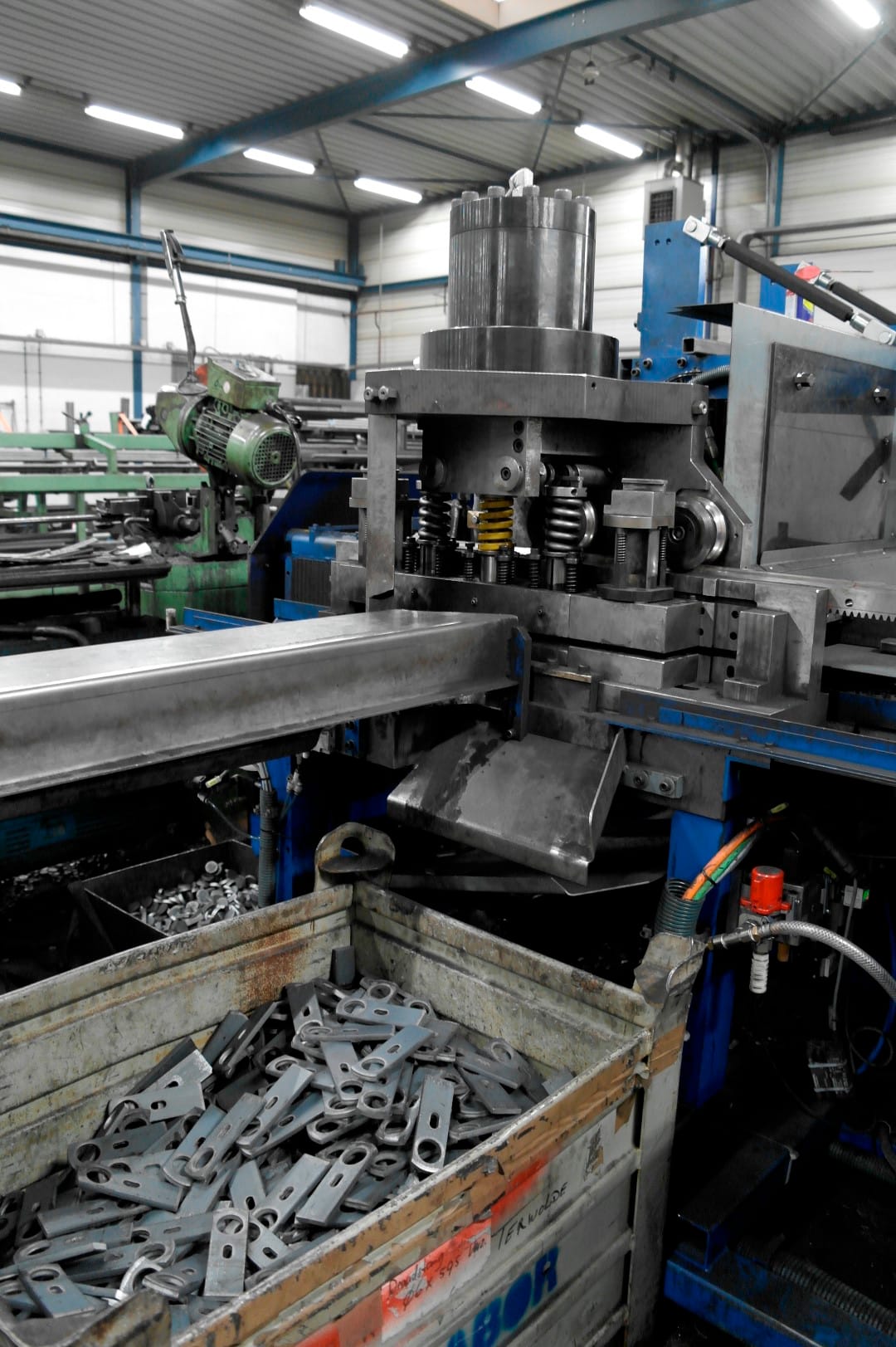
Why Does a Sheet Metal Worker Job Ad Tell You So Little About the Actual Work?
Many job listings simply ask for “CNC experience” and leave it at that. That does not tell you much. There is a big difference between punching the same bracket all day and cutting and bending different components every day.
In livestock housing production, it is usually the latter. A farrowing crate, pen divider or feeder trough is made up of dozens of sheet metal components. Their dimensions, thickness and material can vary from project to project because every barn has different requirements. That means you will often work in small batches rather than running the same program thousands of times.
There is a common misconception that a computer controlled machine does all the work and the operator simply presses start. In custom manufacturing, the real skill lies in setting up the machine. You select the right tooling, determine the bending sequence and inspect the first part before the rest of the batch is produced. A mistake in that first part will be repeated in every item that follows, and the welder or assembler may not spot it until the parts no longer fit together. A job ad that explains how machine setup and first part inspection are handled will tell you far more than a list of machine brands.
Which Machines and Techniques Will You Learn as a Sheet Metal Worker?
In a manufacturing environment, you will often work closely with colleagues in different departments.
A common breakdown comes from vocational training. According to MetaalNieuws, training for an all round sheet metal worker covers three core areas: laser cutting, press brake work and punch nibbling. Around 70 percent of the training is hands on. In livestock housing production, this will usually be expanded to include tube processing and reading drawings for the welding department.
| Machine or technique | What you will learn | How it is used in livestock housing production |
|---|---|---|
| Sheet metal laser cutter | Loading programs, nesting sheet metal, selecting cutting gas and settings for each material, assessing cut quality | Panels, dividers, brackets and sheet metal parts for farrowing crates and piglet pens |
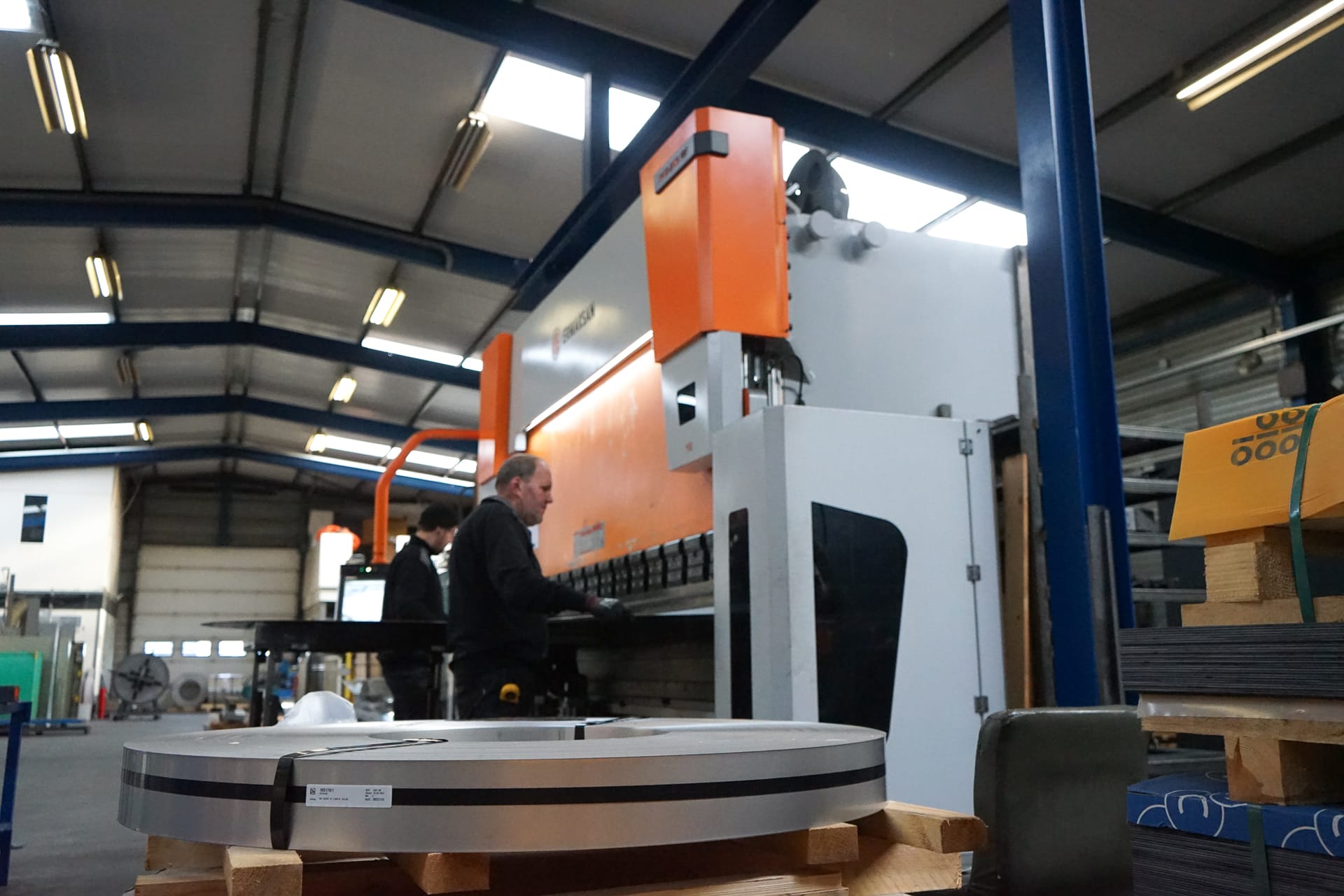
| Press brake | Selecting upper and lower tooling, planning the bending sequence, compensating for springback, measuring angles | Trough edges, folded profiles, finishing edges and reinforcements |
| Guillotine shear and punching machine | Cutting sheet metal to size, punching hole patterns, reducing burrs | Mounting holes, strips and simple flat components produced in batches |
| Tube laser | Cutting tubes and profiles to length, creating cutouts and holes in a single operation | Railings, bars and frames that are welded later |
| Drawing reading and measurement | Understanding dimensions, tolerances and welding symbols, using vernier calipers and angle gauges | Checking that your part will fit the next stage of production |
The final row is often underestimated. A sheet metal worker does not usually carry out the welding. Even so, the drawings you work from include welding symbols. These symbols follow NEN-EN-ISO 2553, the European and Dutch standard for showing welds on technical drawings. When you can read them, you understand why a folded edge has to be in a specific position or why a weld preparation is required.
The material itself also affects what you need to learn. Stainless steel usually springs back more after bending than regular steel and is more prone to scratching. You will therefore learn different settings and handling methods for each material. To find out what happens to a sheet metal part after it leaves your workstation and moves on to welding and assembly, read the article on the journey from laser cutter to welding robot.
How Do You Learn to Operate a Laser Cutter or Press Brake Independently?
Nobody is left alone at a press brake with expensive tooling on their first day. In practice, training happens step by step, from observing experienced colleagues to completing machine setups independently. How long this takes depends on your previous training and the variety of work involved. It often takes several months for each machine.
- Shadowing experienced colleagues and learning to read drawings. You will work alongside an experienced sheet metal worker and learn to recognise dimensions, material codes and tolerances on technical drawings. Your trainer will explain why parts are made in a particular order.
- Safety and machine knowledge. You will learn about the safety systems, including light guards on the press brake and protective enclosures around the laser. You will also learn how to load and unload sheet metal safely. Only then will you operate the machine yourself, initially under supervision.
- Operating with an existing program. You will produce batches using programs that have already been set up and measure the finished parts. Your trainer will inspect your first parts and show you what causes deviations.
- Setting up independently. You will choose the tooling yourself, set the back gauges and adjust the program for a different material or thickness. This is where you learn the most, because every mistake is immediately visible in the first part.
- Adding a second machine. Once you can operate one machine independently, you will train on the next one. This usually means moving from laser cutting to press brake work, or the other way around. If you can operate both, you will understand how cutting and bending work together.
- Programming and improvement. If you want to progress, you can learn to adjust or create programs and contribute ideas for smarter nesting or a better bending sequence. This is usually the next step towards becoming an all round sheet metal worker.
For a closer look at what hands on training at the workbench involves, read how new colleagues learn the trade at Van Osch.
Can You Become a Sheet Metal Worker Without Experience With Computer Controlled Machines?
Yes, provided you are technically minded and willing to learn. According to Smolenaers Constructie & Plaatwerk, metalworking requires at least a technical secondary school education. This can be followed by vocational training at levels 2 through 4 in fabrication or sheet metal work. Courses in computer controlled machine programming and welding techniques can improve your prospects further.
You do not need to complete that vocational qualification before starting work. Many trainees choose the BBL route, a work based learning pathway where you spend most of the week in production and attend school one day a week. If you prefer practical work to sitting in a classroom, this is often the quickest route to working independently on a press brake or laser cutter. An apprenticeship in metalworking is a common starting point.
If you already have experience, for example as a press brake operator in high volume manufacturing, sheet metal work in livestock housing can be a great fit. The machinery is similar. The difference is the variety: more different components, more stainless steel and more frequent machine setups.
It may be less suitable if you prefer the consistency of long runs of the same product, or if you would rather work with a welding torch. In that case, a role as a welder or assembler may be a better match. The difference between the two roles is explained in this comparison of sheet metal worker and welder or assembler roles.
What Should You Look For When Comparing Sheet Metal Worker Jobs?
Two job listings with the same title can describe very different roles. These four factors will make a real difference to what you learn and how quickly you progress, whichever employer you choose.
- Range of operations. Will you only work on a press brake, or will you also use the laser cutter, punching machine and tube processing equipment? A wider range of machinery makes you more versatile, but it also takes longer to become independent on every machine.
- Material variety. Working with steel, galvanized steel and stainless steel teaches you more about machine settings and material behaviour than processing just one type of sheet metal. This makes your experience more transferable to other employers later on.
- Custom work or volume production. Custom work involves more frequent setups and gives you more opportunities to learn each week. Long production runs are more predictable. Neither is better, it simply depends on what suits you.
- Production quality standards. At companies that control welding work in line with NEN-EN-ISO 3834, the standard that Eastmen identifies for welding quality requirements, inspection and documentation procedures are often more tightly defined. For you, that means clearer guidance as well as greater accuracy in your own measurements.
When you meet a potential employer, ask for a tour of the production floor. In ten minutes, you can see how many different parts are moving through the workshop and how the laser cutter, press brake and welding department fit together. That will tell you more than a job description ever could.
Frequently Asked Questions
What is the difference between a sheet metal worker and an all round sheet metal worker?
An all round sheet metal worker can independently operate and set up several machines, usually a laser cutter, press brake and punching machine. They can often adjust programs too. A junior sheet metal worker will usually operate one machine using existing programs.
Do sheet metal workers need to program machines themselves?
Programming is not usually required when you first start. Programs are often prepared by production planning or engineering teams. However, you will generally learn minor machine adjustments, such as changing the setting for a different thickness or back gauge position, within your first year.
Is press brake work physically demanding?
The physical demands of press brake work depend mainly on the size of the sheet metal. Large or heavy parts are usually handled by two people or with lifting equipment. Smaller components require accuracy and concentration more than strength.
Do you need a welding certificate to work as a sheet metal worker?
A welding certificate under NEN-EN-ISO 9606 is intended for welders and is not required to operate a laser cutter or press brake. It is helpful, however, if you can read welding symbols on a drawing. If you later want to move into welding, you can gain this qualification at that stage.
How long does it take before you can operate a machine independently?
The training period varies by person and machine. With a technical background, you can usually work independently on one machine within a few weeks to a few months. Setting up machines independently for changing custom work usually takes longer.
Ready to Start on a Laser Cutter or Press Brake?
Do not choose based on the machine alone. Choose a workplace where you can learn both and receive solid guidance on machine setups. That is what determines how quickly you can progress from operator to all round sheet metal worker.
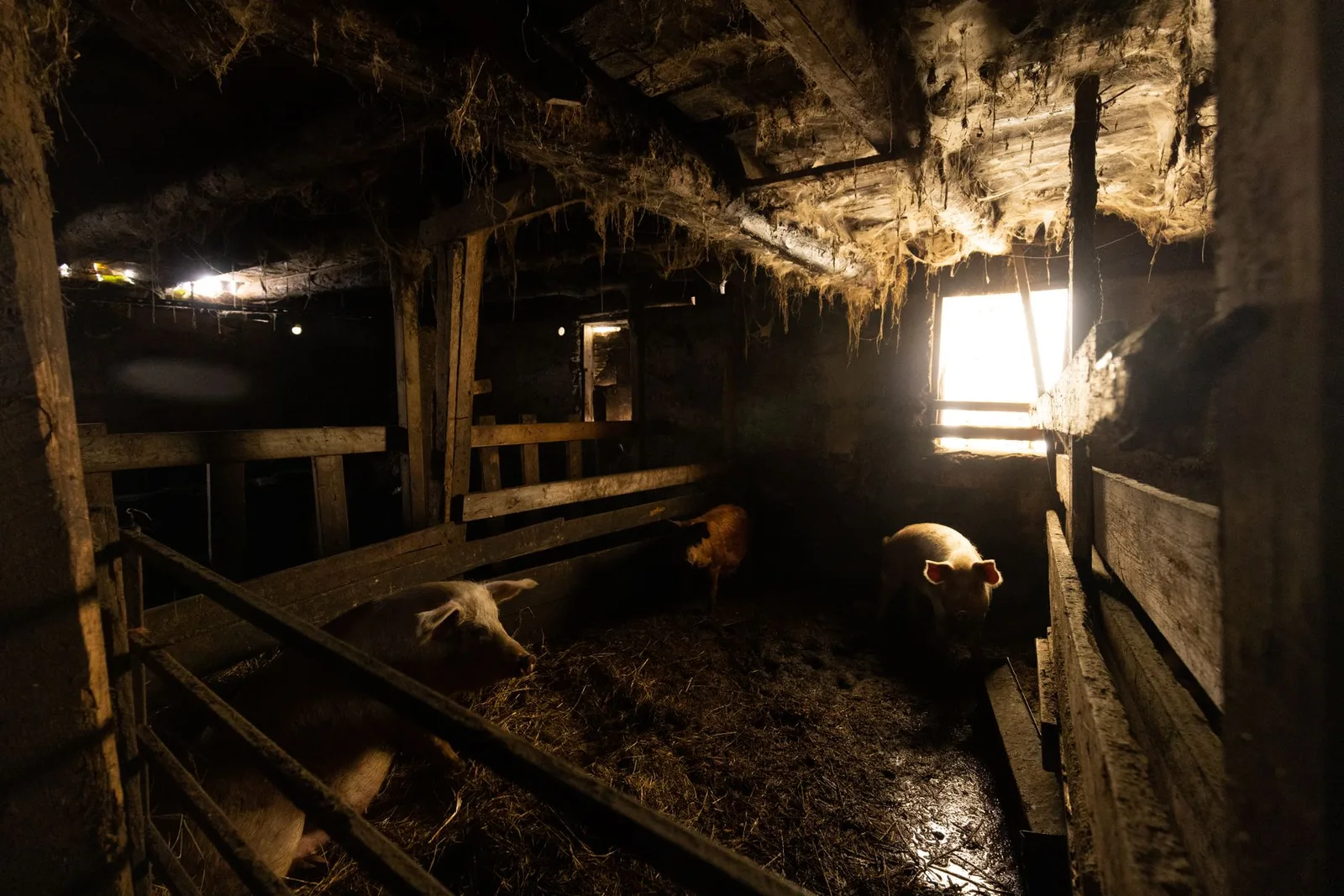
Van Osch manufactures livestock housing equipment for pig farming at its own production facility in Uden. The site has modern sheet metal and tube processing equipment, welding robots and, since 2024, Adige tube laser technology. Custom products are made from steel, galvanized steel and stainless steel. Want to learn how to operate sheet metal machinery? Join Van Osch and explore the role that suits you.
Sources
- MetaalNieuws — Metaalnieuws
- NEN-EN-ISO 2553, de Europese en Nederlandse norm — Ferna
- Smolenaers Constructie & Plaatwerk — Smolenaers
- Eastmen
- Allround plaatwerker CNC in één pittig jaar — MetaalNieuws
- Lassymbolen tekening lezen volgens NEN-EN-ISO 2553 — Ferna
- Welke opleiding heb je nodig voor metaalbewerking? — Smolenaers Constructie & Plaatwerk BV
- Welke lasnormen gelden er in Nederland? — Eastmen