


When choosing a pig feed trough for a free-farrowing pen, start with one question: does the trough need to stay in place, or should it tilt for cleaning and removing leftover feed? The choice usually comes down to a fixed or tilting design. A fixed stainless steel trough is a robust option for barns with a consistent feeding routine, while a tilting trough saves labour where leftover feed is removed regularly and pens are thoroughly cleaned between batches. The best fit for your barn depends on the feeding system, your cleaning method and how much pen space the trough takes up. It is also wise to consider replacement part availability ten years from now.
Why is it harder to choose a trough for a free-farrowing pen than for a conventional farrowing crate?
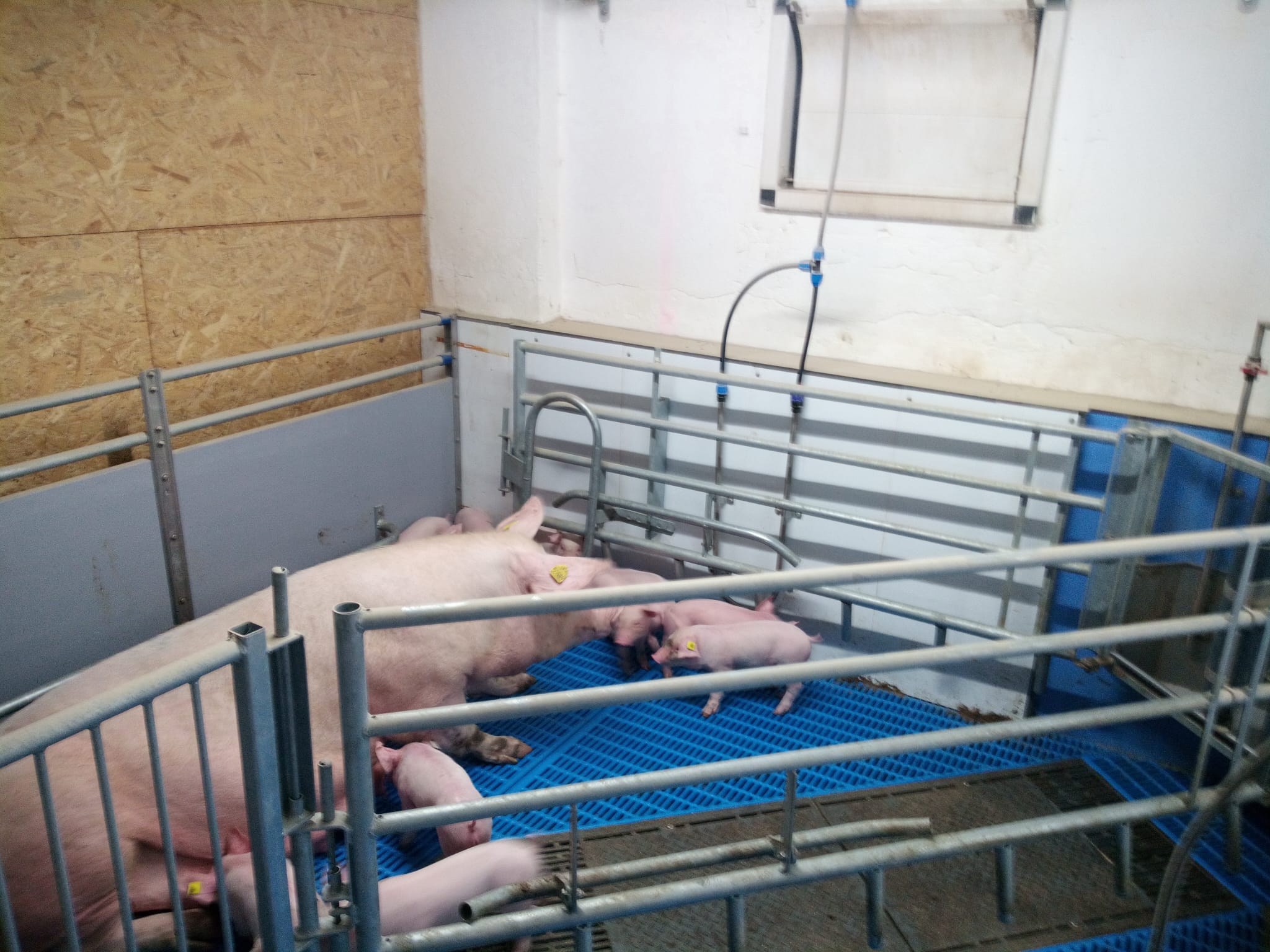
In a conventional farrowing crate, the sow is confined and the trough position is largely predetermined: in front of her head and at a fixed height. In a free-farrowing pen, the sow is able to move freely after the first few days. She turns around and approaches the trough from different angles. That means the trough becomes part of the usable pen area, rather than simply a feeding point.
This matters because the space requirements are specific. According to Varkens.nl (2024), free-farrowing pens under the Beter Leven quality mark must provide at least 4,5 square metres for the sow, a turning circle of at least 2 metres and a bedded piglet nest of at least 1 square metre. A trough that projects deep into a corner can make the practical turning space smaller than the floor plan suggests.
Organic pig farmers face an additional requirement. Skal Biocontrole notes that, under EU organic regulations, a trough or feeder that a pig cannot lie in is deducted from the available indoor space. There is one exception: a feeding stall with a trough suspended at least 20 cm above the floor. For that reason, decide on the trough size and shape while designing the pen, not when you are ready to place the order. To understand how troughs, penning and confinement differ between both systems, read more about the differences between a conventional farrowing crate and a free-farrowing pen.
Which types of pig feed trough are used in farrowing pens, and how do they differ?
The four feeding solutions below each serve a different purpose. When choosing a pig feed trough, look beyond the purchase price and consider cleaning requirements and replacement parts too.
| Type | Main benefit | Point to consider | Often suited to |
|---|---|---|---|
| Fixed stainless steel sow trough | Few moving parts and resistant to feed acids and pressure washing | Leftover feed and dirt beneath the rim are harder to reach | Dry feed with automatic dispensing and a consistent feeding routine |
| Tilting stainless steel sow trough | Leftover feed can be removed quickly and the trough is accessible from all sides for cleaning | The hinge and locking mechanism are wear parts that may need replacing later | Liquid feed, frequent leftover feed and intensive cleaning between batches |
| Trough with an integrated drinker | Feed and water in one location, with fewer separate components in the pen | A leak can wet the trough and spoil the feed | Barns with limited room for a separate drinking point |
| Piglet trough or feed bowl | Helps piglets start eating solid feed early, out of the sow’s reach | Positioning in relation to the bedded nest | Any free-farrowing pen where creep feed is provided before weaning |
This is quite different from a finishing pig pen, where the key issue is the number of feeding spaces per group. According to Varkensbedrijf.nl (2025), the stricter Beter Leven quality mark requirements for finishing pigs call for at least one feeding space per eight animals, with at least thirty centimetres of trough space per animal. In a farrowing pen, the sow eats alone. Accessibility, height and ease of cleaning therefore matter more than trough length. Find out how this works in finishing accommodation in the basics of finishing pig pen design: group feeding, flooring and materials. For a broader overview, see trough types for different pig housing systems.
Fixed or tilting trough: which one should you choose?
Start with the type of feed. With automatically dispensed dry feed, little is usually left in the trough, so a fixed trough is often the right choice. Liquid feed is different, as residues can turn sour quickly in warm farrowing barns. A tilting trough lets you empty each pen in just a few movements. With a fixed trough, you need to lean over the penning to scoop out the corners.
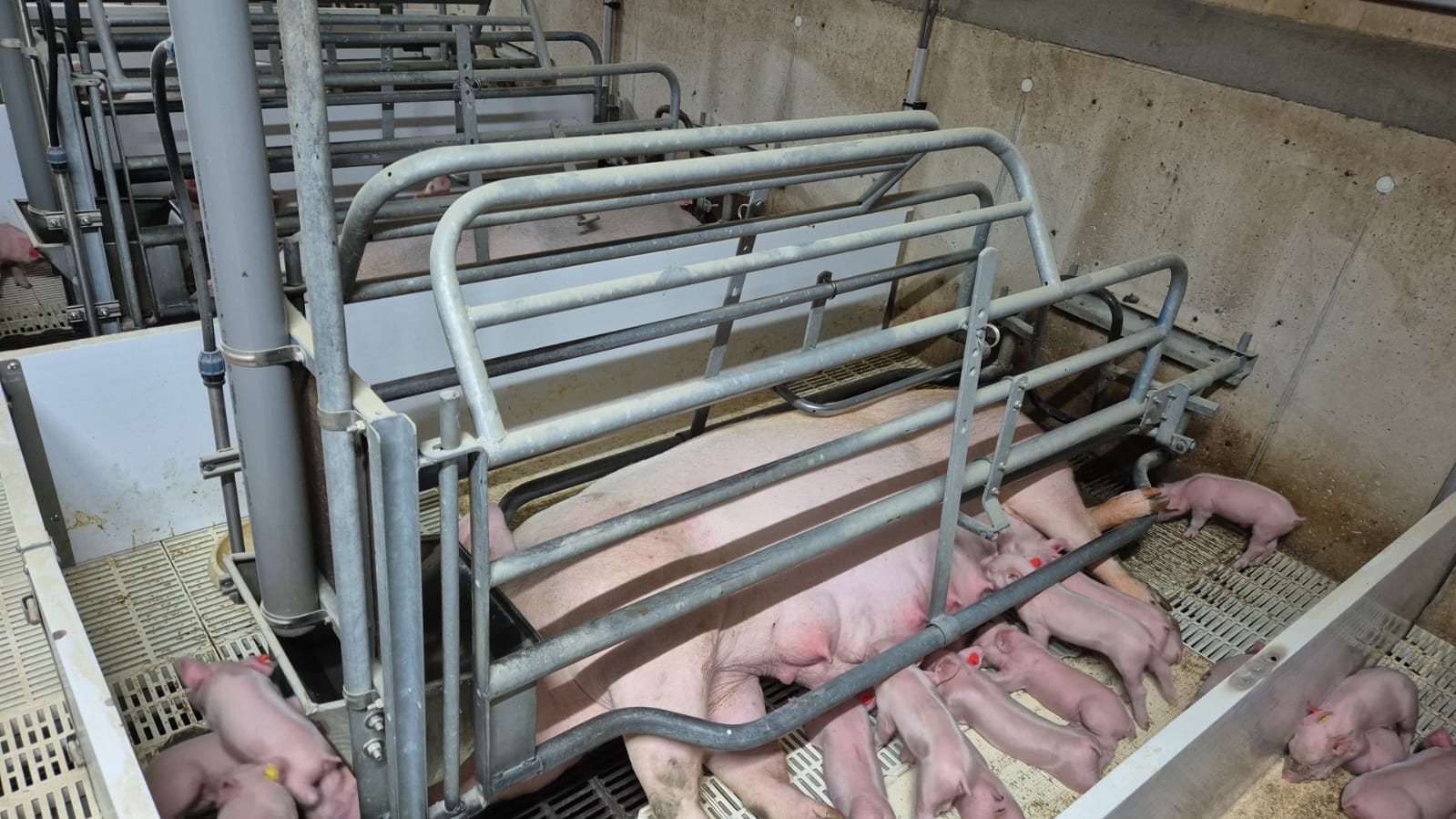
Next, consider your cleaning routine. If an entire section is emptied at the same time, it is thoroughly cleaned between batches. Dirt can remain under the rim of a fixed trough, where it is difficult to reach. A tilting trough exposes the underside and saves time in every pen. That quickly adds up when a section contains thirty or forty pens.
The third factor is confinement. Many free-farrowing pen designs allow the sow to be temporarily confined around farrowing. The trough must remain accessible in both positions, for the sow and for you. Put the penning in its confined position next to the proposed trough location on the drawing. If the layout does not work, it is better to discover that before the first sows enter the pens.
One detail is often overlooked: the trough has a greater effect on the turning circle than the pen size itself. Two pens with the same floor area can work very differently in practice. The difference may be a trough sitting flush in a corner versus one that extends several centimetres into the pen.
Think ahead as well. According to Nieuwe Oogst (2024), a 7,5 square metre free-farrowing pen will be mandatory from 2035 for participants in the Beter Leven quality mark. Existing smaller free-farrowing pens have a transition period until 2045. If you are building a smaller pen now, choose a trough that is bolted in place rather than welded. That makes it easier to move during a future redesign, without having to replace it. As a rule of thumb, first look for a solution within a manufacturer’s standard product range. Custom work is possible, but it is usually more expensive and is most worthwhile for unusual barn dimensions.
What should you check before ordering troughs for a free-farrowing barn?
Checklist for troughs in a free-farrowing barn:
- Confirm the feeding system first: Dry feed or liquid feed determines whether a fixed or tilting trough will save the most time.
- Measure the turning circle with the trough included: Check the 2 metre clear turning space from the trough edge, not from the pen wall.
- Check both pen positions: The trough must be accessible when the sow is confined and when she is loose.
- Match the material to the feed and cleaning routine: Stainless steel is common for liquid feed and intensive cleaning. For other materials, check their resistance to feed acids.
- Choose a movable fixing method: A trough with bolted connections is easier to relocate if the pen dimensions change later.
- Plan the piglet trough separately: Keep creep feed out of the sow’s reach, but do not place it in the bedded nest.
- List wear parts in the quotation: Ask for hinges, locks and brackets to be recorded with part numbers, so they can be reordered later.
This checklist helps prevent problems such as discovering after installation that the trough or feed drop pipe does not line up correctly. Replacement part availability is especially easy to overlook. Here is an illustrative example, not based on a documented project: after eight years, two tilting mechanisms and a pen door are damaged in a farrowing section. If the manufacturer still has the original drawings and its own workshop, those parts can usually be remade to the original dimensions within a few weeks. If the drawings have been lost or the system has been discontinued, the result is often a custom solution requiring a site measurement, or replacement of the entire pen. That is the real operational difference between two troughs that looked identical on delivery day.
What mistakes do pig farmers often make when choosing a trough?
The most common mistake is selecting the trough separately from the pen design. The feeding equipment supplier provides the trough, the pen builder supplies the penning, and no one puts both on the same drawing. During installation, it then becomes clear that the feed drop pipe does not sit above the centre of the trough, or that the penning touches the trough rim when the sow is confined.
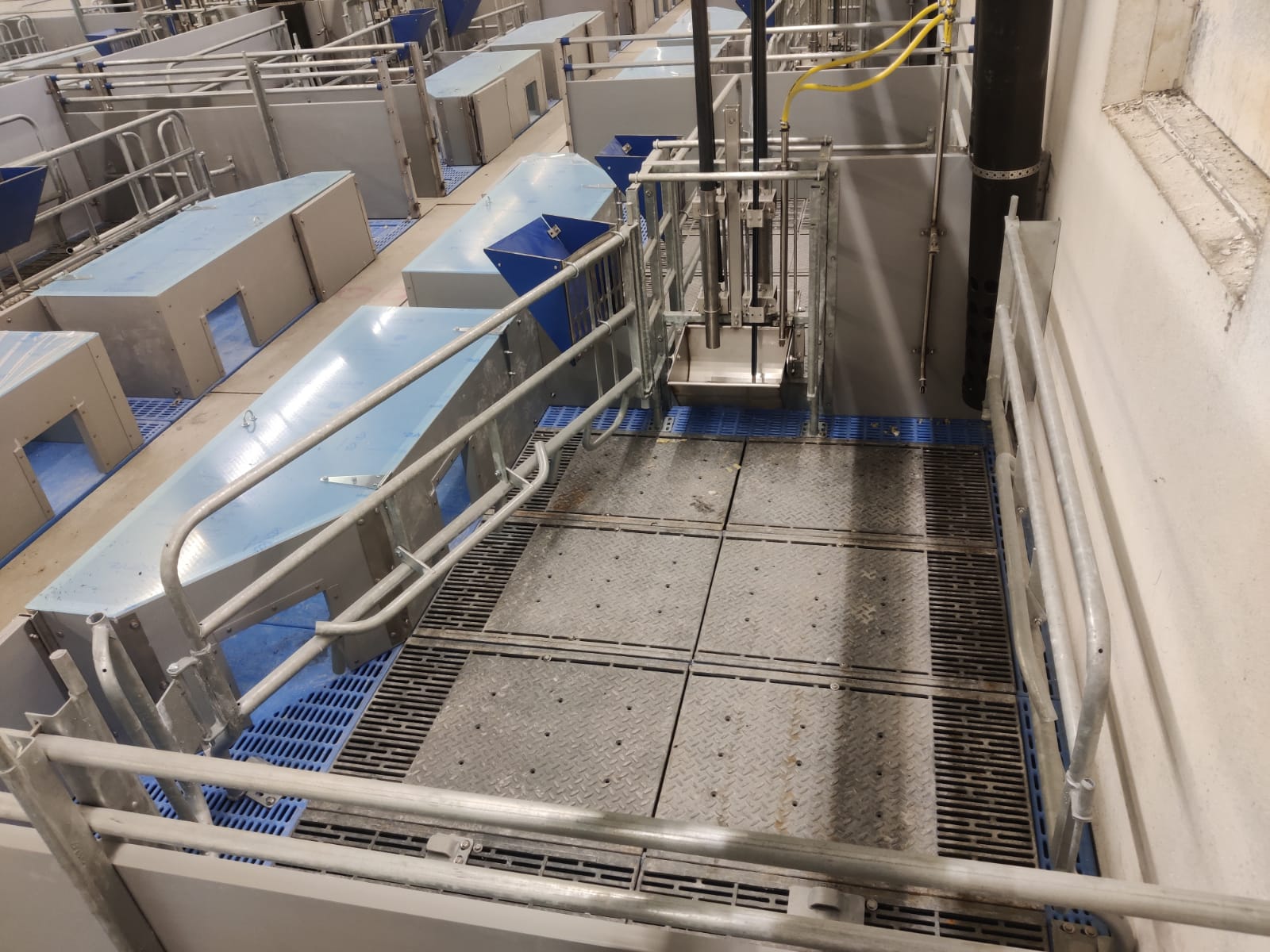
A second mistake is choosing solely on price per trough. The purchase price difference between a fixed and tilting trough rarely outweighs the cleaning time involved over ten or more years. Calculate the time spent per pen per batch, rather than focusing only on the price per unit.
The third mistake is specifying everything as custom made, even when a standard design would do the job. That raises the investment cost and can make replacement parts harder to source later.
Frequently asked questions
How can I check whether a barn equipment supplier still provides parts for my system?
Test replacement part availability by asking for a specific component from a barn system supplied eight to ten years ago, such as a trough bracket or hinge. Ask for the part number and delivery time. If the manufacturer gives you a clear answer within a few days, it is a good sign that it still has records for older systems.
How should I assess references for free-farrowing pens?
References are most useful when you visit a barn that has already been in use for several batches. Ask the farmer how long it takes to clean one pen and what they would change about the trough or penning. Photographs of a new barn show the finished installation, but a conversation in the barn reveals how the system performs day to day.
Does a sow trough in a free-farrowing pen need to be stainless steel?
Stainless steel is common in farrowing barns because it stands up well to feed acids and pressure washing. It is primarily a practical choice. With dry feed and a less intensive cleaning routine, other materials may also work. Whatever material you choose, ask how it performs after years of contact with liquid feed.
Does the trough count towards the floor area of a free-farrowing pen?
For organic farms, not always: under EU organic regulations, a trough that a pig cannot lie in is deducted from the indoor area. For the Beter Leven quality mark, check the current criteria with the scheme itself before finalising the pen size. This avoids a situation where a pen appears compliant on paper but does not meet the requirements in practice.
Do piglets need their own trough in a free-farrowing pen?
Creep feed for piglets is usually supplied in a separate bowl or small trough that the sow cannot reach. Ideally, place it close to the nest but outside the bedded area, so the bedding stays dry. Consider the sow’s walking route too, so the creep feed does not obstruct her turning circle.
Which trough will suit your free-farrowing pen?
First, define your feeding system and cleaning routine. Then check the turning circle with the trough in position, and ask before ordering how replacement part supply will be handled ten years from now. Taking the time to choose the right pig feed trough helps prevent a suitable-looking trough from later restricting movement or creating unnecessary maintenance work.
Share your barn dimensions and feeding system, and ask for advice on fitting out your farrowing sow barn.
Sources
- Varkens.nl — Varkens
- Skal Biocontrole — Skal
- Varkensbedrijf.nl — Varkensbedrijf
- Nieuwe Oogst — Nieuweoogst
- Dierenbescherming verplicht vrijloopkraamhok van 7,5 vierkante meter — Varkens.nl / Nieuwe Oogst
- Varkenshouders: opmeten troggen en feeders voorafgaand aan de Skal inspectie — Skal Biocontrole
- Dierenbescherming kiest voor vrijloopkraamhok van 7,5 vierkante meter — Nieuwe Oogst
- Varkenshouders spelen in op verscherpte eisen Beter Leven-keurmerk — Varkensbedrijf.nl