


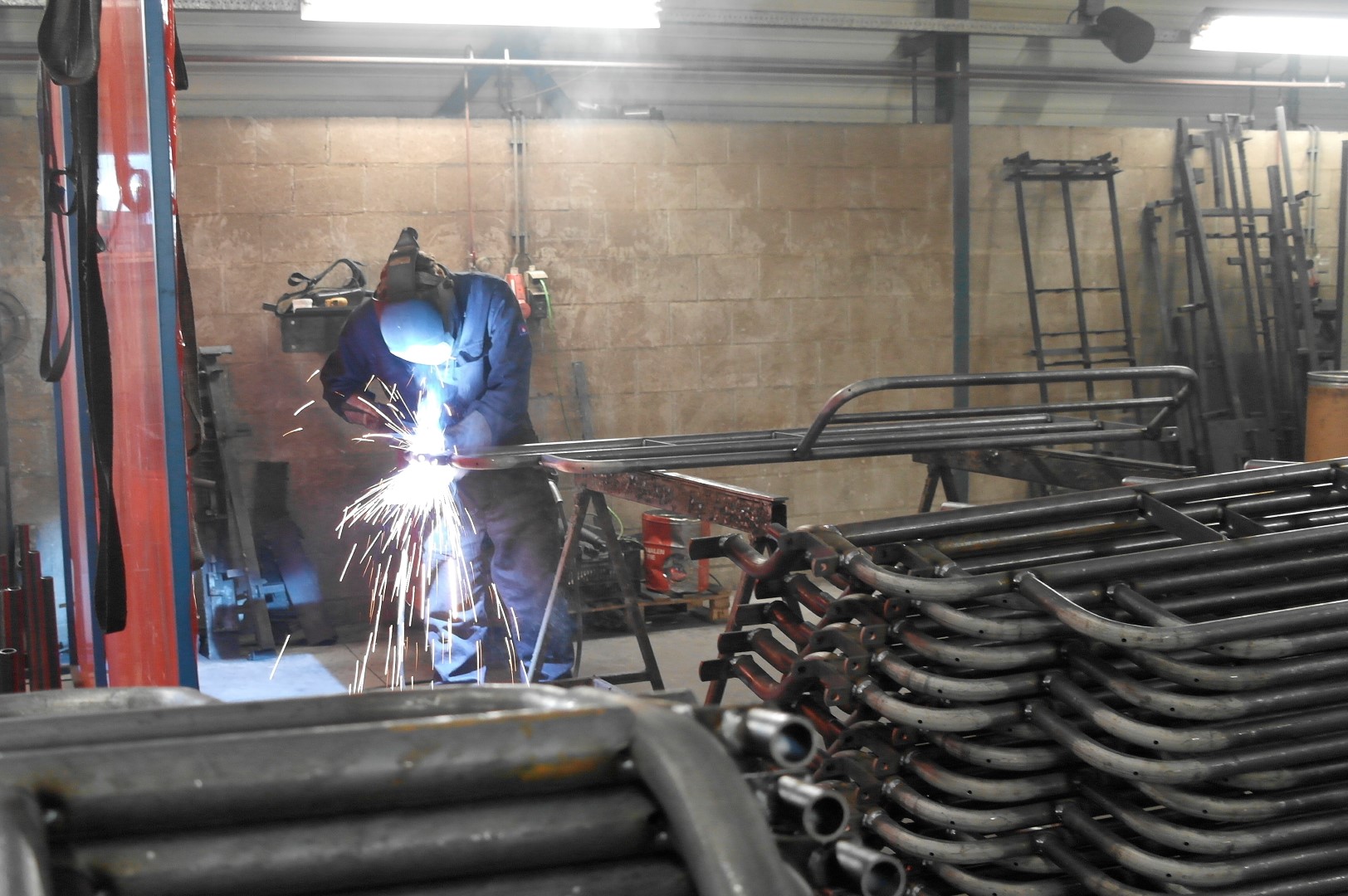
Combining a BBL apprenticeship with work in metalworking usually means spending four days a week in production and one day at college. You have an employment contract and earn a salary under the collective agreement. It works best when four essentials are sorted out before you start: an SBB-approved training company, a workplace mentor at your level, a protected slot for your college day in the production schedule and pay that matches the BBL pay scale. Once those details are in writing, you can focus on learning the trade itself, from welding and sheet metal work to tube processing and assembly.

## Can you combine a BBL apprenticeship with a job in a manufacturing company?
Yes. In the Dutch metalworking sector, it is the standard route into the trade. According to [MKB Servicedesk](https://www.mkbservicedesk.nl/personeel/stagiairs-studenten/hoe-word-ik-een-mbo-leerbedrijf), a BBL student must spend at least 60% of their total course time in a work placement. In practice, that usually means four days at work and one day at college each week.
The real challenge is not usually the college day itself. It is the other four days. Manufacturing companies run on orders and delivery deadlines. For a producer of pig housing equipment, for example, that can mean custom farrowing crates, fencing and slatted floors that must be delivered to a customer on a fixed date. When the schedule is tight, your college day can come under pressure. That is why it pays to ask upfront how the company handles this.
There is homework to factor in, too. Expect a few hours each week for assignments and tests, depending on your course and the point you are at in the academic year. After a full day in the workshop, that can feel more demanding than it sounds on paper.
The good news is that you are in a strong position. The engineering sector needs people. According to [Metaalkrant (2026)](https://metaalkrant.nl/2026/06/26/technieksector-luidt-opnieuw-de-noodklok-over-groeiend-personeelstekort/), the Netherlands already has a shortage of around 60.000 skilled technicians, and the Techniekcoalitie is among the organisations calling for more BBL pathways. Companies need new talent, which gives you room to agree on proper support and a workable schedule before you sign.
## What 4 agreements should you make before starting a BBL apprenticeship?
> Four things determine whether work and study fit together well. Discuss every one of them during your interview, and make sure they are included in your contract or work placement agreement.
### 1. The training company is approved by SBB
Without approval, your work placement hours will not count towards your qualification. A company must be formally approved by SBB, the Dutch organisation for vocational education and business, before it can supervise BBL students. Approval does not last forever. Under the [SBB recognition rules for training companies](https://wetten.overheid.nl/BWBR0051839/2025-12-01), it automatically expires if a company has not provided practical vocational training for four consecutive years. A business that has not taken on trainees for a long time may therefore have lost its approval without realising it. Ask to see the approval, or check the SBB register yourself.
### 2. Your workplace mentor is qualified to at least your level
This is where training companies can really differ. Pay is set by the collective agreement, so it is broadly similar at companies covered by the same agreement. The quality of your day to day support is not. Since 2025, [MKB Servicedesk](https://www.mkbservicedesk.nl/personeel/stagiairs-studenten/hoe-word-ik-een-mbo-leerbedrijf) states that a workplace mentor must be able to demonstrate that they have at least the same professional level as the qualification you are working towards.
That is only the minimum requirement. Ask who will supervise you each day, how often you will review your progress and whether you will get experience in more than one department. For a closer look at what practical training looks like on the shop floor, read [how new colleagues learn their trade at the workbench](https://www.van-osch-uden.nl/blog/zo-leert-van-osch-nieuwe-collegas-het-vakmanschap-aan-de-werkbank/).
### 3. Your college day is fixed in the production schedule
Four days at work and one day at college sounds straightforward. The problems tend to arise around exceptions: test weeks, exams, college project days and school holidays. Agree that your college day will be recorded as a fixed absence in the production plan. Also agree what happens if an order runs late. Your final practical assessment, known as the proeve van bekwaamheid, is often partly completed at the company itself. That takes preparation and time from your workplace mentor.
### 4. Your pay follows the BBL scale in the collective agreement
In metalworking, pay is covered by the Metaal en Techniek collective agreement. Your age when you start determines which BBL pay scale applies, and your pay rises with each year of training. Under the 2024 to 2026 Metaal en Techniek collective agreement published by Koninklijke Metaalunie, an 18 year old starting their first year received € 1.120 per month, rising to € 1.439 in the second year (scale effective from 1 March 2025). According to [RMU](https://rmu.nl/eindresultaat-cao-metaal-en-techniek), pay and scales increased by 3% from 1 March 2026. From the age of 21, you no longer fall under the BBL pay scale but move to the standard salary scales.
## BBL or BOL: how much can you earn and what is the difference?
If you are deciding whether to combine a BBL apprenticeship with work or study full time first, the main things to compare are income, hands on experience and security. BOL is a college based vocational course with placements. BBL is a job alongside your training.
| Aspect | BBL: work and study | BOL: college with placements |
|---|---|---|
| How your week is split | ✅ Four days at work, one day at college | ⚠️ Most of your time is spent at college |
| Income | ✅ Salary under the collective agreement | ❌ Usually only a placement allowance |
| Contract | ✅ Employment contract with the training company | ❌ Placement agreement only |
| Experience by the time you qualify | ✅ Years of production experience | ⚠️ A few placement periods |
| Time for theory | ⚠️ One day plus evenings | ✅ A fuller teaching timetable |
| Entry requirement | ⚠️ You need a training company before you start | ✅ Enrolling at college is enough |
The biggest difference is clear from the first row marked with a tick. As a BBL student, you gain experience with real orders from day one. You might weld stainless steel parts for a farrowing crate or set up a press brake for panels and doors. A BOL student generally sees this kind of production work only during placements.
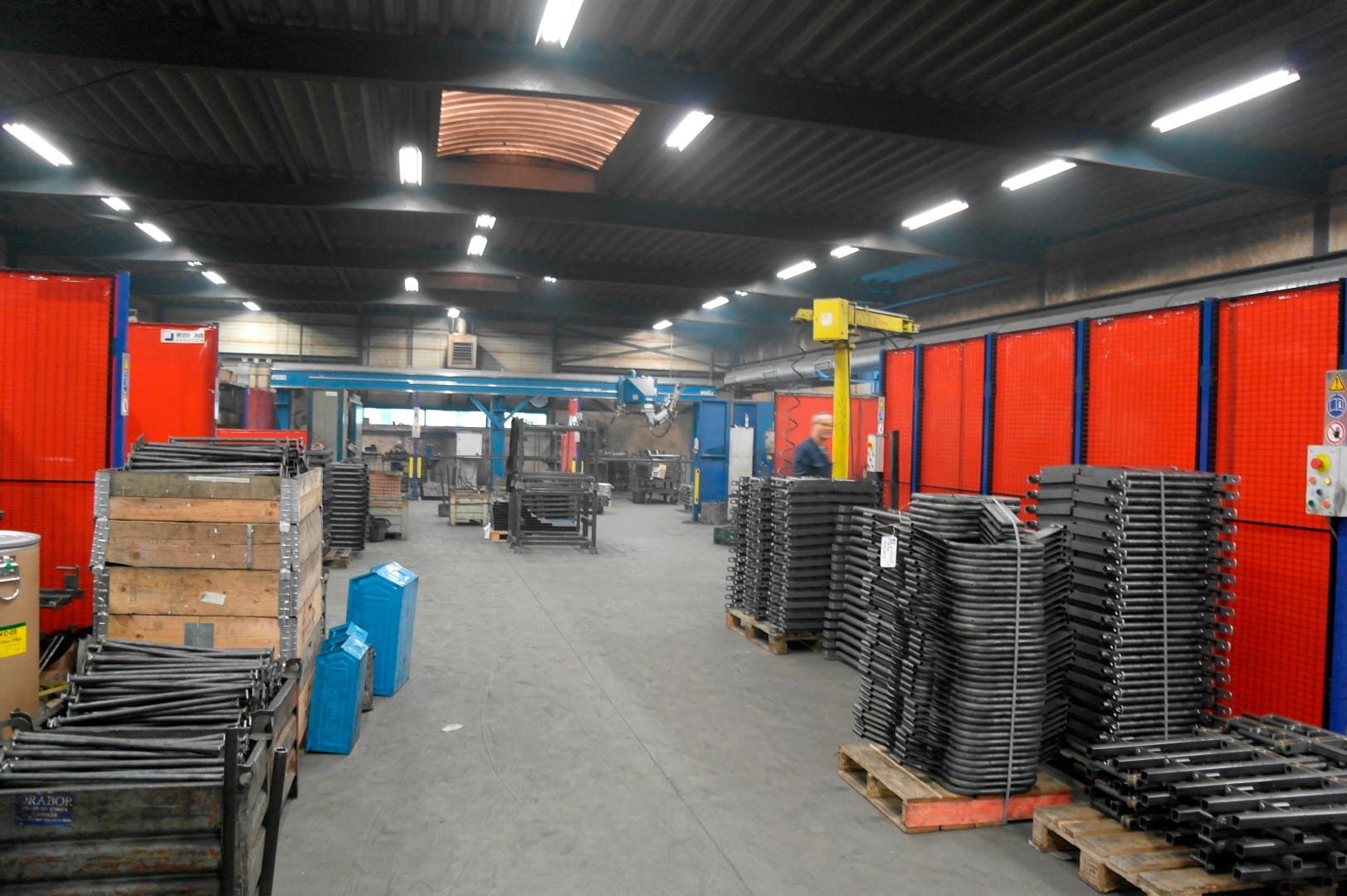
The trade off is that BBL students have to fit the theory into fewer hours. If you find technical drawings, calculations or material knowledge difficult, you may notice that sooner. A good workplace mentor can help by connecting theory to the work you are doing on the shop floor that week.
Financially, the difference is significant. A BOL student will usually rely on student finance and a part time job. A BBL student receives a monthly salary that increases each year of training. In many cases, the employer also covers BBL tuition fees. Check your contract, as this is not automatic.
## Is BBL right for you, or should you start with BOL?
Would you rather begin in the classroom or get straight into the workshop? It depends less on your grades than on how you learn best.
BBL is a good fit if you learn by doing, like having regular working hours and already know you want a career in metalworking. It is also often the sensible choice if you need an income. At a manufacturing company with modern machinery, you will work with techniques you may only see to a limited extent at college. For an example, read [from laser cutting to welding robot: how a farrowing crate is made in the factory](https://www.van-osch-uden.nl/blog/van-laser-tot-lasrobot-zo-ontstaat-een-kraamhok-in-de-udense-fabriek/).
BOL may suit you better if you are still unsure which direction to take, want to get to grips with the theory first or plan to progress from vocational education to higher education and need more classroom time. You can usually switch later. Many students start on BOL and move to BBL after a year, once they have found a training company.
If you already know the direction you want to take, look closely at the department you will join as well. Sheet metal work and welding or assembly require different skills. Find out more in [sheet metal worker or welder assembler: which role suits you?](https://www.van-osch-uden.nl/blog/plaatbewerker-of-lassersamensteller-welke-functie-past-bij-jou-vanuit-het/). You can also explore a real training opportunity through the [junior metalworker vacancy](https://www.van-osch-uden.nl/werken-bij/leerling-metaalbewerker/) to see what a BBL role involves in practice, including the tasks and support available.
The rule of thumb is simple. If you have found an approved training company with a good workplace mentor, BBL gives you a qualification, an income and work experience in the same period. If you have not found that yet, do not rush into joining the first company that says yes.
## Frequently asked questions
### What are the rules for a BBL apprenticeship?
**The BPV agreement** is the foundation. It is a three way agreement between you, your college and your training company, alongside your employment contract. It sets out your course, workplace mentor and the period of your work placement. If your contract ends early, you will need to find another training company to complete your qualification.
### How do I find a BBL work placement?
**Approved training companies** can be found in the SBB register, which also lists available apprenticeship vacancies. Your college can often help with your search. In metalworking, sending a speculative application to a manufacturing company in your area can work well too, especially because skilled people are in short supply.
### How much do you earn on a BBL apprenticeship?
**Your BBL pay** depends on your age when you start and your year of training, based on the BBL scales in the collective agreement. You remain in the scale for your starting age even if you have a birthday during the course. Under the 2026 to 2028 Metaal en Techniek collective agreement, once you complete a relevant BBL qualification and do not continue studying, you move into the standard salary scales.
### Can you progress from level 2 to level 3 through BBL?
**Progression is possible.** Under the collective agreement, you remain within your BBL pay scale and continue into the next training year. Your next year of study therefore brings another pay increase. Be sure to discuss it with your training company early on, as they also need to be able to support the follow on course.
### Is your college day paid?
**It depends on your contract,** not on the course itself. At many training companies, the college day counts as part of the working week, but this varies between employers. Make sure it is written into your contract before you sign.
## A good training company stands out through its support, not its pay
If you are considering combining a BBL apprenticeship with work, compare training companies based on their approval, workplace mentor and commitment to a fixed college day. Pay is already set by the collective agreement. Get those four points sorted before you sign, and you can focus on learning the trade.
Van Osch has been a family business since 1939. From its own factory in Uden, it designs and produces pig housing equipment, using its own skilled professionals, welding robots and tube laser technology. Want to know more about working in this production environment? [Join Van Osch](https://www.van-osch-uden.nl/werken-bij/) and see which apprenticeships and job opportunities are currently open.
Sources
- MKB Servicedesk — Mkbservicedesk
- Metaalkrant (2026) — Metaalkrant
- Regeling erkenning leerbedrijven SBB — Wetten
- RMU — Rmu
- Hoe word je een erkend SBB leerbedrijf? — MKB Servicedesk
- Regeling erkenning leerbedrijven SBB (BWBR0051839) — Overheid.nl
- Technieksector luidt opnieuw de noodklok over groeiend personeelstekort — Metaalkrant