


You can future-proof your farrowing unit for 2035 by answering three questions first. How many farrowing places will remain if every pen becomes larger? Does your permit allow for the additional space? And will your flooring and slurry pit meet the per-animal-place emission standards due to apply from 2035? If you participate in the Beter Leven label scheme, plan for a 7.5 m² loose farrowing pen. If you are renovating now, choose pen dimensions, slatted flooring and slurry pit layout with 2035 in mind, not just today’s requirements. With proper maintenance, a farrowing pen installed in 2026 or 2027 will usually still be in use well beyond 2035.
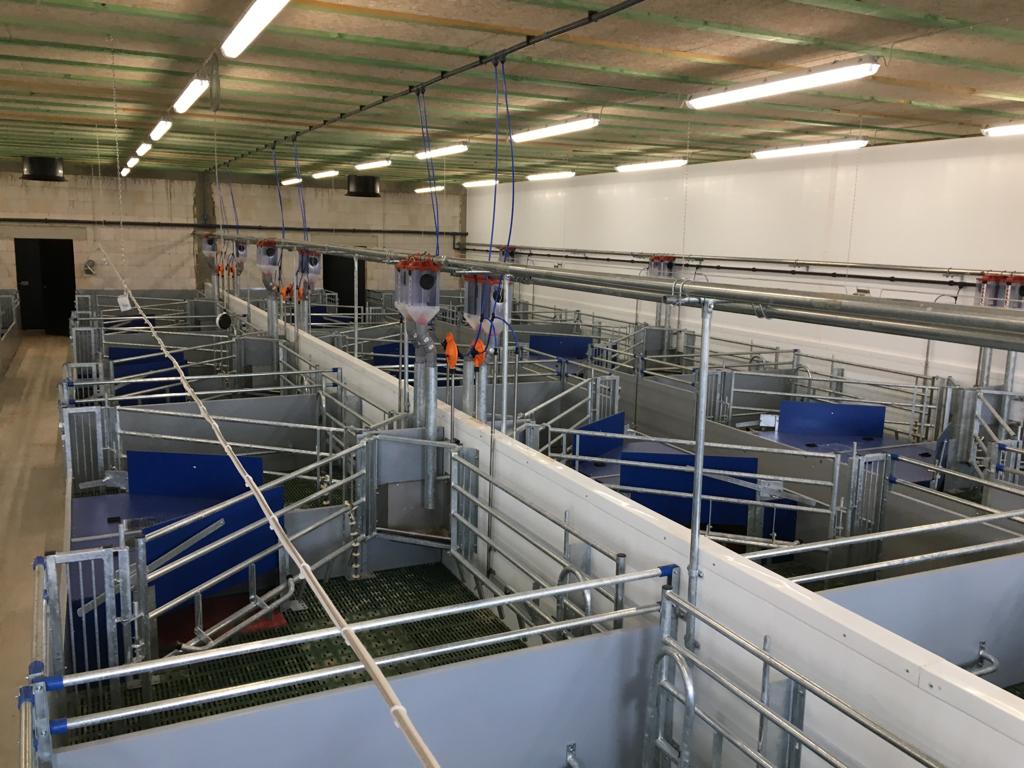
Why should you already be planning for 2035 when renovating your farrowing unit?
Two developments will come together in 2035. According to Growth Towards Tomorrow, Dutch Government, pig farms will need to meet farm-specific ammonia and greenhouse gas emission standards per animal place from 2035. The exact standards are expected to be announced in the first quarter of 2027. So, if you are designing a farrowing section in 2026, you do not yet know the precise benchmark your building will eventually be assessed against.
A baseline rule already applies. According to the Environment and Planning Information Centre (IPLO), under the Dutch Environmental Activities Decree, pig housing must be low-emission when more than 15 pigs, excluding piglets, or more than 10 piglets are kept. Emission limits depend on the year the building was constructed. A major renovation can therefore determine which limit applies to your farrowing section. Discuss this with your adviser before finalising the design.
The second issue is pen size. Nieuwe Oogst (2024) reports that participants in the Beter Leven welfare label scheme will be required to use 7.5 m² loose farrowing pens for all three star levels by 2035. Pens that do not meet this size requirement will have a transition period until 2045. This is a label requirement rather than legislation, but for breeders supplying a welfare-certified supply chain, it carries much the same weight in practice.
Most pig farmers start by looking at the type of pen. The real bottleneck is often somewhere else: the number of farrowing places. Nieuwe Oogst (2026) notes that moving to loose farrowing pens means many sow farms need to build additional farrowing pens to maintain the same sow numbers. Whether that is possible depends heavily on whether the authorities will grant the required permits. Your first calculation should therefore be a capacity assessment, not a catalogue choice.
Which options can future-proof a farrowing unit for 2035?
If you are renovating or building a farrowing unit now, there are broadly four possible routes. Each suits a different starting point: the age of the building, the available space on site and whether you participate in a welfare label scheme.
- Replace conventional farrowing pens on a like-for-like basis. The section and number of places remain unchanged. It is the least disruptive option, but you may face pen-size requirements as 2035 and 2045 approach if a welfare label or legislation calls for more space.
- Install loose farrowing pens within the existing building footprint. You fit larger pens into the existing sections. This avoids new construction, but reduces the number of places per section and may require changes to your production schedule or group size.
- Build or extend with 7.5 m² loose farrowing pens. You maintain capacity and can design the slurry pit, flooring and ventilation around the new layout from the outset. This option does require planning permission for additional space, which is where the uncertainty lies.
- Convert in phases. Replace the permanent elements now, including the slurry pit, slatted flooring and pipework, using a layout already suited to loose farrowing. The pen fittings can follow later, one section at a time.
Across all four options, the permanent elements have the longest lifespan: the slurry pit, floor layout and walls. Pen fittings are the layer you are more likely to replace sooner. A practical rule of thumb is to design the permanent structure for the largest pen size you can reasonably expect, even if you install smaller pens today. For guidance on where stainless steel and plastic will last longest in each part of a pen, read material choices for each component of a loose farrowing pen for 2035.
How do the options compare on capacity, permits and risk?
The table below compares the main differences. Use it as an initial filter. The best outcome for your farm will depend on your building dimensions, permit and supply chain.
| Aspect | 7.5 m² loose farrowing pen, new build | Loose farrowing within an existing building | Replace conventional farrowing pens |
|---|---|---|---|
| Meets Beter Leven requirements for 2035 | ✅ Meets the pen-size requirement | ⚠️ Depends on the achievable size | ❌ Transition period until 2045 |
| Number of farrowing places | ✅ Capacity remains the same | ❌ Fewer places per section | ✅ Number of places remains the same |
| Permit risk | ⚠️ Additional space required | ✅ Within the existing building footprint | ✅ Usually no change required |
| 2035 emission standard | ✅ Slurry pit and flooring designed from scratch | ⚠️ Existing slurry pit is the limiting factor | ⚠️ Existing slurry pit is the limiting factor |
| Reinvestment before 2045 | ✅ Little expected | ⚠️ May be needed if requirements tighten | ❌ Likely to be required |
| Staff workflow | ✅ Can be planned freely | ⚠️ Limited by existing passageways | ✅ Familiar workflow |
Every row includes costs that are often missing from an initial quote. In a loose farrowing pen, the sow slatted floor, piglet slatted floor and solid piglet nest are arranged differently from a conventional pen. If the slurry channels in your existing pit do not line up with that new layout, renovating within the existing building can quickly become more expensive than expected. Always ask for a drawing that overlays the pen layout onto the slurry pit layout.
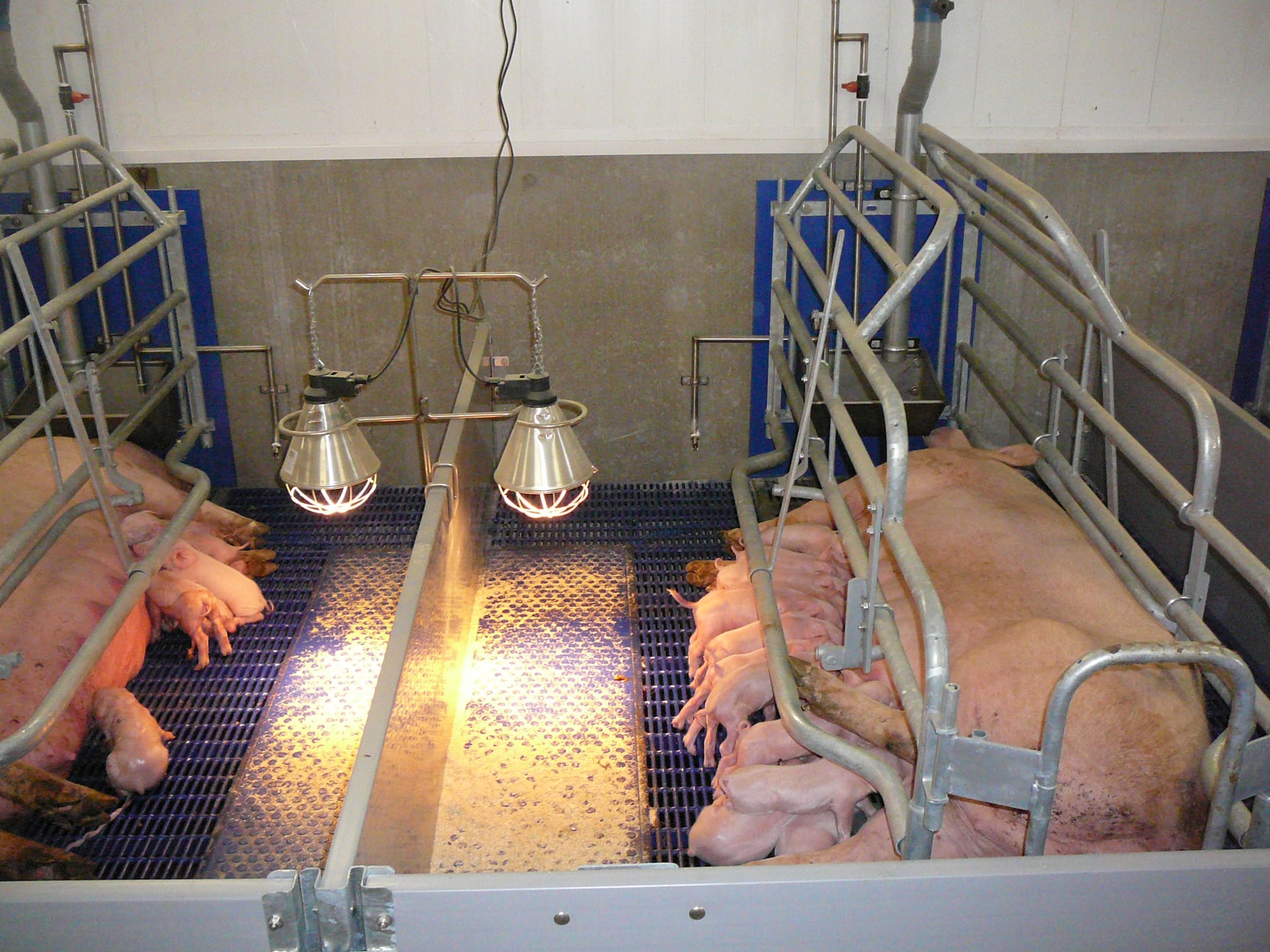
The same applies to water and feed. A larger pen changes the position of the trough, the sow drinker and the piglet feeder. Supply lines need to be routed differently too. Solving this during installation leads to extra labour for the installer and more bends in the pipework, making cleaning more difficult. Current common dimensions and configurations are outlined in loose farrowing pens in 2026: requirements, dimensions and configurations.
You also need to consider what happens after weaning. If the number of farrowing places or your production schedule changes, the flow of pigs into nursery and finishing sections changes with it. The same principles apply when choosing feeding systems, flooring and materials there. Read finishing pen layouts: where to start with group feeding, flooring and materials to see how these three choices affect one another. A farrowing unit plan that ignores the rest of the production chain can still create a bottleneck a few years later.
Which option suits your farm, and what should you lock in during 2026?
Do you participate in Beter Leven, or expect to join in the near future? Then a 7.5 m² loose farrowing pen is the logical starting point. The question is not whether you will switch, but how you will protect capacity. If you have space on site and a permit that can accommodate growth, new construction can prevent you from having to overhaul your production schedule.
Is your building relatively new, is the slurry pit in good condition, and is a welfare label not relevant to your business? Then replacing pens within the existing footprint may be a sensible choice. Even so, factor in the transition period to 2045 and the emission standards due to be announced in 2027. If the slurry pit needs replacing anyway, phased conversion is often the lowest-risk route. You build the permanent structure correctly once, then choose the timing of the pen fittings themselves.
Do not wait until every standard is known. Instead, design the project so the final decisions can still be adjusted. In practice, this order works well:
- Establish your position in relation to the welfare label. This determines the minimum pen size you should work from.
- Calculate your required farrowing places. Start with your production schedule and calculate how many pens of the chosen size fit into your existing sections. The difference is your capacity requirement.
- Check your permit capacity. Find out early whether additional building volume or a changed housing system is feasible. This is the biggest risk to the project timeline.
- Keep the slurry pit and flooring adaptable until the emission standards are published. Develop the design, but avoid committing to a final low-emission system until the farm-specific standards are announced in 2027.
- Make the pen layout modular. Choose walls, sow restraint systems and slatted floor sections that allow you to switch one section at a time later, without removing the permanent structure.
Future-proofing a farrowing unit for 2035 is mainly about getting the sequence right. Farmers who assess capacity, permits and the slurry pit first can then select the right pen. Those who start with the pen often discover the other three issues only after signing the quote.
Frequently asked questions
Will loose farrowing pens be a legal requirement in the Netherlands in 2035?
A Beter Leven requirement is the right description for the 7.5 m² rule in 2035. It is a welfare label criterion, not legislation. Whether and when loose farrowing will become a legal requirement is a separate process. Check the current position with the Dutch Government or your adviser before investing.
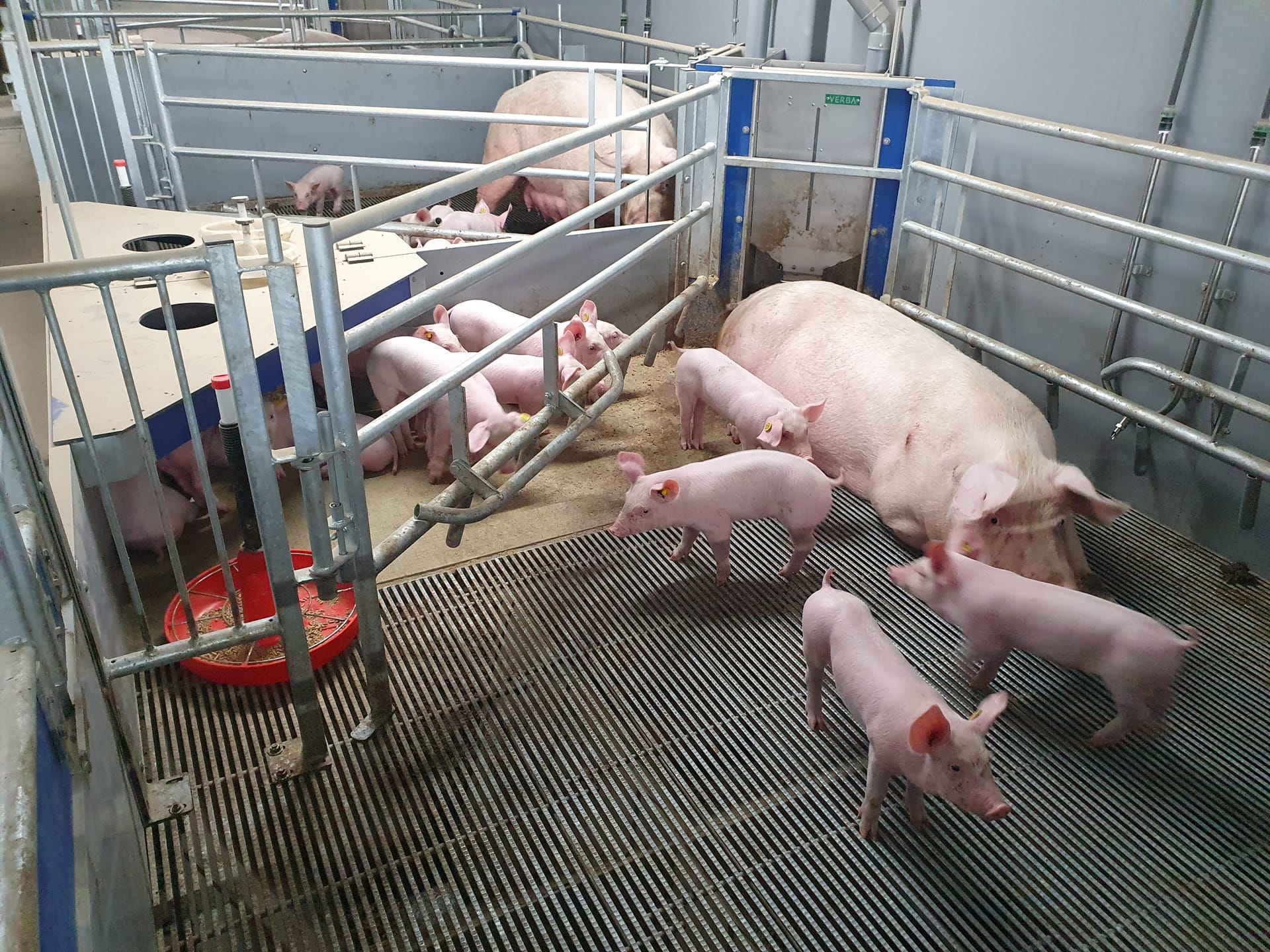
What happens after 2035 to farrowing pens smaller than 7.5 m²?
The transition period is the key point. For Beter Leven participants, pens that do not meet the required size may remain in use until 2045. If you install smaller pens now, you will therefore have another ten years after 2035. Whether that is enough time to recover the investment should be calculated for each section.
Should I wait until the emission standards are announced in 2027?
Designing and committing are two different steps. You can already begin the design, capacity calculation and permit process. Ideally, wait until the per-animal-place standards are known before making the final decision on the low-emission system for the slurry pit and flooring.
Can I convert a conventional farrowing pen into a loose farrowing pen?
Conversion depends on the pen dimensions and the slurry pit layout beneath it. In many existing sections, conversion means fewer pens because each pen requires more floor area. Have a layout drawn over your existing slurry pit before deciding between conversion and new construction.
How many farrowing places will I lose when moving to 7.5 m²?
Floor area per pen determines the reduction, not the pen type itself. If your current pens are around 4 to 4.5 m², the same section will typically accommodate roughly 40 to 45 percent fewer pens, depending on passageways and pen shape. You will need to make up those places elsewhere or compensate through a different production schedule.
Where should you start when planning your farrowing unit for 2035?
Start by calculating your farrowing-place requirement and checking whether your permit allows room to grow. Only then should you choose the route and the pen. That gives your investment the best chance of remaining viable after 2035 and 2045.
Van Osch B.V. designs and manufactures both conventional farrowing pens and loose farrowing pens in Uden. Every solution is made to suit your existing building dimensions and slurry pit layout. Its advisers help you determine the right sequence for capacity, flooring and pen layout. The Five O’s, solution-focused, supportive, open, organised and sincere, define how Van Osch remains available after delivery. Want to know which option best suits your farrowing unit? Explore the custom solutions for farrowing sows and request advice for your own building.
Frequently asked questions about farrowing pens for 2035
Will loose farrowing pens become mandatory?
That depends on final legislation, transition periods and any conditions for existing buildings. What is clear is that the move towards more space and freedom of movement for sows is continuing. If you are building new facilities or carrying out a major renovation, it makes sense to allow for a more spacious farrowing setup now.
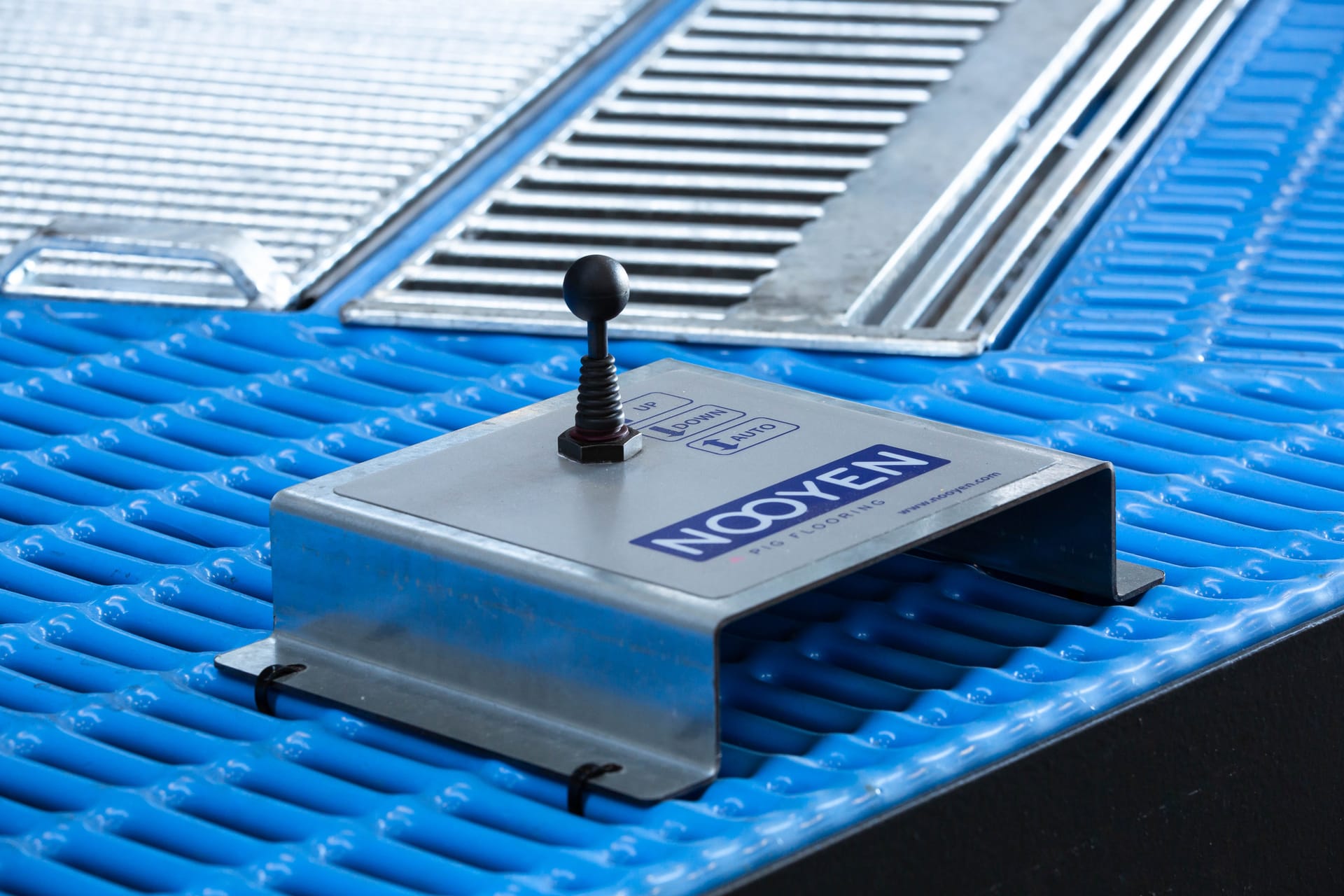
Can I adapt my existing farrowing unit without rebuilding it completely?
Often, yes. However, the possibilities are determined by building width, slurry pit location, ventilation, feed passage, technical installations and available permit capacity. A phased renovation may be possible in some cases. In others, a new section is the more practical or cost-effective choice.
How large should a loose farrowing pen be?
A common starting point is around 7.5 m² per farrowing pen, including space for the sow and piglets. However, the usable dimensions also depend on the length-to-width ratio, the position of feed and water, piglet nest provision and the floor design.
Does more space always lead to higher piglet mortality?
Not necessarily. A larger pen does need a well-designed layout. Piglet protection, an inviting and warm piglet nest, a clear overview for the sow and safe lying areas all play an important role in reducing crushing losses. Management during farrowing, supervision and climate control also remain decisive.
Can I continue using my current farrowing pens temporarily?
Transition rules may apply to existing buildings. Always check the latest requirements and discuss your plans in good time with your adviser, permitting authority and housing supplier. Waiting until investment becomes unavoidable usually leaves you with fewer options.
Conclusion
Choosing a farrowing unit that is future-proof for 2035 is about more than installing a new pen. It involves available space, production planning, permits, piglet safety and the technical limitations of your existing building. By calculating your required number of farrowing places and available square metres first, you avoid selecting a solution that looks right on paper but costs too much capacity in practice.
A custom design helps you use the available space as efficiently as possible without compromising the comfort of sows and piglets. That is how your farrowing unit can remain future-proof for 2035, even as pen-size and emission requirements are developed further.
Sources
- Groei naar Morgen (Rijksoverheid) — Groeiennaarmorgen
- Informatiepunt Leefomgeving (IPLO) — Iplo
- Nieuwe Oogst (2024) — Nieuweoogst
- De plannen voor intensieve veehouderij (pluimvee, varkens en kalveren) — Groei naar Morgen (Rijksoverheid)
- Emissiearme stal varkens — Informatiepunt Leefomgeving (IPLO)
- Dierenbescherming kiest voor vrijloopkraamhok van 7,5 vierkante meter — Nieuwe Oogst
- Varkenscriteria Beter Leven-keurmerk worden aangescherpt — Nieuwe Oogst