


Looking through technical job vacancies in Uden for a role where you can learn a trade while earning a salary? A BBL metalworking apprenticeship could be the right fit. At a manufacturer of livestock housing systems for pig farms, you will typically spend four days in the production workshop and one day at college. On the shop floor, you will make farrowing pens, railings, feeding troughs and slatted floors from steel, galvanised steel and stainless steel. You sign an employment contract, fall under a metalworking collective agreement and earn a vocational qualification recognised across the metalworking industry.
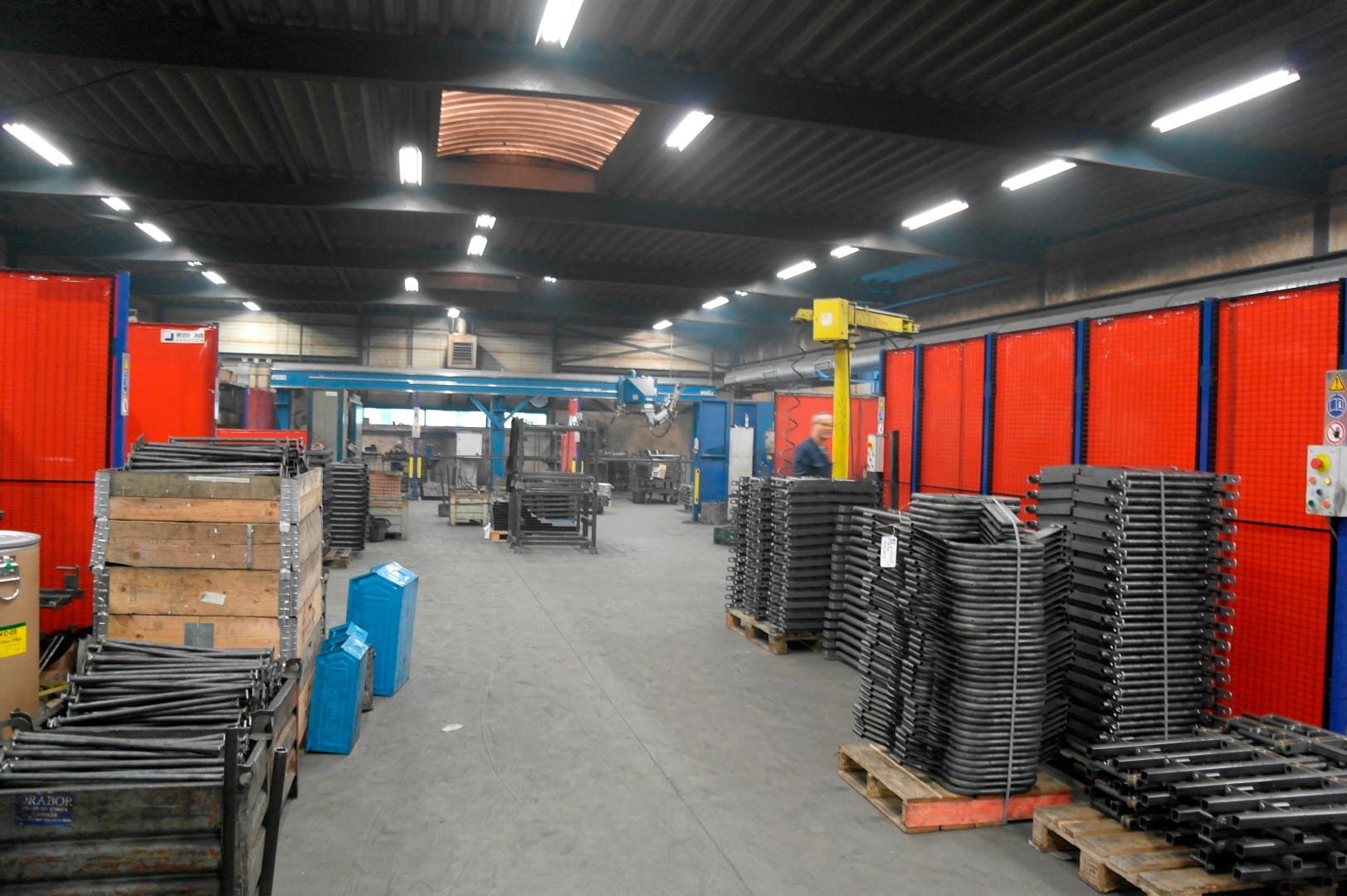
What does a BBL metalworking apprenticeship involve at a livestock housing manufacturer?
A BBL metalworking apprenticeship combines vocational education with paid employment at an approved training company. You learn on the job and usually attend college one day a week. Unlike a BOL course, the company is your employer rather than the school. That means you have an employment contract, a workplace mentor and a salary. Your college assesses the skills you develop in the workshop.
In livestock housing, you are not simply producing standard parts for an anonymous market. You make components that pig farmers use every day: farrowing pen frames, pen dividers, gates, feeding stalls and stainless steel troughs. If a measurement is wrong, the installer will notice it later on site. That quickly teaches you why precision matters.
In metalworking, you will generally start at level 2 as a metalworker or entry level welder. You can then progress to level 3, for example as a fabrication worker or sheet metal worker. Stagemarkt shows which courses a company is approved to support. For every approved training company, Stagemarkt lists the relevant courses and core tasks, such as preparing work, making or machining a product, measuring and inspecting it, then finishing and delivering it. You may follow this same process when making railings and farrowing pen frames.
For a closer look at a typical week, read the article about an apprenticeship as a metalworker and a day in the production workshop. Want to understand how to balance college, work and free time first? Read how to combine a BBL apprenticeship with working in metalworking.
Technical jobs in Uden: why are there so many roles in livestock housing?
Brabant has a strong pig farming sector, and that is reflected in the region’s manufacturing industry.
Farm sizes are growing too. Statistics Netherlands (2024) reports that the average number of pigs per farm rose by 19% in seven years, reaching 3.434. When a larger barn is built or refurbished, each project needs more pens, creating more work within a single order. Pig farmers are also moving to different systems, including free farrowing pens. These require different frames, hinges and flooring, which means the production team is constantly working from new drawings.
Skilled people do not appear out of nowhere. According to FME, Brabant faces a growing shortage of well-trained technical professionals. That is why FME, Techniek Nederland and the Province of North Brabant jointly created the Brabant Technology Coalition. What does this mean if you are just starting out? Companies would rather invest in an apprentice who is likely to stay than leave a vacancy unfilled for months.
One thing many newcomers overlook is that livestock housing involves custom work in small and medium production runs. You will change drawings more often than you would in a factory making the same component year after year. It can be more challenging at first, but it helps you learn to read technical drawings and think independently much faster. To find out what else to consider before applying, read how to find a metalworking job around Uden and what to look for before you apply.
What will you learn in the workshop, from laser cut sheet metal to a welded farrowing pen?
A farrowing pen begins as a flat sheet or tube. By the end, it is a welded frame in galvanised steel or stainless steel, ready to be installed in a barn. As a BBL apprentice, you will usually see that entire process, first as an assistant and later independently. See how the stages connect in from laser cutting to welding robot: how a farrowing pen is made at the Uden factory.
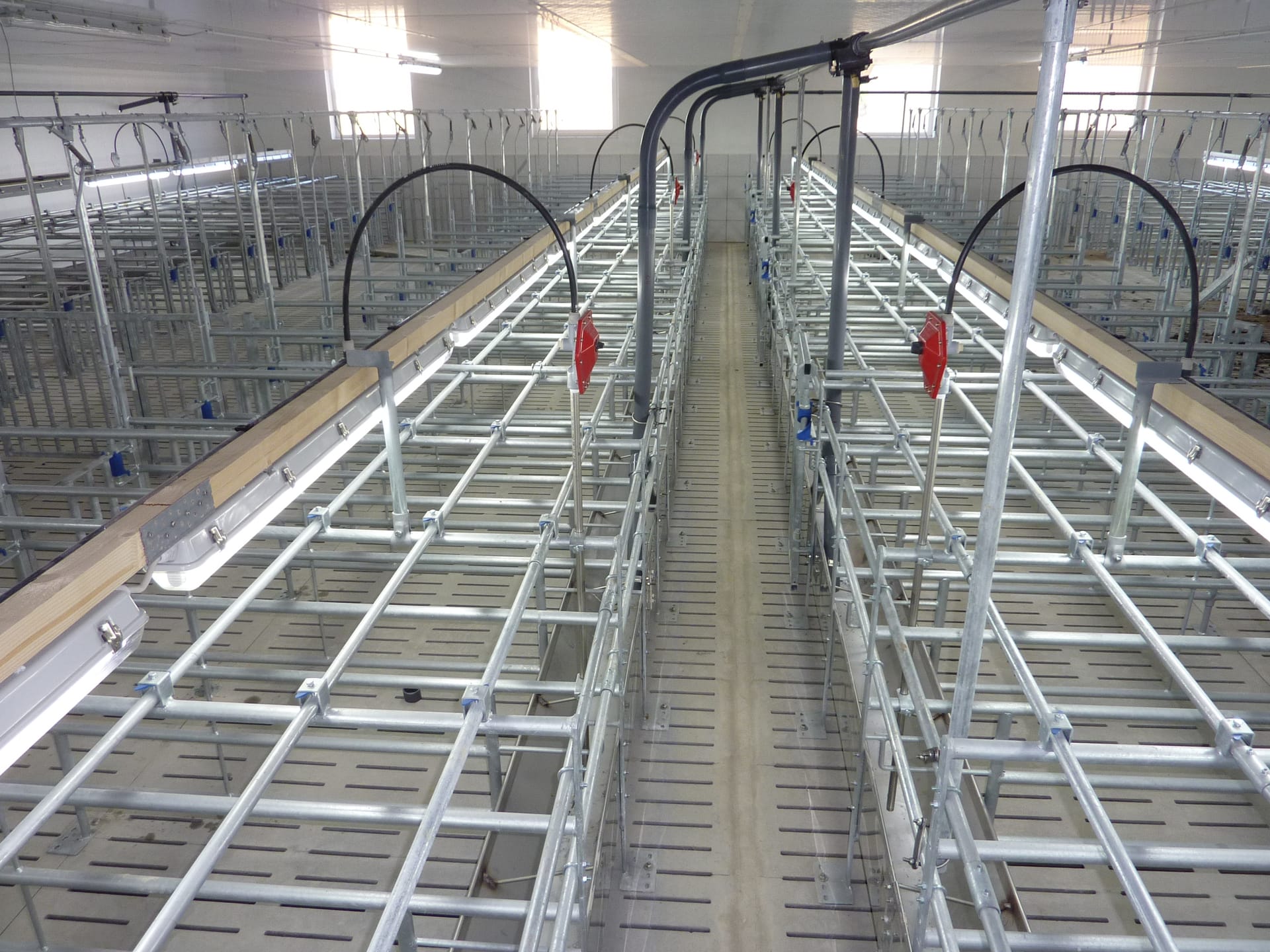
Sheet metal and tube processing
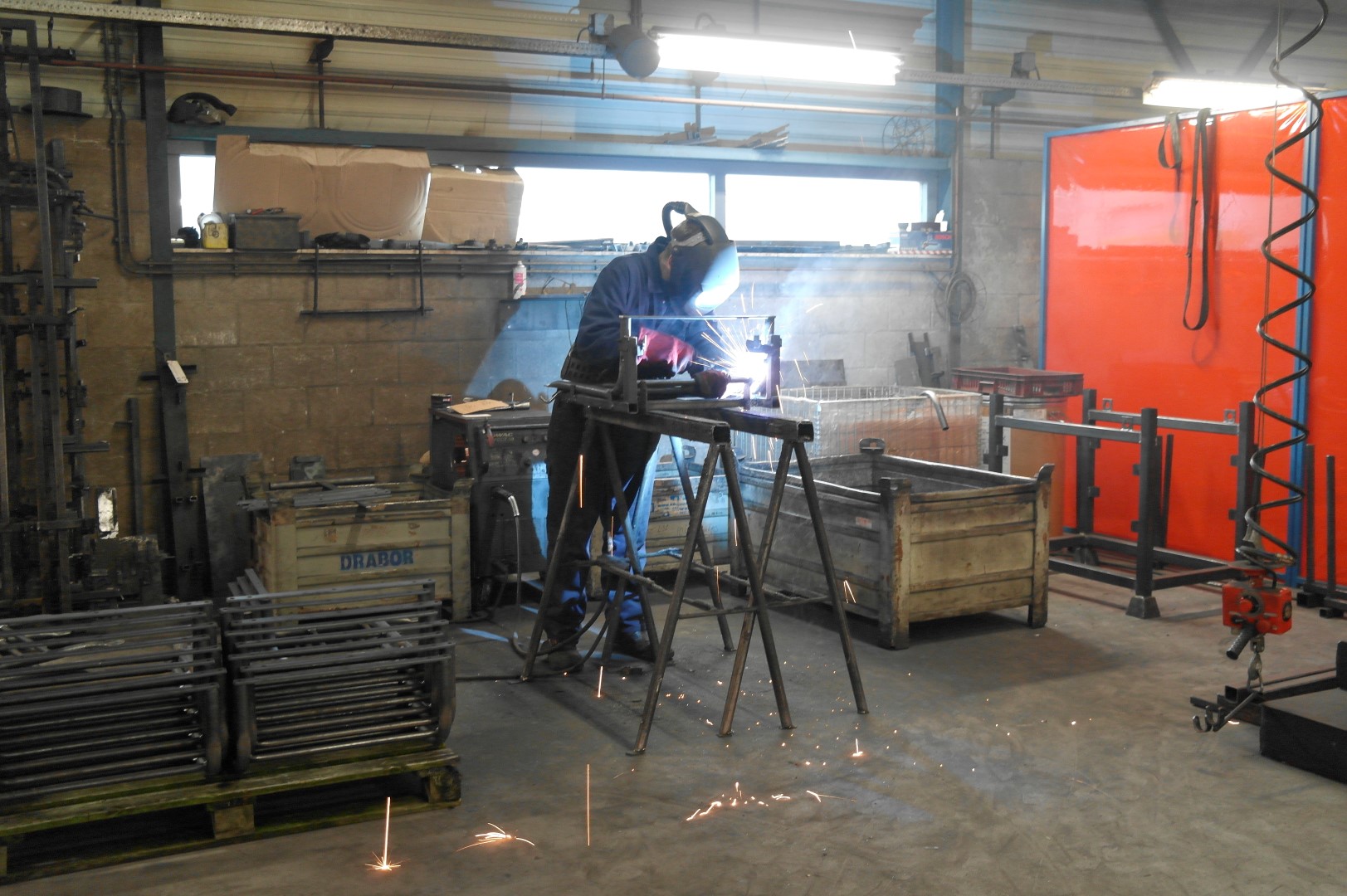
In sheet metalworking, you will usually learn to use a laser cutter, press brake and tube processing equipment. Some manufacturers in the region have a tube laser that cuts tubes to length and creates the required holes in one operation. Your job may involve loading programmes, measuring the first pieces and adjusting the machine where needed. Read which machines and techniques you will learn as a sheet metal worker to find out exactly which equipment you may operate.
Welding and assembly
During assembly, you position parts in a jig and tack them in place. A welder or welding robot then completes the seams. Manual welding remains essential for custom work and repairs. With stainless steel in particular, you need clean welds and must prevent discolouration. Not sure whether you are better suited to press brake work or welding? This comparison of a sheet metal worker and a welder or assembly worker can help you decide, even if you are currently working in a warehouse.
Some skills cannot be learned from a book. How do you keep a frame flat while welding? When should you check a measurement again? You learn that from experienced colleagues. Read how new colleagues learn hands on craftsmanship at the workbench to see how that works in practice.
Which collective agreement, working hours and support can you expect as a BBL apprentice?
You can only compare salaries properly when you know which collective agreement applies. In metalworking, this is usually the Metaal en Techniek collective agreement. Some larger industrial companies fall under the Metalektro collective agreement. Your job advert or employment contract will state which agreement your employer follows.
Salary in 2026
The current Metaal en Techniek collective agreement runs from 1 February 2026 to 31 January 2028. A 3% pay increase took effect on 1 March 2026. BBL apprentices have a separate pay scale based on their age when they start. Leerwerkplek.nl (2026) lists a gross monthly salary of €1.475 in the first training year if you start at 18, and €2.095 if you start at 20. This is based on a 38 hour working week. Amounts can vary slightly between sections of the collective agreement, so always compare them with your own contract. Once you earn your qualification and stop studying, you move to the standard pay scales under the new agreement, regardless of your age.
Working hours
Most metalworking production roles operate daytime shifts. The collective agreement is based on an average 38 hour week, although a training company may offer a contract with fewer hours. Your pay will then be adjusted proportionately. Shift work is mainly found at companies that run laser cutters or welding robots into the evening. Ask about the schedule during your interview and whether apprentices also work shifts.
Onboarding and the steps before your first day
An approved training company has a workplace mentor who coordinates your progress with the college. Your first few weeks will generally focus on safety, personal protective equipment and reading technical drawings. You will work alongside an experienced colleague. From application to your first working day, the process usually looks like this:
- You apply for a vacancy or send an open application. For apprentices, motivation matters more than a long résumé.
- You have an introductory interview, often followed by a tour of the production workshop.
- You spend a trial day in sheet metalworking or assembly.
- You enrol on a vocational course. You, the college and the company sign a practical training agreement.
- You sign your employment contract. Your workwear and safety shoes are arranged, and your first day starts with a safety briefing.
How do you choose a BBL placement that genuinely helps you progress?
Salary is not the biggest difference between apprenticeship placements. The real difference lies in the support you receive and the variety of work available. First, check on Stagemarkt whether the company is approved for your course. Without that approval, your practical training hours will not count towards your qualification.
Then ask which machines you will work on during your first three months. An apprenticeship where you only deburr and sand for six months will teach you less than one where you are operating a press brake under supervision within a few weeks. Ask about the materials too. Working with both galvanised steel and stainless steel teaches you two different approaches to welding and finishing. That makes you more versatile later on.
Think about the long term as well. Ask how many apprentices are currently employed and how many stayed after earning their qualification. Can you continue from level 2 to level 3 or 4, and will your contract continue while you study? A clear answer to those questions tells you more than a polished job advert ever could.
Imagine you are 19, currently working in a warehouse and choosing between a temporary production job and a BBL placement. The temporary role may pay more at first. With a BBL placement, you will have a qualification and a trade after two to three years, then move onto the standard pay scales. If that sounds like the right next step, the region offers apprenticeships such as this trainee metalworker vacancy. If you already have welding experience, take a look at this welder and assembly worker vacancy.
Frequently asked questions
Which collective agreement applies to a BBL apprentice in metalworking?
The Metaal en Techniek collective agreement is the most common agreement in metalworking. Some larger industrial businesses fall under the Metalektro collective agreement. Under the Metaal en Techniek agreement, you will receive the March 2026 increase, a one off gross payment of €132 in November 2026, and an additional €115 gross per month from 1 March 2027.
Will you work shifts as a trainee metalworker?
Day shifts are most common for apprentices because a workplace mentor can provide the best support during normal daytime hours. If you are under 18, Dutch working time legislation also restricts night work. Always ask about the schedule before signing a contract.
Can you do a trial day before signing a contract?
A trial day is very common in metalworking and is the quickest way to find out whether the role suits you. Pay attention to the noise levels in the workshop, working positions at the machines and how colleagues treat one another. Ask whether you can try a simple task yourself, such as measuring a component.
Do you need experience to start a BBL metalworking apprenticeship?
Experience is not required for level 2. Technical aptitude and motivation matter more. People moving from a warehouse role or another trade can also get started. From the age of 21, the statutory minimum wage applies as the minimum threshold in any case.
How many free farrowing pens has Van Osch supplied?
Ask for the current number of free farrowing pens supplied and installed, as well as the different versions available. You can also ask which barns and projects use these systems. Practical feedback from the field can support the ongoing development of these products.
A BBL placement in livestock housing is a trade, not a stopgap
When comparing technical job vacancies in Uden, look beyond the hourly rate. An approved apprenticeship, a dedicated mentor and varied custom work will determine how quickly you become a skilled professional. Always spend a trial day on the shop floor before you sign.
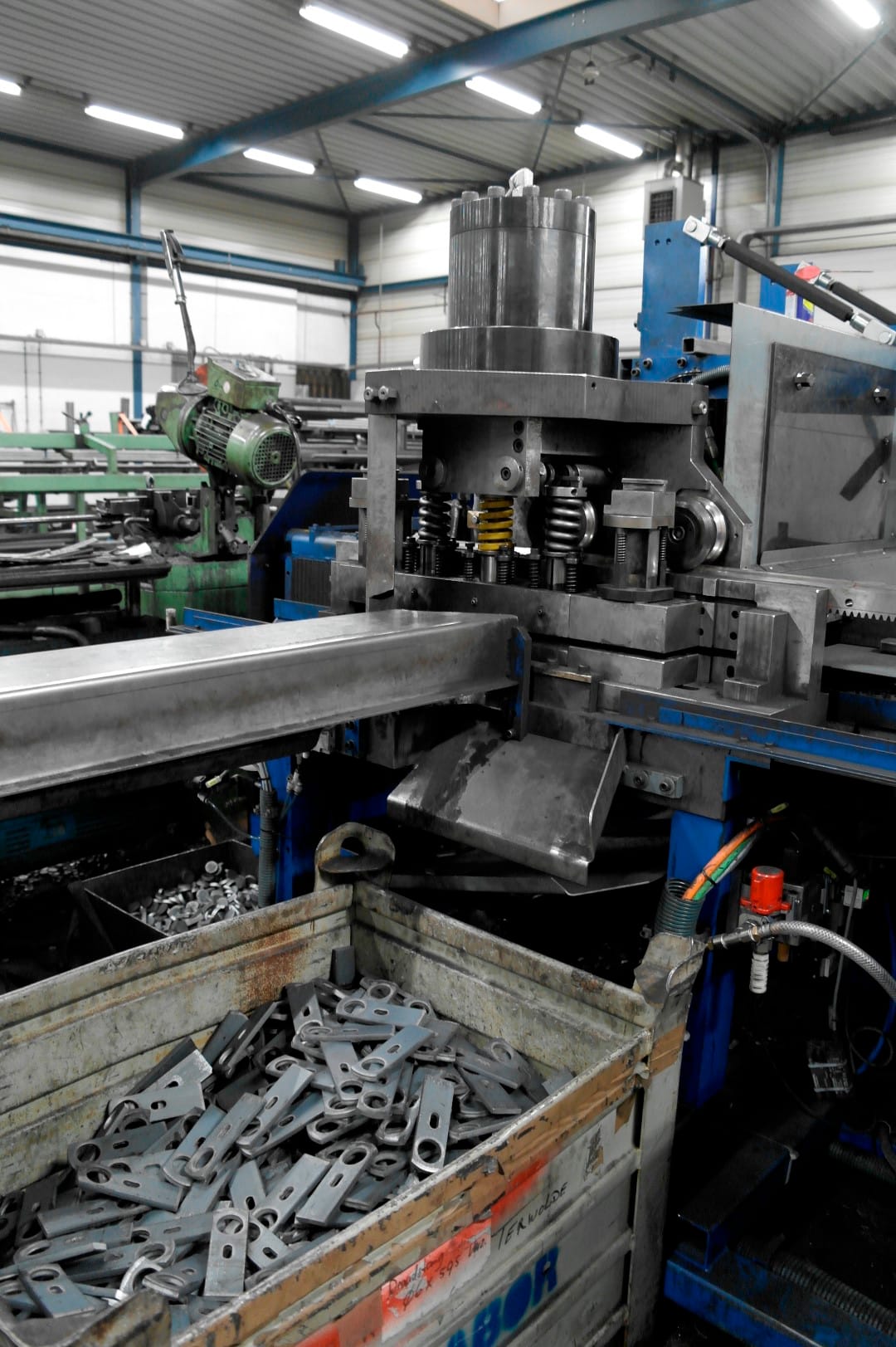
Van Osch has been a family business since 1939, manufacturing livestock housing systems for pig farming, from farrowing pens to finishing pig pens. Engineering, welding robots, sheet metalworking and tube processing are all based under one roof in Uden. Visit the careers page for more information about roles in metalworking, sheet metalworking, welding and assembly. Join Van Osch and ask if you can spend a trial day in the workshop.
Sources
- Stagemarkt
- CBS (2024) — Cbs
- FME — Fme
- 3% loonsverhoging — Mijntechcarriere
- Leerwerkplek.nl (2026) — Leerwerkplek
- Leerbedrijf Van Osch Uden B.V. in Uden — Stagemarkt.nl (SBB)
- Nederlandse varkensstapel doet weer een stapje terug — Nieuwe Oogst / CBS
- Melkveestapel iets gekrompen in 2024 — Centraal Bureau voor de Statistiek (CBS)