


Van Osch B.V. designs farrowing house systems as fully integrated, made-to-measure solutions, so the sow can lie down calmly, piglets can find warmth and space, and you can keep daily handling per animal to a minimum. The focus is never on one standalone product, but on how flooring, lighting, pen layout, and material choice work together within the legal framework, including at least 0.6 m² of solid floor or rubber mat per litter and at least 40 lux for a minimum of 8 hours a day. That practical approach shapes everything below: what really matters when planning and fitting out a farrowing house.
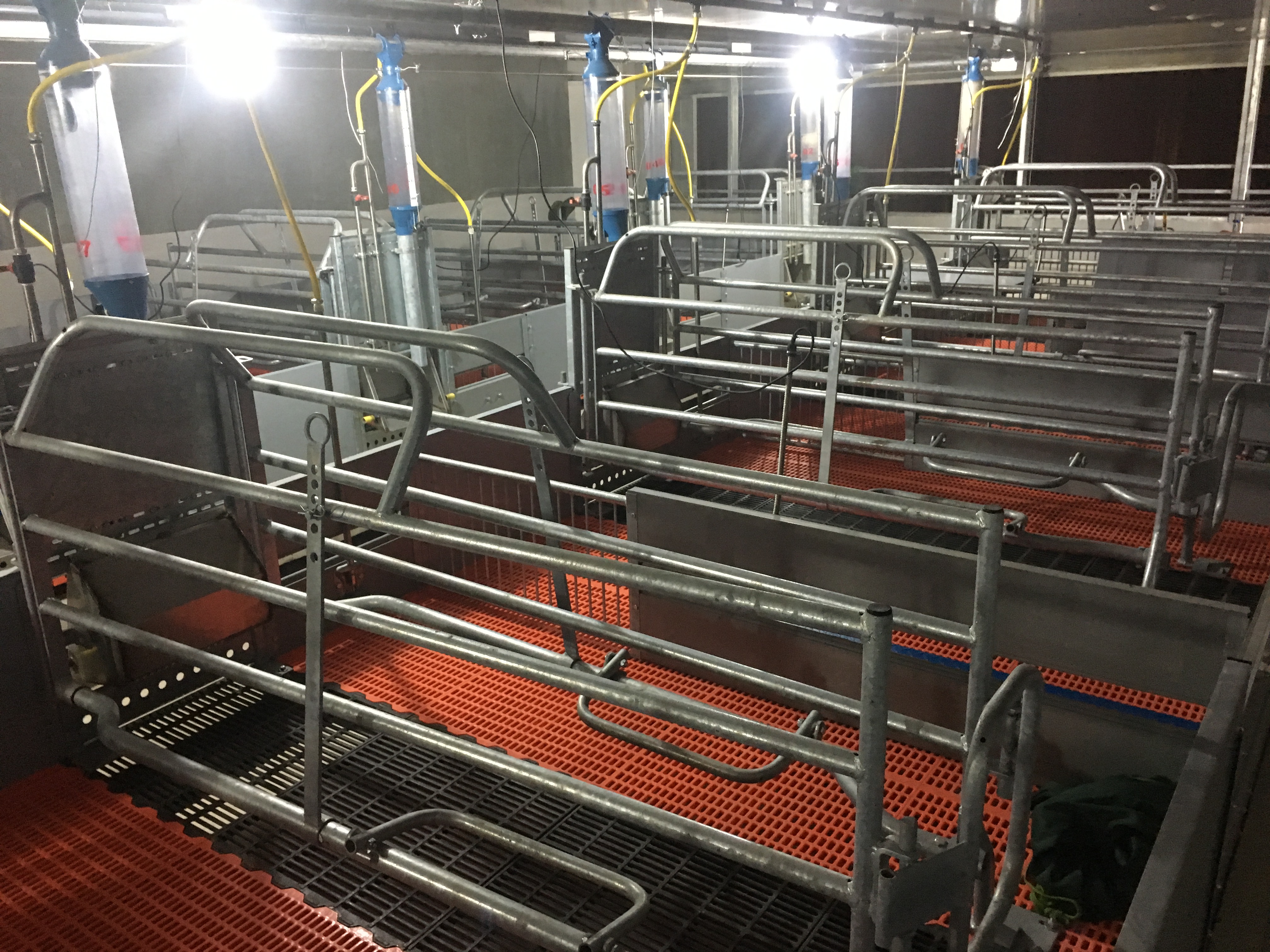
- Provide at least 40 lux for a minimum of 8 hours a day.
- Keep noise below 85 dBA, quiet-running mechanics and sound-dampening materials make a real difference.
- Pen design that slows the sow’s lying-down movement matters more than the pen type itself.
- Litter uniformity and piglet creep design both affect how many piglets make it to the teat.
- Choose materials such as steel, galvanized steel, stainless steel, or plastic based on cleanability and service life.
Introduction
In both new-build and renovation projects, Van Osch B.V. keeps hearing the same question: which farrowing pen system will still meet future requirements while also creating a calm, workable unit today? As a manufacturer and specialist in complete custom livestock housing systems since 1939, based in Uden, the company sees the farrowing house as one of the most critical parts of the farm. This is where the foundation is laid for healthy piglets and for the workload your team will live with over the next decade.
The numbers make that clear. According to NOS/Nieuwsuur, average pre-weaning mortality in the Netherlands was 13.3 percent in 2017, equal to more than 5.3 million piglets across roughly 1,500 farrowing units. A large share of those losses is linked to warmth, lying comfort, and whether the sow lies down in a controlled way. That makes farrowing pen design far more than a detail. It is a technical decision with direct impact on performance. Farms that build the unit around animal behavior and daily routine gain calmer animals, easier work, and better technical results.
What Does Good Farrowing House Design Look Like in 2026?
Picture a pig farmer with around 500 sows walking the farrowing unit during daily breeding and stock checks. In a unit where the piglet creeps are centrally positioned and the pens are easy to operate, the work per row is done in minutes. In a unit where drinkers, lighting, and heat lamps do not work together, that same routine can easily add another half hour a day.
A good farrowing house is a system where animal behavior, daily workflow, and legal standards all come together, not a collection of separate products. That systems approach determines whether the sow lies quietly, whether piglets find their warm creep area, and whether you can get through the day with as little unnecessary walking as possible.
The baseline is set by Dutch animal housing law. According to the legal requirements on Overheid.nl, piglets must have at least 0.6 m² of solid floor or rubber mat per litter, and light intensity must reach at least 40 lux for a minimum of 8 hours a day. It sounds straightforward, but in practice lighting is often underestimated. One lamp above a pen of fifteen piglets rarely delivers enough. When lighting is planned at pen level, piglets are often more active at the feeder and drinker.
What Helps Piglets Stay Healthy in the Farrowing House?
The biggest gains in a farrowing house do not come from the pen type itself, but from whether the sow is encouraged to lie down in a controlled way. Research by Wageningen Livestock Research at the Sterksel Pig Innovation Centre, covering six pen designs and 1,271 monitored litters, found that pen design did not affect the number of piglets crushed by the sow, provided the sow was forced to lie down more slowly. That is a design insight worth acting on: invest in mechanics that slow the lying-down movement, not expensive add-ons that do not change behavior.
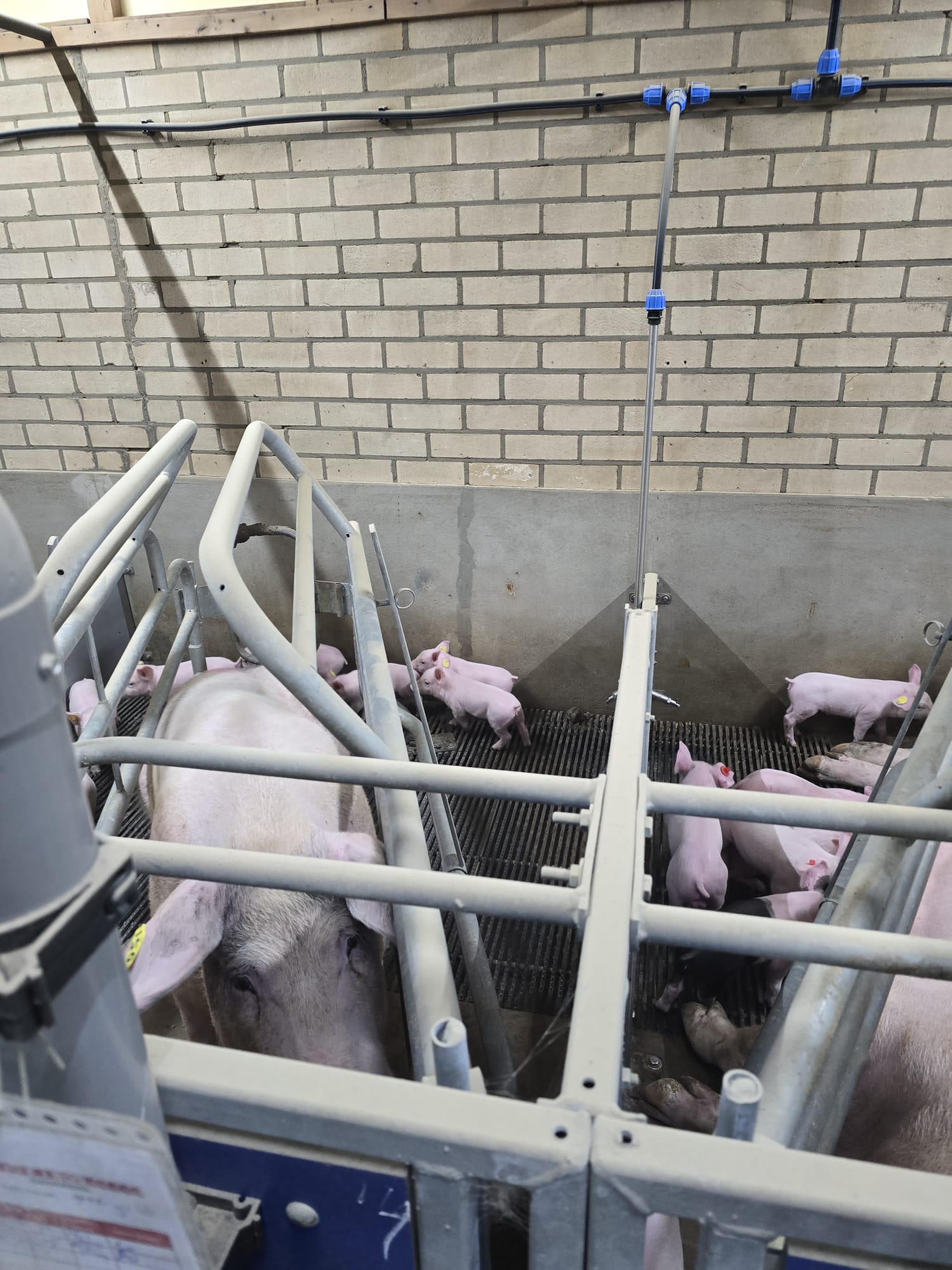
That is why, in the 2021 sow housing project in Egchel, Van Osch B.V. used coated movable slats that greatly reduce the risk of the sow lying on the piglets. It is a practical example of turning research findings into working pen design.
The Piglet Creep as a Heat Zone
Piglets look for warmth, while the sow prefers a cooler area. A farrowing pen that separates those two needs, with a sheltered piglet creep and targeted lighting, keeps piglets away from the sow when they are most vulnerable. The required 0.6 m² of solid floor or rubber mat is the legal minimum, not the finish line. What really matters is where the creep sits in relation to the pen and whether piglets can get to it easily.
Uniformity Starts with Space and Light
Belgian doctoral research at KU Leuven, through the Unipig project, shows that the number of live-born piglets per sow has risen to an average of 15.5 per litter. Larger litters often come with lower birth weights, more variation, and higher losses. More uniform litters can help reduce piglet mortality. In design terms, that means space, lighting, and accessible feed and water systems all help lighter piglets get off to a better start.
How to apply this in practice:
- Check whether each pen individually reaches 40 lux for at least 8 hours, measured with a lux meter at floor level.
- Choose a pen design that has been proven to slow the sow’s lying-down movement, rather than one that only looks good on paper.
- Position the piglet creep so piglets can reach it without having to pass the sow.
- Allow at least 0.6 m² of solid floor or rubber mat per litter, and plan extra space for large litters.
Which Legal Requirements Shape Farrowing Unit Design?
The law sets the boundaries, and those boundaries go beyond floor area alone. Alongside the 0.6 m² solid floor requirement and the 40 lux lighting standard, there is also a noise limit. In pig housing, continuous noise at or above 85 dBA, as well as constant or sudden loud noise, must be avoided.
In day-to-day practice, that noise requirement is rarely considered carefully, even though it has a direct effect on calmness in the unit. Rattling gates, slamming doors, and ventilation peaks all add up. Strong construction in steel, galvanized steel, and stainless steel, combined with smooth-running mechanics, helps keep noise down and supports a calmer sow. Checking permits and compliance remains the farmer’s job together with an agricultural adviser. The housing system then needs to translate those requirements into practical technical solutions.
Farrowing House Trends Through 2035
The farrowing house is changing. Four developments are already shaping the decisions worth making now.
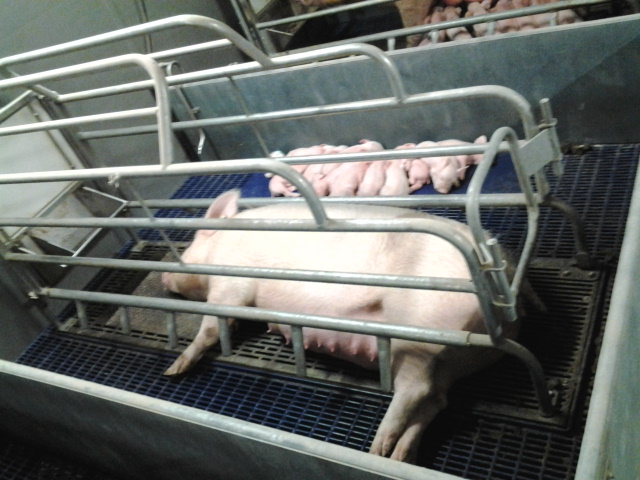
Trend 1: Free farrowing pens are becoming mainstream
Free farrowing systems, where the sow moves freely instead of being confined in a crate, are gaining ground. The difference from a conventional farrowing pen is fundamental. In a traditional setup, the sow is kept in a crate. In a free farrowing pen, she can move around within the pen. Through projects in places such as Wolferstedt in Germany and Nederweert, Van Osch B.V. has developed proven systems that line up with expected welfare rules.
Trend 2: Bigger litters need smarter creep areas
With an average of 15.5 live-born piglets per litter, attention is shifting toward creep areas that can support larger litters. More creep space, better lighting, and targeted heat sources help lighter piglets as well. Uniformity is becoming a design goal in its own right.
Trend 3: Cleanability is now a design starting point
The pressure on hygiene keeps increasing. Smooth surfaces, fewer joints, and materials that stand up to intensive cleaning are becoming standard. Stainless steel and coated slats fit that trend well.
Trend 4: Investments need to last longer
The Dutch pig herd is shrinking. According to CBS, the Netherlands had 10.6 million pigs on 1 April 2024, 2.6 percent fewer than a year earlier, partly due to the Srv and Lbv buyout schemes. For the farms that remain, the key question is simple: will every investment still earn its keep ten years from now?
What Do These Trends Mean for Your Farm?
Each trend leads to a practical choice in the unit. The rise of free farrowing means it makes sense to build in flexibility now, so a future switch does not require a complete rebuild. Van Osch B.V. supports pig farmers and dealers with advisers who know both the systems and the reality of day-to-day farm work.
The shift toward larger litters has a direct effect on the piglet creep. If you are building now, it makes sense to plan a more spacious creep with better lighting than the legal minimum requires. And the growing focus on cleanability turns material choice into a long-term business decision, not just a purchasing decision.
| Feature | Traditional farrowing pen | Free farrowing pen |
|---|---|---|
| Sow freedom of movement | Sow kept in crate | Sow moves freely in pen |
| Space required per pen | From around 4 m² | Typically 6.5 to 7.5 m² |
| Work routine in the first days | Clear and predictable | More attention needed during and after farrowing |
| Fit with new welfare rules | Limited | Better aligned with future requirements |
| Investment per place | Lower | Higher |
The table makes the trade-off clearer. A free farrowing pen needs more space and a higher upfront investment, but it is better aligned with where the sector is heading. Which option delivers the best return depends on your management style and your investment horizon. For more background, see how Van Osch B.V. approaches custom housing solutions.
How Should You Prepare a Farrowing House Project?
You do not design a farrowing house for today alone. You design it around the level of performance you want over the coming years. Start with the number of litters your unit needs to handle each year and the technical results you are aiming for. That determines pen numbers, throughput, and layout.
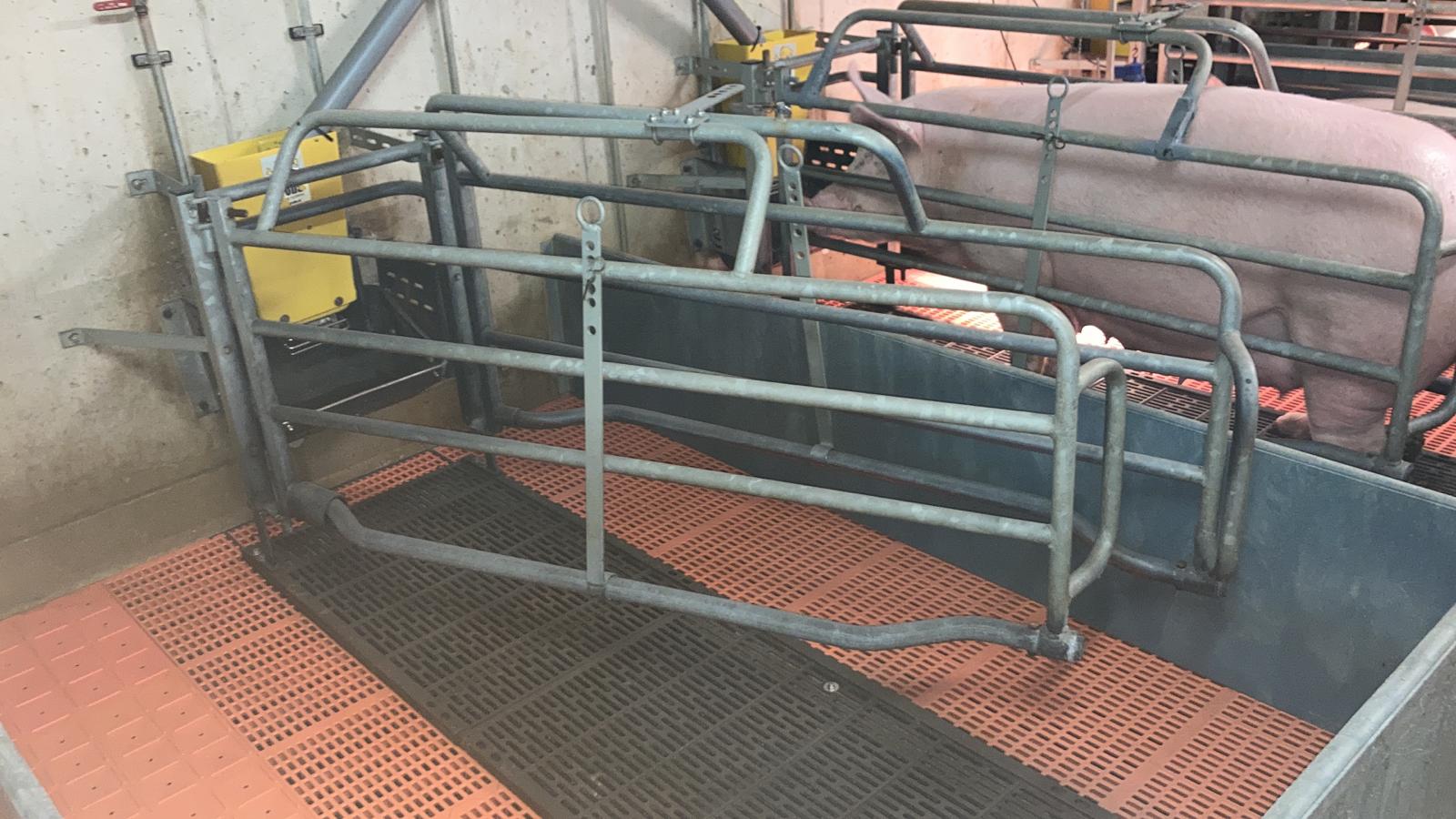
A sow unit is full of dimensions that are almost, but not quite, standard. In renovation projects, you run into columns, slurry pits, and building dimensions that do not fit a standard grid. That is exactly where in-house engineering and production make the difference. Van Osch B.V. designs, manufactures, and supplies from Uden, with short lines from drawing board to installation. Because products are developed and made in-house, slats, troughs, drinkers, and partitions are designed to work together. That greatly improves the chances that what is agreed during the quotation stage actually works on the farm floor.
Choose materials based on function and use. For guidance on weighing up stainless steel versus plastic in intensive livestock housing, the article on stainless steel or plastic pen equipment for finisher pigs is a useful starting point, including for the farrowing unit.
Think in Walking Distance, Not Individual Pens
Map out the stockperson’s daily route before finalizing the design. Where are the drinkers? Where is the piglet heat lamp? How does the pen open? Every action you design out of the system saves labor over the full working life of the building.
How to apply this in practice:
- Define the technical performance and throughput your unit should deliver over the next five to ten years.
- In renovation projects, first map the existing dimensions, including columns, pit layout, and available height.
- Select materials for each animal group based on cleanability and lifespan, not just purchase price.
- Work with one supplier who combines design, production, and installation, so every component fits together properly.
Why In-House Production in Uden Makes the Difference
With custom livestock housing, success depends on the fit between design and execution. Van Osch B.V. manufactures in Uden using its own skilled team, welding robots, Adige tube laser technology introduced in 2024, and modern sheet and tube processing. That combination delivers consistent quality and dependable lead times, even for non-standard dimensions.
Its service promise is built around the Five O’s: solution-focused, supportive, open, organized, and sincere, backed by practical commitments such as a callback guarantee within one working day. Because production is in-house, replacement parts and technical questions can be handled quickly, since the installed system is already known internally. For pig farmers and the international dealer network alike, that means short communication lines during and after the build.
Frequently Asked Questions
What is a good farrowing house system and how does it work?
A farrowing house system includes the pen, piglet creep, floor, lighting, and water supply, all designed to help the sow lie calmly and give piglets warmth and space. It works as a system: at least 0.6 m² of solid floor per litter, at least 40 lux of lighting, and a pen design that slows the sow’s lying-down movement. That combination shapes both animal behavior and your daily workflow.
How much solid flooring and light is legally required in a farrowing house?
Dutch animal housing law requires at least 0.6 m² of solid floor or rubber mat per litter of piglets, plus a light intensity of at least 40 lux for a minimum of 8 hours a day. Continuous noise levels of 85 dBA or more must also be avoided. In practice, one lamp per pen often is not enough, so lighting should be calculated at pen level.
Should I choose a traditional farrowing pen or a free farrowing pen?
The key difference is freedom of movement. In a traditional farrowing pen, the sow is kept in a crate. In a free farrowing pen, she can move freely within the pen. A free farrowing pen usually requires 6.5 to 7.5 m² per pen and a higher investment, but it is better aligned with future welfare standards. The right choice depends on your management system and investment horizon.
Which pen design reduces piglet mortality the most?
Research at the Sterksel Pig Innovation Centre shows that the pen design itself does not affect the number of piglets crushed, as long as the sow is made to lie down more slowly. So it makes more sense to invest in mechanics that slow the lying-down movement, such as coated movable slats, than in costly extras that do not change behavior. A well-positioned, warm piglet creep strengthens that effect.
How does Van Osch B.V. help with farrowing house design?
Van Osch B.V. designs, manufactures, and supplies complete farrowing house systems from Uden, backed by in-house engineering and more than 85 years of sector experience. The company turns practical farm requirements and legal standards into pen systems that help the sow lie calmly and reduce labor per animal, from traditional farrowing pens to free farrowing pens. Its Five O’s service promise, including a callback guarantee within one working day, applies to both pig farmers and the dealer network.
Conclusion
Stronger piglets and a calmer farrowing unit do not come from one single product, but from a farrowing house system where flooring, lighting, pen design, and materials all work together. The law sets the framework through the 0.6 m² solid floor requirement, the 40 lux lighting standard, and the 85 dBA noise threshold. Research shows that controlled lying-down behavior and a warm piglet creep are the real difference-makers. Farms that think in walking distance and long-term return build a unit that keeps performing.
Start with your technical targets and throughput, measure lighting at pen level, and choose materials based on cleanability and lifespan. Van Osch B.V. brings together design, in-house production in Uden, and practical sector knowledge, so the choices made on the drawing board also work in the barn.
Sources
- NOS/Nieuwsuur — Nos
- wettelijke eisen op Overheid.nl — Collegebundel
- de boxuitvoering geen invloed heeft op het aantal doodgelegen biggen — Nieuweoogst
- CBS — Cbs
- Kraamstal én sterfhuis: ruim 5 miljoen biggen halen de slacht niet — NOS/Nieuwsuur
- Besluit houders van dieren, hoofdstuk 2 paragraaf 4 — Overheid.nl / Wettenbank
- Melkveestapel iets gekrompen in 2024 — CBS
- Een lamp voor vijftien biggen is te weinig — Nieuwe Oogst