


A practical farrowing house starts with decisions for each individual zone: slatted flooring for the sow and piglets, the piglet nest, feeding and drinking points, and the route your staff take through the unit. Choose stainless steel pig housing equipment in areas where manure, feed, and water put materials under daily strain, and decide upfront whether the pen may need to be converted to loose housing later. This prevents a farrowing house from looking good on paper while adding unnecessary time to cleaning, checks, and piglet care every cycle.
Why Can a New Farrowing House Create More Work Than the Old One?
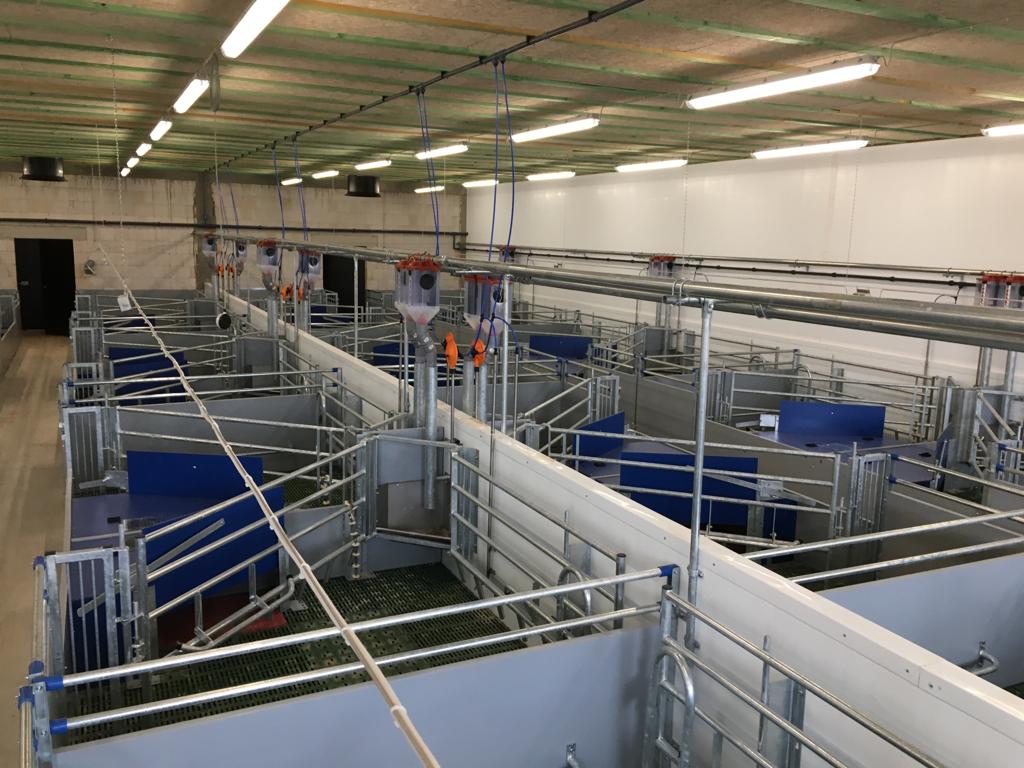
The farrowing house is the section of the farm where each animal requires the most hands on work. Checking piglets, providing supplementary feed, administering treatments, assisting a sow during farrowing, and thoroughly cleaning the whole unit after every cycle all happen in the same pen. As a result, a design mistake does not occur once. It is repeated in every pen, during every cycle.
That repetition matters even more as farms grow. According to CBS (2025), the Dutch pig population fell to 9,96 million animals, while the average number of pigs per farm rose to around 5.000. More pigs per farm means more farrowing pens for each employee to manage.
Take a unit with 40 farrowing pens. If an employee has to step over a barrier at every pen to reach the piglet drinker, it may take only half a minute per pen. Across a full cycle and several units, that becomes a fixed labour cost that could have been avoided simply by positioning the drinker differently. These details need to be resolved during the design stage, not during installation.
What Practical Bottlenecks Do You See in a Farrowing House?
When you walk through existing farrowing houses with pig farmers, the same bottlenecks keep appearing. They have little to do with the building plans and everything to do with pen layout.
- Slatted flooring that is not designed for piglets. The Rijksdienst voor Ondernemend Nederland (RVO) states that, for lactating sows with piglets, concrete slats may have a maximum gap width of 10 mm, while other slatted floors may have gaps of up to 12 mm. In housing for piglets and weaned pigs, slat widths must be at least 50 mm. A slatted floor chosen only with the sow in mind will not automatically meet those requirements.
- Cleaning that takes too long every cycle. Seams, open tube ends, and corners where manure collects all add time to every cleaning routine. Galvanised steel in manure exposed areas can deteriorate over the years, creating rougher surfaces that are harder to clean.
- Piglet feeding and drinking points in the wrong place. A piglet feeder positioned in the sow’s walking route can become contaminated or be walked around. Find out how to avoid this in the guide to choosing and positioning piglet feeders in loose farrowing pens.
- Fixed pen dimensions with no room for loose housing. The public consultation on the AMvB Dierwaardige Veehouderij includes a proposal allowing the sow to move freely during the farrowing period, with confinement limited to a short period around farrowing. A farrowing pen with no spare space rules out that option from the start.
Why Does Copying Your Old Farrowing House No Longer Work?
The quickest option often seems obvious: measure the old unit, order the same pens, and move on. In reality, that approach falls short for three reasons.
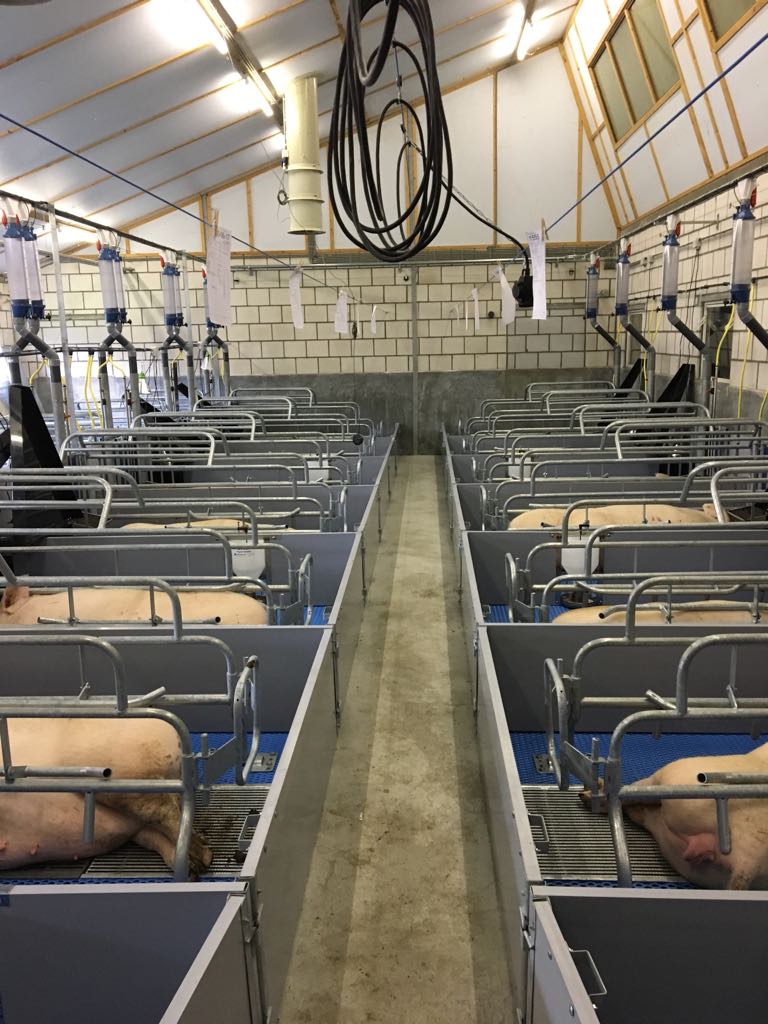
First, there is no legal minimum floor area that you can simply rely on. Varkensloket (Flanders) notes that current regulations do not prescribe a minimum area for farrowing pens, either for confined systems or loose farrowing pens. The rules only include general provisions on space behind the sow and sufficient nursing space for piglets. Copying the old dimensions therefore means repeating a choice made for a different situation. You need to establish for yourself whether those dimensions will also suit the regulations now being prepared.
Second, requirements for the barn climate are changing. According to Nieuwe Oogst (2026), from 1 January 2028, among other measures, the maximum CO2 concentration in the barn will be 3.000 ppm, while the maximum ammonia concentration will be reduced to 20 ppm from 2030. Pen layout, along with the height and density of partitions, affects how air moves through the unit. Coordinate the pen design with your ventilation specialist, rather than discovering later that a solid partition is blocking airflow.
Third, a standard catalogue pen rarely fits an existing barn perfectly. Columns, an unusual slurry pit layout, or a narrow central passage all require adjustments on site. If slatted flooring, troughs, drinkers, and partitions are also supplied by different companies, you are left carrying the risk of poor connections. Every unsealed joint becomes a place where dirt collects and a point of discussion between three different suppliers.
Where Should You Use Stainless Steel Pig Housing Equipment in a Farrowing House?
Not everywhere. The practical approach is to determine what each zone must withstand and choose the material accordingly. Stainless steel pays for itself in areas where feed, water, and manure make daily contact. According to Alurvs.nl, stainless steel is used in the food industry because it is easy to clean and its inert surface does not release substances. Those same qualities make stainless steel pig housing equipment a strong choice for troughs, piglet feeders, and drinkers.
| Zone in the farrowing pen | What the material must withstand | Practical consideration when choosing |
|---|---|---|
| Sow trough and feeding area | Wet feed residue, daily cleaning | Seamless stainless steel trough with no areas where feed can build up |
| Piglet feeder and drinking point | Small feed portions, contamination from piglets | Position outside the sow’s walking route, use stainless steel for hygiene |
| Slatted flooring for sow and piglets | Manure, urine, claw wear | Gap and slat dimensions in line with RVO requirements, coated or plastic in the piglet area |
| Pen partitions | Splashing water, abrasion, pressure washing | Plastic panels with stainless steel or galvanised profiles, smooth finish |
| Piglet nest | Heat, dryness, minimal manure | Solid, easy to clean floor and a cover that can be opened with one hand |
This layout directly addresses the bottlenecks described above. Choose slatted flooring for both the piglets and the sow. Cleaning time generally falls when seams and corners are removed from manure exposed areas. Feeding and drinking points are positioned outside the walking route, while pen dimensions do not prevent a future move to loose housing. For a more detailed comparison by zone, read the article on plastic or stainless steel in piglet housing.
A new sow unit in Egchel (2021) shows how flooring choices work in practice: Van Osch fitted the farrowing pens with coated movable slats, making it virtually impossible for the sow to lie on the piglets.
How Do You Design a Farrowing House Step by Step?
Start with the work itself, not the price per pen. This sequence helps you make the right decisions at the right time.
- Walk through a complete cycle with your employees. From moving sows in to weaning, where do they stand, what do they pick up, and what do they have to step over? Record every task that is currently awkward. That list becomes your design brief.
- Decide on your future direction. Do you want loose farrowing pens now, or a pen that can be converted later? This determines pen width and length, and therefore how many farrowing places fit in your barn. The article on loose farrowing pens in 2026 explains how to bring those requirements together in one coherent barn plan.
- Specify the slatted flooring before the pen layout. RVO gap and slat dimensions, materials for each zone, and the connection to the slurry pit all determine where pen partitions can be installed.
- Choose materials by zone. Use the table above as a starting point and ask about the expected lifespan of every component in your own conditions.
- Involve the ventilation specialist in the pen layout. Have them assess how partitions and the piglet nest affect airflow, with the CO2 and ammonia requirements in mind.
- Request a trial pen or a dimensionally accurate drawing of one pen. Correcting an error in one pen takes an afternoon. The same error in forty pens can cost you an entire cycle.
When renovating an existing barn, step 3 is often the limiting factor. Start by having the slurry pit and column positions measured. In that situation, custom pig housing equipment is not a luxury. It is the only way to make the pen fit around the existing structure.
Frequently Asked Questions
Is there a legal minimum size for a farrowing pen?
Floor area requirement: no, current regulations do not prescribe a minimum floor area for farrowing pens, including loose farrowing pens. However, there must be space behind the sow and enough nursing space for the piglets. Choose dimensions that support your future plans, rather than the smallest size that appears acceptable today.
Does the entire farrowing house need to be fitted with stainless steel?
Materials by zone: that is rarely necessary. Stainless steel adds the most value for troughs, piglet feeders, and drinkers, where feed and water are in daily contact with the surface. For pen partitions, plastic panels with stainless steel or galvanised profiles are often a practical combination.
Can I convert an existing farrowing house to loose housing later?
Future conversion: this depends mainly on barn width, the slurry pit layout, and the slatted flooring. Pens designed with a little extra space generally offer more options for future conversion. Have this assessed before ordering the slatted flooring, as it is the most difficult component to alter later.
Who should be involved in designing a farrowing house?
Design team: in addition to the pig farmer, bring in the employees who work in the barn every day, the ventilation specialist, and the pig housing equipment manufacturer. Employees spot workflow issues that are not visible on a drawing. The earlier everyone is involved, the fewer adjustments will be needed on site.
What is the risk of sourcing pig housing equipment from different suppliers?
Connections: the greatest risk lies in the transitions between slatted flooring, partitions, troughs, and drinkers. A joint that does not close properly adds time to every cleaning session and can lead to disputes over responsibility. Having one point of contact for the entire pen layout reduces that risk.
Where Should You Start With Your Farrowing House?
Start by walking through your current farrowing house and listing every task that takes extra time. Then determine, zone by zone, where stainless steel pig housing equipment will genuinely add value. Following that order helps you design a farrowing house that works for piglets, sows, and the people working there every day.
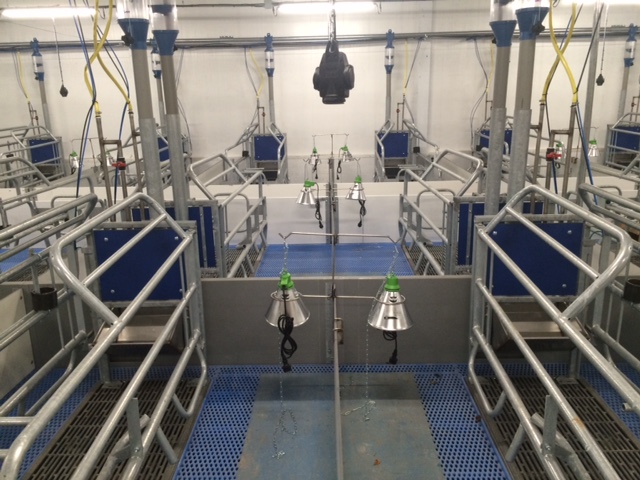
Van Osch designs and manufactures custom farrowing pens and loose farrowing pens in steel, galvanised steel, stainless steel, and plastic in Uden, tailored to your barn dimensions and working methods. Guided by the Five O’s, solution focused, supportive, open, organised, and sincere, its advisers work with you from the first sketch through to completion and beyond. Explore the options for farrowing pens for sows and request advice for your own farrowing house.
Frequently Asked Questions About Stainless Steel Pig Housing Equipment in Farrowing Houses
Is stainless steel always necessary in a farrowing house?
No. Stainless steel is particularly valuable in areas that are cleaned intensively, exposed to high levels of moisture and manure, or where hygiene and a smooth, hard wearing surface matter most. This includes drinking water systems, feeders, troughs, partitions, and components around the piglet nest. Galvanised steel or plastic can be a suitable choice for other parts.
What is the advantage of stainless steel over galvanised steel?
Stainless steel stands up well to moisture, cleaning agents, and corrosion. Its smooth surface makes it harder for dirt to stick, so components are easier to clean. Galvanised steel is often a practical, cost effective solution for load bearing structures and components with less direct exposure to water and manure.
How can I prevent sharp edges in a farrowing pen?
Choose rounded tubing, neatly finished welds, and transitions that fit together without gaps. During the design process, inspect not only visible components but also the undersides of troughs, fixing points, and connections at floors and walls.
Can a farrowing pen be adapted to existing barn dimensions?
Yes. Custom manufacturing makes it possible to tailor pen width, length, the position of feeding and drinking facilities, the piglet nest, and working space to the existing barn. This is especially important in renovations, where columns, slurry channels, ventilation, and slatted flooring are often already fixed in place.
Which areas need extra attention during cleaning?
Pay particular attention to the connections between pen partitions, flooring, troughs, drinkers, and walls. Hard to reach corners under feeders or behind protective rails also need consideration. An open, uncluttered construction makes cleaning faster and inspection easier.
When is a loose farrowing pen suitable?
A loose farrowing pen can be a good fit if you want to give the sow more freedom of movement while still working safely during farrowing and piglet care. The best practical arrangement depends on your farm management, available space, management approach, and how you want to use the pen during different stages.
Conclusion
A well designed farrowing house does not begin with materials alone. It begins with everyday work: feeding, checking, cleaning, treating, and moving animals. Stainless steel pig housing equipment can help create a hygienic, durable, and clearly organised workspace, provided the layout is logical and suits your barn and working methods.
By identifying critical zones, connections between components, and the space needed for people, sows, and piglets in advance, you avoid solutions that look right on paper but cost time in practice. A well considered farrowing pen is ultimately an investment in calm, safety, and long term efficiency.
Sources
- CBS (2025) — Cbs
- Rijksdienst voor Ondernemend Nederland (RVO) — Rvo
- internetconsultatie van de AMvB Dierwaardige Veehouderij — Internetconsultatie
- Varkensloket (Vlaanderen) — Varkensloket
- Nieuwe Oogst (2026) — Nieuweoogst
- Alurvs.nl — Alurvs
- Welzijnseisen voor varkens — Rijksdienst voor Ondernemend Nederland (RVO)
- Normen voor (vrijloop)kraamhokken? — Varkensloket (Vlaanderen)