


At a glance
When piglets are wasting water at their drinkers, the cause is almost always a combination of mounting height, flow rate and pen location, rather than the make or material of the drinker. The Flemish Government’s practical guide on agriculture and fisheries states that drink bowls and nipple drinkers should be set to suit the size of the animals, as an awkward drinking posture leads to spillage. If the drinker is positioned over solid flooring or right beside the lying area, spilled water ends up in the resting space rather than draining through slatted flooring. Check the height and flow rate first, then consider changing the system.
Key takeaways
- The height of drink bowls and nipple drinkers must match the size of the animals. An uncomfortable drinking posture causes water spillage (Flemish Government, Agriculture and Fisheries).
- For weaned piglets, the recommended flow rate for nipple drinkers is around 500 ml per minute, with no more than 10 piglets per nipple (Varkens.nl, 2021).
- Allow at least 1 drinking point per 10 animals, preferably at least 2 per group to provide a backup if a drinker becomes blocked or dominant animals prevent access. More than 20 pigs per nipple is not recommended (Varkensloket).
- Anti-spill drink bowls feature a large bowl and a side-mounted pressure valve rather than a central valve. Use a pressure regulator to set the flow rate for each animal category.
- Providing sufficient drinking-quality water at all times is a legal requirement. Leaking nipples and cracked pipes should be repaired immediately.
Why is the weaner unit wet while the water meter keeps climbing?
You walk through the unit after weaning. The slatted floor beneath the drinker looks thoroughly rinsed, yet the lying area feels damp and piglets are spread out along the pen walls. The water meter shows consumption that does not match the growth you are seeing on the scales. That gap between water consumed and water disappearing is where the problem lies.
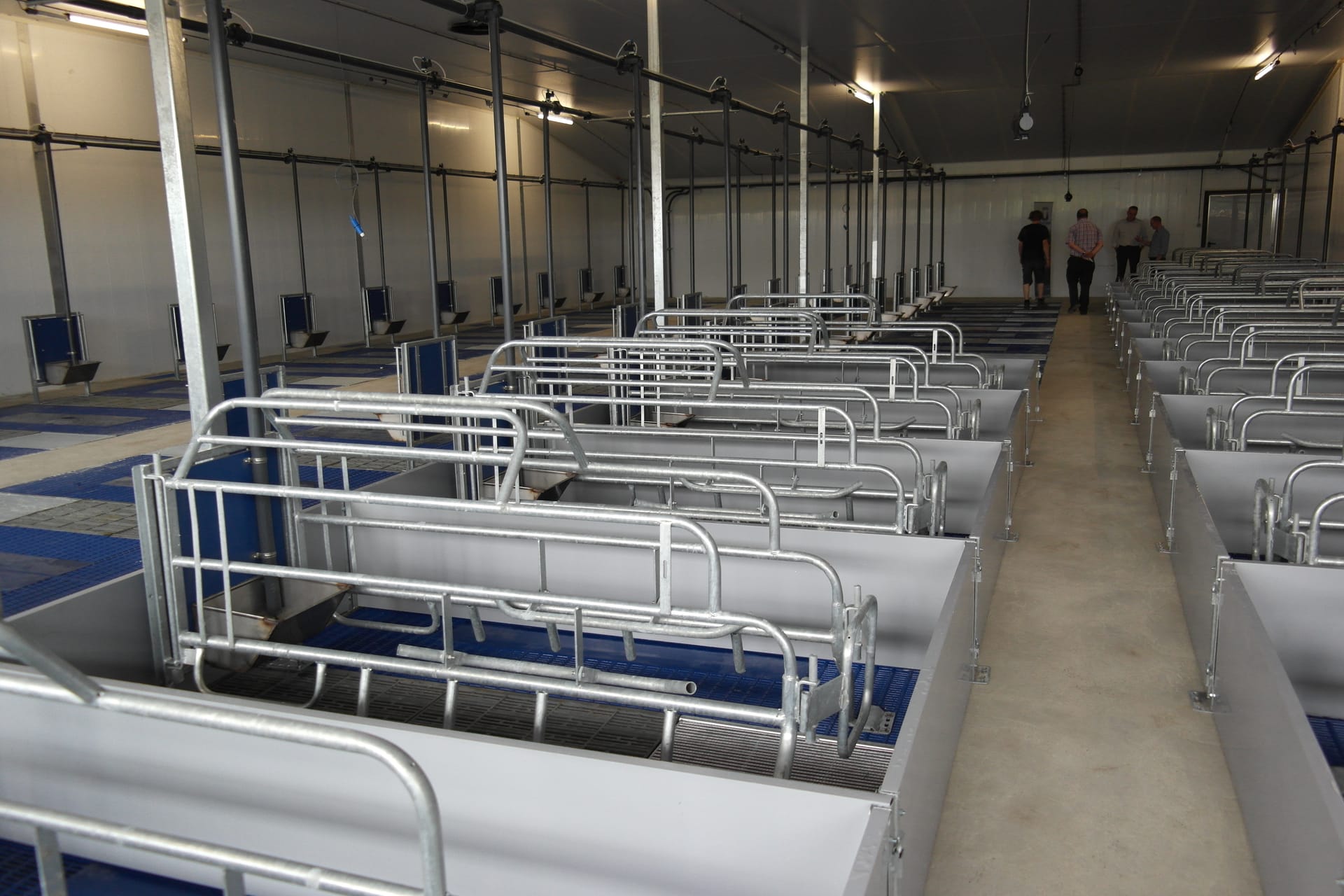
A piglet that has to stretch too high drinks with its head raised, allowing water to run from the corners of its mouth. A piglet forced to bend too low will push its snout into the bowl and splash water over the rim. Either way, the figures tell the same story: rising water use with no improvement in growth.
At Van Osch B.V., one issue often stands out during refurbishment projects: drinkers are frequently fitted where the existing water pipe happens to emerge, rather than where piglets can use them properly. In new buildings, pipework is fixed on the drawings. During renovations, installation convenience can too easily take priority over the pen layout. It is a five-minute decision that can affect the entire production cycle.
A wet lying area costs more than wasted water. Piglets move to find a dry spot, which means they lie closer together. Climate control in the unit becomes harder to manage. Cleaning between batches takes longer because manure and spilled water end up mixing in areas where they should not.
What determines whether a piglet drinks or spills water?
Water spillage in piglets is nearly always caused by a mismatch between drinking height, water flow rate and the drinker’s position in the pen. These are three factors you can check and correct separately.
Height: a moving target after weaning
A newly weaned piglet weighing 7 kilos and that same piglet at 25 kilos at the end of the batch do not need the drinker at the same height. That is the heart of the issue. You set the drinker for one point in the cycle, while the animal grows considerably over six to eight weeks. Adjustable mounting is not a luxury, it is essential for practical day-to-day management. In most cases, it pays to carry out a mid-cycle inspection and adjust the drink bowls.
Flow rate: too much water is just as problematic as too little
For weaned piglets, the target flow rate is around 500 ml per minute (Varkens.nl, 2021). The Flemish Government’s practical guide specifically notes that excessive flow rates waste water in young animals, and that flow should be adjusted by animal category using a pressure regulator. Measure it with a measuring jug and stopwatch in every unit, not once for the whole building.
Placement: where does spilled water end up?
Even when height and flow rate are right, a piglet will always spill some water. The important question is where that water lands. A drinking point installed over slatted flooring, away from the lying area and not directly next to the feed trough, helps keep the resting area dry. When it is placed beside the trough, spilled water mixes with feed residues, increasing the risk of contamination and blockages.
What to do:
- Measure piglet shoulder height when they enter the unit and again halfway through the cycle. Set the drinker to suit the animals, rather than relying on a fixed measurement.
- Measure flow rate in each unit with a measuring jug. If it differs significantly from the recommended 500 ml per minute for weaned piglets, adjust the pressure regulator.
- Inspect the floor after pigs have left the pen. A clean patch beneath the drinker and a damp patch in the lying area point to poor placement.
- Check that every pen has at least two drinking points, so one blocked nipple does not affect the whole group.
Drink bowl or nipple drinker: which option suits a weaner unit?
This decision is often based on unit price, and that can be the most expensive way to choose. A nipple drinker is the easiest option to install, but with young animals it also creates the greatest risk of water missing the mouth. An anti-spill drink bowl takes up more pen space and needs more attention during cleaning, but it does a better job of keeping water in the bowl.
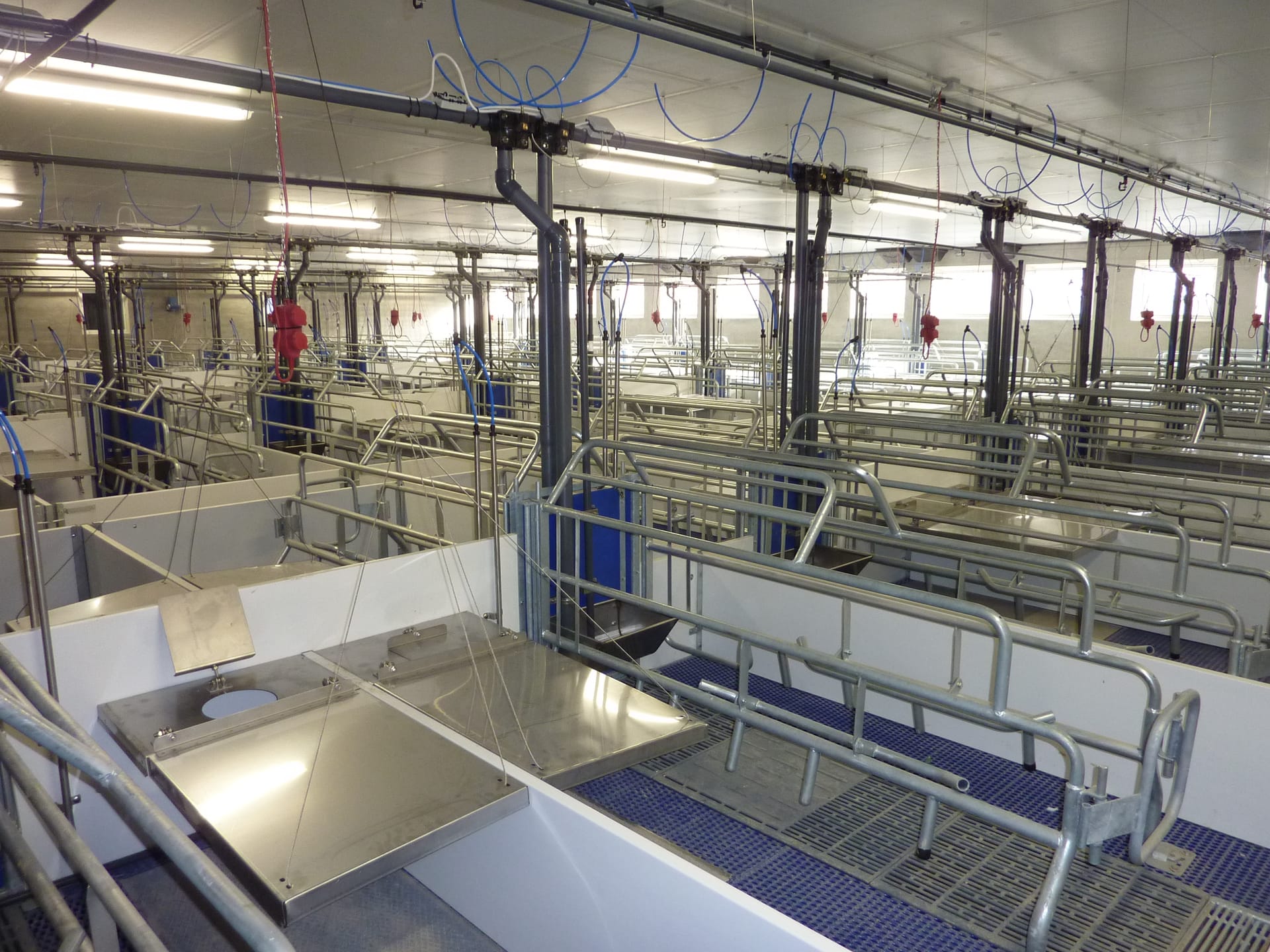
The main options compare as follows:
| Type | Flow rate setting | Drinking points per group | Risk of spillage in weaned piglets | Cleaning between batches |
|---|---|---|---|---|
| Standalone nipple drinker | Pressure regulator per unit, target around 500 ml/min | Min. 1 per 10 animals, preferably 2 per pen | High when incorrectly positioned | Quick, minimal surface area |
| Nipple drinker above a bowl | Same regulator, bowl catches spills | Min. 1 per 10 animals | Medium | Check the bowl daily |
| Anti-spill drink bowl, side valve | Pressure regulator required for each animal category | 1 bowl per 10 animals as a rule of thumb | Low | Larger bowl, more attention needed |
| Combined drink bowl and feed trough | Same as drink bowl | Depends on trough length | Low to medium | Feed residues may collect in the bowl |
Anti-spill drink bowls have a large drinking bowl and a pressure valve positioned to the side rather than in the centre, so piglets do not press directly against the water jet. In practice, that detail makes a bigger difference than changing the material. The question of which material lasts longest is a separate consideration. You can find a dedicated comparison in our guide to the service life of drink bowls by material.
One note on drinker numbers. A ratio of at least 1 nipple per 10 animals is recommended, particularly for piglets and where dry feed is used. At least 2 drinking points per group are preferable as a backup against blockages, breakages or dominant animals restricting access (Varkensloket). More than 20 pigs per nipple is not recommended. A single drinking point in a pen is therefore a risk even when there is no spillage issue.
What checks should be part of your regular weaner unit inspection?
Take a pig farm with around 400 sows and a weaner unit operating two batches per pen. The farmer notices water use in one unit is consistently higher than in the others, while growth is falling behind. On checking, the flow rate in that unit is well above the guideline for weaned piglets, and the drink bowls are still mounted at the height used for the previous, heavier batch. Once the pressure regulator and mounting height are adjusted, the lying area will generally dry out within a few days and water use will move closer to that of the other units. It is an illustrative example, but a familiar pattern.
Drinking point checklist for the weaner unit:
- Check height for every batch: Set the bowl for the current animals, not the previous batch, because an incorrect drinking posture is a common cause of spillage.
- Measure flow rate with a measuring jug: The guideline for weaned piglets is around 500 ml per minute. Correct deviations using the pressure regulator.
- Provide two drinking points per pen: A second point provides cover for blockages, breakages and displacement by dominant animals.
- Check the position relative to the lying area: Install the drinking point over slatted flooring and away from the route leading to the lying area.
- Maintain distance from the feed trough: Prevent spilled water and feed residues from building up in the same corner.
- Fix leaks immediately: Cracked pipes and leaking nipples should be repaired without delay. Sufficient drinking-quality water must also be available at all times by law (Varkensloket).
- Check mountings for movement: A bracket that has worked loose can gradually alter the drinker’s height during the batch.
What to do:
- Make flow-rate testing part of your standard inspection when a new batch arrives, rather than treating it as a separate task.
- Record water use per piglet per day for each unit and compare units with one another. The outlier will point you towards the problem pen.
- If consumption is unusually high, check height first, then flow rate, then placement, in that order.
- Where leaks keep recurring, do not just replace the nipple. Check the water pressure in the line behind it as well.
Which drinker placement mistakes cost the most when piglets waste water?
The biggest mistake is treating the drinking point as a standalone item rather than part of the overall pen layout. At Van Osch B.V., the positions of the drink bowl, feed trough and lying area are therefore established in the same design stage as the slatted flooring and pen divisions. This ensures that the pipework follows the layout, rather than the other way around. The same approach is used for custom livestock housing solutions, where the dimensions of the existing building are the starting point.
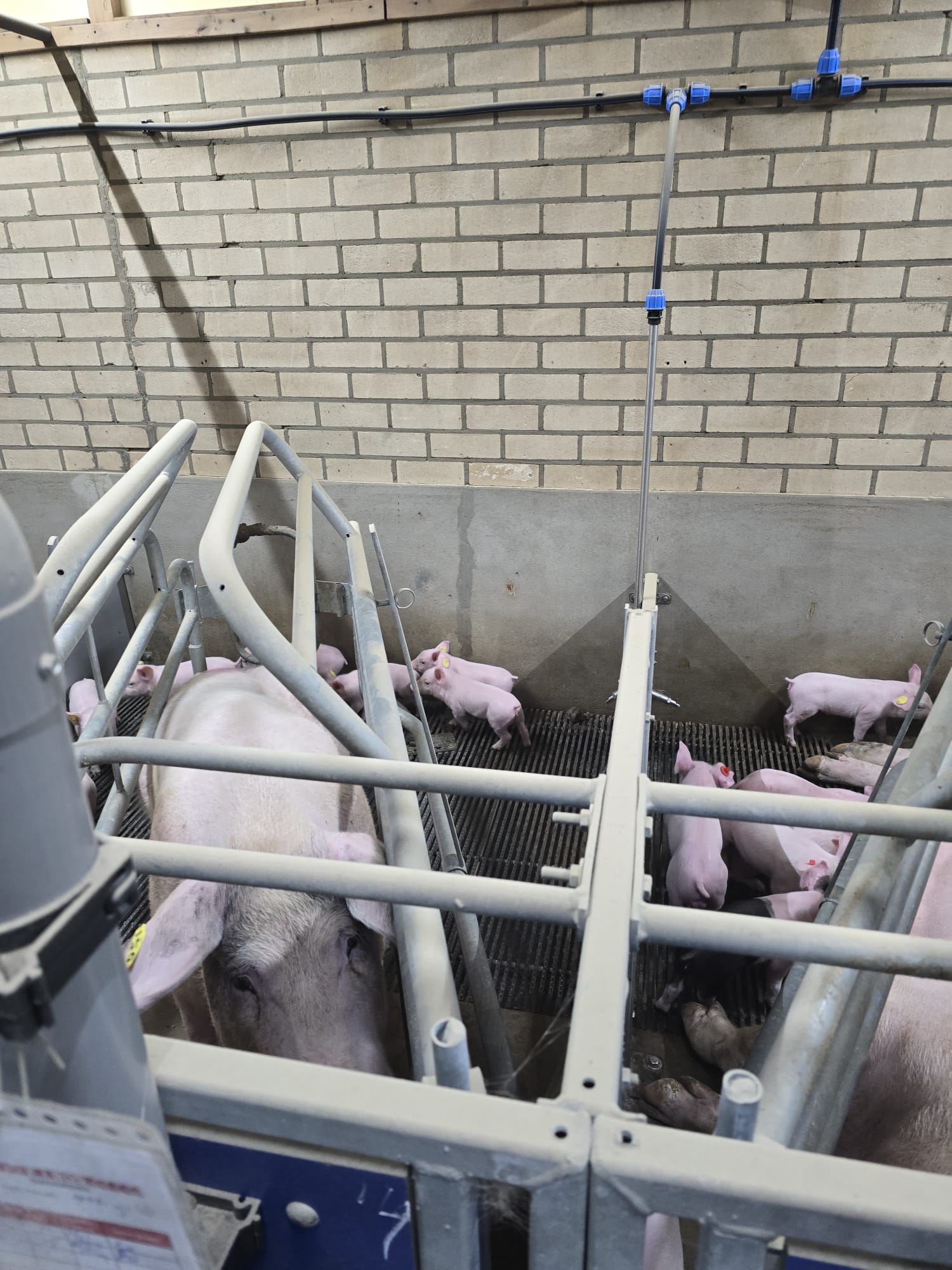
Two other mistakes occur regularly. First, setting every unit to the same water pressure because it is convenient from an installation perspective. Farrowing sows, piglets and finishing pigs each need their own setting. Second, placing the drinker so close to the pen division that a dominant piglet can block access. The smallest animals in the group then drink less, even though they are the ones that need water most.
There is also one persistent misconception: that a higher flow rate helps piglets drink faster. In fact, the opposite happens. A jet that is too strong pushes against the mouth, the piglet pulls away and water ends up on the floor. The same principle applies in the farrowing house, where pen layout and practical usability must also be balanced, as explained in our guide to a calmer farrowing house with stronger piglets.
What to do:
- Set the position of drinking points on the pen drawing before water pipes are installed.
- Adjust pressure by animal category and label the regulator for each unit.
- Keep at least half a metre of clear space around the drinking point to reduce the chance of animals being pushed aside.
- When changing a pen layout, check that the drinking point is above slatted flooring rather than solid flooring.
Frequently asked questions
How high should a drink bowl be mounted for weaned piglets?
Animal size determines the correct height. Drink bowls and nipple drinkers should be set to suit the size of the animals, as an awkward drinking posture causes spillage (Flemish Government, Agriculture and Fisheries). Because piglets grow substantially during a single batch, adjustable mounting is generally more practical in a weaner unit than a fixed installation height. Plan one adjustment halfway through the cycle.
How many drinking points do I need in a piglet pen?
At least 1 per 10 animals, preferably 2 per group. This ratio is recommended particularly for piglets and when dry feed is used, with at least two drinking points providing backup in case of blockages, breakages or dominant animals restricting access (Varkensloket). More than 20 pigs per nipple is not recommended. One drinking point per pen means a fault immediately affects the entire group.
Why is my water consumption rising without better growth?
Water is probably being spilled or lost through leaks. First, measure the flow rate in each unit. For weaned piglets, the recommended rate is around 500 ml per minute (Varkens.nl, 2021). Then check drinker height and pipework. Cracked pipes and leaking nipples should be repaired immediately. Compare units to identify the outlier.
Does an anti-spill drink bowl really work better than a standard nipple drinker?
The valve position is what makes the difference. Anti-spill drink bowls have a large bowl with a side-mounted pressure valve rather than a central one, so the piglet does not drink directly against the jet. The flow rate still needs to be set for each animal category using a pressure regulator, otherwise the benefit will be limited. Expect to spend a little more time cleaning between batches.
How does Van Osch B.V. approach drinking point placement during a renovation?
The drinking point, feed trough, lying area and slatted flooring are planned together. Van Osch B.V. measures the existing building and develops the pen layout before the water pipework is finalised, ensuring that the pipework follows the layout rather than the other way around. Because design, engineering and production are all handled under one roof in Uden, dimensions and mountings can be tailored for each unit. This avoids unnecessary coordination between multiple suppliers during a renovation.
Conclusion
If piglets are wasting water at their drinkers, do not start by ordering different bowls. Start with three checks: the mounting height for the current animal size, the flow rate in each unit using a measuring jug, and the location of the drinking point relative to the lying area and feed trough. Only when these three factors are correct and spillage continues does a different option, such as an anti-spill drink bowl, become the logical next step.
Start with a practical first step: inspect one unit this week, record the measured flow rate and compare its water use with a similar unit. If one stands out, you know where to make changes. When renovating or planning a new layout, it pays to include drinking points on the drawing alongside the pen layout. This is the approach used in Van Osch B.V. projects in the Netherlands and abroad.
About Van Osch B.V.
Van Osch B.V. is a Dutch family business based in Uden, founded in 1939. The company designs, manufactures and supplies complete custom livestock housing systems for pig farming. Its range includes pen systems for sows, farrowing sows, piglets and finishing pigs, manufactured in steel, galvanised steel, stainless steel and plastic. Van Osch B.V. serves pig farmers and dealers throughout Europe and beyond, both directly and through an international dealer network.
Sources
- Varkens.nl, 2021 — Varkens
- Varkensloket
- Zuinig omspringen met water en water besparen in de varkenshouderij — Vlaamse Overheid, Landbouw en Zeevisserij
- Drinkwatervoorziening: een essentieel onderdeel van de hokinrichting voor varkens — Varkensloket
- Wateropname bij gespeende biggen — Varkens.nl