


The short answer
Van Osch B.V. often sees pig farmers focus on the purchase price when replacing drinking bowls, even though it says little about what they will cost over the next ten years. When choosing pig drinking bowl material for long-term value, stainless steel is usually the best choice in farrowing units and for sows. It experiences very little wear, will generally not need replacing within that period and can often be reused when converting to a free farrowing pen. Plastic is cheaper to buy and can still make sense in sections due for refurbishment within a few years, or for piglets where bowls receive less wear and tear. The deciding factors are replacement frequency, the labour required for each replacement and the bowl’s residual value during a conversion.

Key takeaways
- Even stainless steel can corrode. According to HEGO, this can happen when its protective oxide layer is damaged or when it becomes contaminated through contact with ordinary steel. Installation and finishing therefore have a direct impact on bowl lifespan.
- Grade 316 stainless steel (EN 1.4401) contains around 2% molybdenum, making it more resistant to chlorides than grade 304. This matters when chlorine-based cleaning products are used.
- Cost formula per drinking bowl: purchase price + (expected replacements × (price + labour)) minus residual value at conversion.
- Plastic only comes out ahead when the section will be removed or refurbished within its depreciation period, or when the bowl receives little wear.
What does a pig drinking bowl really cost over ten years?
In practice, a plastic drinking bowl often costs roughly one and a half to two times less than a comparable stainless steel bowl at the point of purchase. With eighty to one hundred drinking points in a farrowing unit, the decision can seem obvious. But the price tag tells you very little about what a drinking bowl will actually cost over ten years.
The purchase price is only part of the cost
Every replacement involves labour: shutting off the water, removing the old bowl, inspecting the mounting, fitting the new bowl and resetting the flow rate. That can easily take half an hour to an hour per drinking point, usually in the middle of an active production cycle. Hygiene is another consideration. According to De Metaalgids, surface finishes for stainless steel are specified in NEN-EN 10088-2, and smoother surfaces give dirt less opportunity to cling. Plastic bowls covered in scratches and bite marks after several years are generally harder to clean.
Example calculation: eighty drinking bowls in a farrowing unit
Imagine a pig farmer with a sow herd of several hundred animals replacing eighty drinking bowls in the farrowing unit. The figures below are assumptions for calculation purposes, not market prices. Substitute your own quoted prices and hourly labour rate.
| Cost per drinking bowl over 10 years (assumptions) | Plastic | Stainless steel 304 | Stainless steel 316 |
|---|---|---|---|
| Purchase price per unit | €35-50 | €70-100 | €90-130 |
| Expected replacements | 1-2 | 0 | 0 |
| Labour per replacement (0,5-1 hour) | €25-50 | not applicable | not applicable |
| Total per unit after 10 years | €95-250 | €70-100 | €90-130 |
| Total for 80 drinking bowls | €7.600-20.000 | €5.600-8.000 | €7.200-10.400 |
| Reusable after conversion | limited | usually yes | usually yes |
If a plastic bowl needs replacing just once in those ten years, most of its upfront saving has already disappeared. After two replacements, the total cost is clearly higher than stainless steel. The calculation only swings back in favour of plastic if the section is demolished or refurbished within five to six years.
Checklist:
- Count how many drinking bowls you have replaced in each section over the past five years
- Use your own hourly labour rate, including the time needed to reset the flow rate
- Record whether the section will be refurbished within ten years
- Always ask which steel grade is being supplied with stainless steel bowls, 304 or 316
How does the choice change when moving to free farrowing pens?
A free farrowing pen gives the sow more room and only restrains her temporarily around farrowing, rather than keeping her in a farrowing crate throughout lactation. This makes a significant difference to the drinking bowl. In a conventional farrowing crate, the sow approaches the bowl from the same direction every time. In a free farrowing pen, she can approach it from several sides, rub against it and push it. That behaviour puts more strain on the mounting and bowl edge than a bowl designed for a farrowing crate may be able to handle.
Many farms with conventional farrowing crates are factoring a future conversion into their plans for the next ten years. The timing and design vary from farm to farm. That uncertainty is precisely why it makes sense to choose a drinking bowl that will survive the conversion. A stainless steel bowl with a robust mounting can often be installed in a different position in the pen after conversion. A plastic bowl that has already sustained several years of bite damage will usually be discarded. For more detail on which components in free farrowing systems benefit from stainless steel, see why stainless steel is increasingly becoming the standard in free farrowing pens.
Research is another source of uncertainty. Wageningen Livestock Research is examining optimal water provision for sows, piglets and finishing pigs in the three-year Tip top drinken project, supported by the Varkensfonds, because current standards for water requirements may be outdated. The findings are not yet known. However, a mounting system that can be moved or adapted later keeps your options open.
Pig drinking bowl material for long-term value: what do specialists recommend?
Is it sensible to use one material throughout the entire building? Usually not. The demands placed on a drinking bowl vary greatly by animal group, so ten-year costs vary as well.
Choose by animal group, not by building
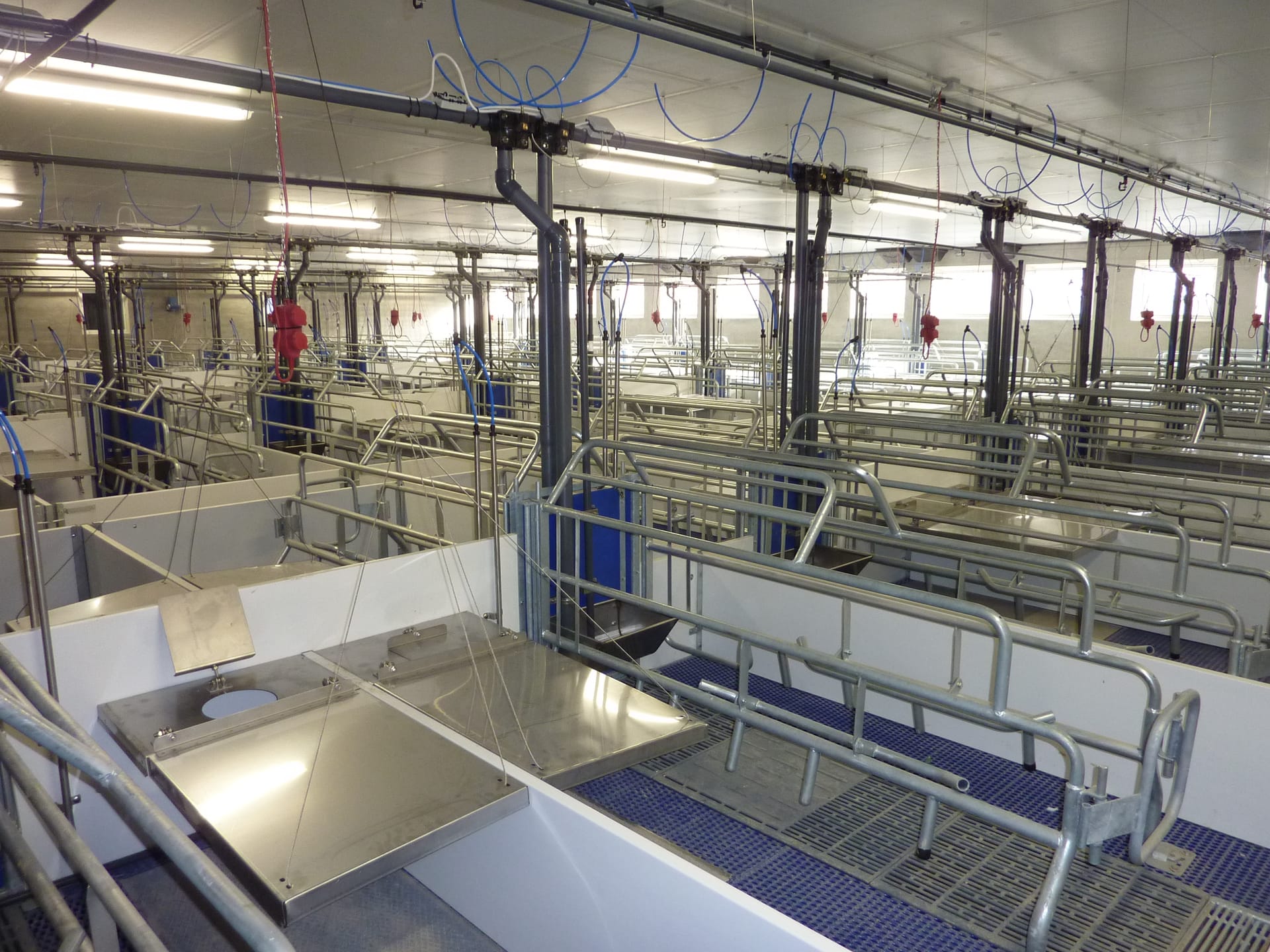
Sows and farrowing sows are heavy animals that bite and push with considerable force. In these areas, stainless steel is almost always the better option. Newly weaned piglets place less mechanical stress on bowls, and those sections may be redesigned sooner, so plastic or cast iron can work well. Finishing pigs fall somewhere in between: group size and pen layout determine how much wear a bowl will receive. Van Osch B.V. therefore assesses material selection by animal group and by section during the design stage, in line with the depreciation period used by the farmer. For a comparison of all three materials, see stainless steel, plastic or cast iron: which drinking bowl material lasts longest?
Steel grade and finish determine service life
Stainless steel is not a single material. According to NEN, European standard EN 10088 defines the chemical composition of stainless steel grades, so performance does not depend on the supplier. On farm, the important distinction is between 304 and 316. According to Wikipedia, 316 (EN 1.4401) contains around 2% molybdenum and is therefore more resistant to salt corrosion. If you clean or disinfect with chlorine-based products, 316 offers a longer service life. If you do not, 316 often means paying for protection you will not use.
Checklist:
- Define the expected lifespan of each section before its next refurbishment
- Choose material by animal group: stainless steel for sows, with a separate assessment for piglets and finishing pigs
- Select the steel grade based on your cleaning products: 316 with chlorine, otherwise 304
- Check whether the mounting can be relocated during a conversion
What should you consider when replacing drinking bowls in a farrowing unit?
When drinking bowls start rattling loose after only a few years, the issue is rarely the bowl material. More often, it is the mounting, location or pipework. The following points help prevent a new bowl from wearing prematurely.
Best practices for pig housing equipment:
- Replace by section, not bowl by bowl: This gives you one mounting type and one setup, saving time during future repairs.
- Inspect the mounting plate: A stainless steel bowl mounted on a rusted steel plate can become contaminated by ordinary steel, and according to HEGO, even stainless steel can then corrode.
- Use stainless steel bolts with stainless steel bowls: Mixing metals in a wet environment is an invitation for corrosion.
- Reset the flow rate: A new bowl paired with an old valve can lead to spillage and wet flooring.
- Allow for drainage: According to the legal text on FAOLEX, the Dutch Decree on Keepers of Animals requires a clean, comfortable environment with adequate drainage. Standing water around drinking points works against that requirement.
- Choose custom parts for non-standard pen sizes: In older buildings, catalogue bowls do not always fit. Van Osch B.V. produces custom components at its own facility in Uden for these situations.
- Put service arrangements in writing: Under the Five O’s, a callback is guaranteed within one working day, so a leaking bowl is not left unresolved for weeks.
For more practical advice on the replacement itself, see replacing pig drinking bowls: what should you look out for?
Which mistakes make a stainless steel drinking bowl more expensive than it needs to be?
Buying stainless steel is easy. Getting a return from it takes more care. The most expensive mistake is mounting a stainless steel bowl on damaged steel or using galvanised bolts. That introduces exactly the kind of contamination that stainless steel does not tolerate well. A second mistake is buying 316 when chlorine is never used, or choosing 304 when it is. Finally, bowls are often reinstalled in their old location even though the pen layout has changed after a conversion.
Checklist:
- Have the surface sanded down or replaced before installation if rust is present
- Request the material certificate or steel grade on the quotation
- Match your cleaning products to the selected steel grade
- Choose the bowl location based on the new pen layout, not the old one
Frequently asked questions
How long does a stainless steel drinking bowl for pigs last?
Stainless steel lifespan depends mainly on installation, steel grade and cleaning practices, not on wear to the steel itself. In practice, a properly installed stainless steel bowl will generally outlast the surrounding pen equipment. If you need to replace one after ten years, inspect the mounting and valve first.
Is plastic ever the better choice for drinking bowls?
Plastic makes sense when a section will be refurbished within roughly five to six years, or when the bowl receives little wear, such as in weaned piglet sections. In that case, you benefit from the lower purchase price before replacement becomes necessary. For sows and farrowing sows, that calculation rarely works in plastic’s favour.
What is the difference between 304 and 316 stainless steel in a pig unit?
Grade 316 contains around 2% molybdenum and is more resistant to chlorides than 304. If you clean or disinfect with chlorine-based products, 316 is the logical choice. Without chlorine, 304 is sufficient in many pig units.
Can I reuse my drinking bowls in a free farrowing pen?
Reuse is often possible with stainless steel bowls, provided the mounting suits the new pen layout. A sow approaches the bowl from several directions in a free farrowing pen, so check both location and mounting strength. Plastic bowls with bite marks are usually not worth relocating.
How do I calculate the ten-year cost of a drinking bowl?
Total cost is calculated as the purchase price plus the expected number of replacements multiplied by (price plus labour), minus the residual value at conversion. Use your replacement history from the past five years as the basis. Allow at least half an hour of labour per replacement, including resetting the flow rate.
Conclusion
The lower purchase price of plastic is rarely the full story when selecting pig drinking bowl material for long-term value. Over ten years, replacement costs, labour and potential reuse after a conversion determine the outcome. In farrowing units and sow sections, that usually favours stainless steel. Plastic still has a place in sections with a short remaining lifespan and where wear is low.
Start with three steps: count replacements by section, compare your refurbishment plans with the depreciation period and select the steel grade based on your cleaning products. At Van Osch B.V., this assessment is made for each animal group during the design stage, ensuring the drinking point works for both the current farrowing crate and a potential free farrowing setup. If you are replacing or converting farrowing pens for sows, it is best to include the drinking point in the design from the outset.
About Van Osch B.V.
Van Osch B.V. is a Dutch family business based in Uden, established in 1939. It designs, manufactures and supplies custom pig housing equipment for the pig industry. The company equips housing for sows, farrowing sows, piglets and finishing pigs in stainless steel, plastic and steel. Pig farmers are served directly or through an international dealer network.
Sources
- De Metaalgids — Demetaalgids
- Wageningen Livestock Research — Agriholland
- NEN — Nen
- HEGO — Hego
- wettekst op FAOLEX — Faolex
- NEN-EN 10088-1:2014 en — NEN (Nederlands Normalisatie-instituut)
- Roestvast staal — Wikipedia
- De corrosiebestendigheid van RVS — HEGO