


Your choice of materials affects how long your pig housing equipment lasts, how much time each cleaning cycle takes and whether your pens continue to meet legal housing requirements. Farmers researching pig housing materials usually want to know which option offers the best long-term value for each component. The best way to assess materials for pig housing equipment is component by component. Look at where manure, urine, cleaning products and animal pressure all come together, then choose a material that can cope with those conditions for years to come. A low purchase price means very little if a component needs repairing or replacing several times during the expected lifespan of the building.

Why does pig housing equipment wear out faster than the building itself?
A livestock building will usually stand for decades. The equipment inside it faces much tougher conditions. In a piglet unit, everything comes together: urine and manure at floor level, ammonia in the air, a warm and humid climate, plus pressure washing and disinfectant after every production cycle. Piglets chew on gates, while sows lean against partitions.
Each material responds differently to this combination of stresses. At floor level, galvanised steel gradually loses its zinc coating. Plastic can crack under point loads or impact. Even stainless steel only performs as expected when the right grade is used in the right location. You will not spot a poor material choice when the installation is new. The warning signs tend to appear years later: corrosion around feet and supports, loose fixings and hairline cracks in wall panels.
So the key investment question is not which material is best overall. It is which material lasts longest in each location and what it costs over its full service life. Replacing pen dividers too early means paying for more than replacement materials. You also need to factor in installation labour and the cost of taking a section out of use.
Which materials are used in pig housing equipment?
Modern pig housing typically combines four material groups, each with a different role:
- Stainless steel: according to Tosec, this is a steel alloy containing at least 10.5% chromium. The chromium forms a thin protective layer of chromium oxide. A higher chromium content generally improves corrosion resistance. The composition of different steel grades is defined in the European standard NEN-EN 10088. Stainless steel is commonly used for feed troughs, drinkers and components at floor level.
- Galvanised steel: strong and rigid, making it a popular choice for gates, frames and load-bearing structures above the manure zone. The zinc layer protects the steel, but corrosion can begin wherever that layer is damaged.
- Plastic: used for wall panels, dividers and piglet slats. It does not rust, is lightweight and feels less cold to animals. However, it is less rigid and often needs a supporting frame.
- Cast iron and concrete: mainly used for slatted floors in sow and farrowing areas. These materials are heavy, stable and able to withstand high loads.
Material selection is also a compliance issue. The Besluit houders van dieren requires animal housing, including flooring, to prevent injury and avoid sharp edges or projections. Materials must be suitable for the animals and easy to clean and disinfect. A cracked plastic panel or corroded gate with sharp edges will eventually fail to meet those requirements.
How do stainless steel, galvanised steel, plastic and cast iron compare in practice?
No material is the best choice in every respect. The table below highlights where each one performs well and where extra care is needed.
| Factor | Stainless steel | Galvanised steel | Plastic | Cast iron |
|---|---|---|---|---|
| Resistance to manure and urine | ✅ Excellent | ⚠️ Zinc coating wears over time | ✅ Will not rust | ⚠️ Can corrode over time |
| Strength and rigidity | ✅ High | ✅ High | ⚠️ Needs a supporting frame | ✅ Very high |
| Ease of cleaning | ✅ Smooth surface | ⚠️ Becomes rougher as it wears | ✅ Smooth and easy to seal | ⚠️ Rougher surface |
| Purchase price | ❌ Usually the highest | ✅ Moderate | ⚠️ Varies widely | ⚠️ Moderate |
| Suitable at floor level | ✅ Yes | ⚠️ Limited | ✅ Yes | ✅ As flooring |
| Typical use | Feed troughs, drinkers | Gates, frames | Walls, piglet slats | Sow slats |
Flooring involves more than service life. Research by Wageningen UR Livestock Research into rooting systems for finishing pigs found that metal allows manure to pass through more effectively, while pigs have more secure footing on concrete. The study also found that urease activity varies by flooring material, which can affect ammonia emissions. Dimensions matter too. The Flemish government specifies a maximum slot width of 18 mm and a minimum slat width of 80 mm for concrete slats used by finishing pigs, helping to prevent claw injuries.
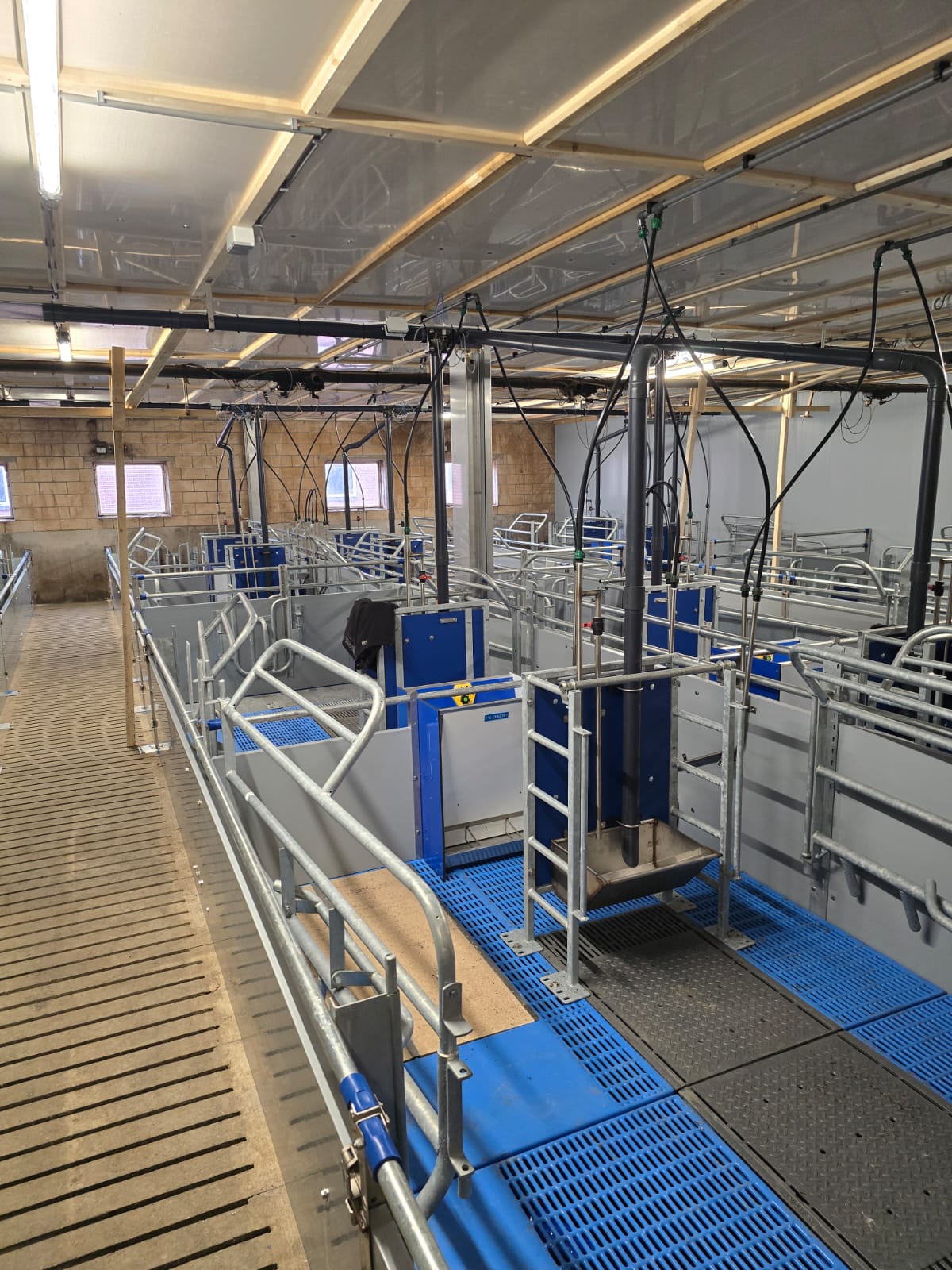
Replacing floors as part of a refurbishment? Check your environmental permit as well. According to the Informatiepunt Leefomgeving, a pig house must be designed to reduce ammonia emissions and comply with limits set out in the Besluit activiteiten leefomgeving. Have the proposed flooring checked first to make sure it remains within the approved housing system.
In practice, problems are often caused not by the material itself but by the transition between materials. A stainless steel bolt in a galvanised gate, a galvanised upright set into concrete in the manure zone, or a stainless steel weld that has not been pickled after welding can all become early corrosion points. In a damp environment, contact between different metals can speed up the process. When requesting a quotation, ask not only about the material but also about joints, fixings and weld finishing.
How should you choose materials for each component of your pig housing?
Take a piglet pen as an example. The wall panel, the gate above it, the feed trough and the drinker all face different stresses, so each needs its own assessment. Use these five steps to make the right choice for every component:
- Map the conditions in each zone. Floor level, with manure, urine and wash water, demands something different from animal height, where components are bumped and chewed, or the top edge of a divider. Find out how to assess each zone in a piglet unit in plastic or stainless steel in piglet housing, which material should you choose for each zone?.
- Set the required lifespan. Does the component need to last for the full depreciation period of the building, or is a replacement halfway through acceptable?
- Calculate annual cost, not cost per metre. For example, gate system A may be a quarter cheaper to buy, but need replacing after roughly 10 to 15 years, while gate system B lasts the full term. Once replacement, fitting and downtime are included, the cheaper option can quickly become the more expensive one.
- Review the connections. How are the materials fixed together, and where do different metals come into contact?
- Check legal requirements and permits. Confirm that the component will remain free from sharp edges after years of use, and that flooring remains compatible with your approved housing system.
Feed troughs and drinking systems need extra attention because feed, water and saliva are constantly present together. If you are investing in a farrowing unit, the article on choosing and positioning piglet feed troughs in free-access farrowing pens explains how materials and positioning affect results. If you are unsure whether plastic is strong enough, see which plastic components are strong enough for farrowing pens and piglet units?.
Frequently asked questions
Is stainless steel always the best choice for pig housing equipment?
Not everywhere. Stainless steel is especially worthwhile at floor level and around feed and water, where the risk of corrosion is greatest. For gates and frames above the manure zone, galvanised steel is often an excellent lower-cost option.
How can you check whether stainless steel is the right grade?
Ask for a material certificate. Check which steel grade is being used under NEN-EN 10088 and request a material certificate. Also ask whether welds are pickled after welding, as welding can locally reduce corrosion resistance.
How long does galvanised steel last in a pig house?
Its lifespan depends on the thickness of the zinc layer, its location in the pen and the cleaning method. Galvanised steel generally lasts much longer above the manure zone than at floor level. Ask the manufacturer about coating thickness and the galvanising process used.
Can you combine materials during a refurbishment?
Yes, if the details are right. Combining materials is common, for example plastic walls with stainless steel components at floor level. The critical points are the transitions: prevent different metals from touching directly in damp areas and use suitable fixings.
Do cleaning products affect material choice?
They can. Cleaning products may damage materials when they are not compatible. Strongly acidic or chlorine-based products are particularly hard on zinc and can also damage stainless steel if used incorrectly. Match your cleaning protocol to the materials in the building and ask the manufacturer which products are suitable.
Where should you start when choosing materials?
Do not start by choosing a material. Start with a floor plan of your building, noting the conditions and required lifespan in every zone. Then compare quotations based on annual cost and the quality of the joints, rather than the purchase price alone.
Van Osch Uden manufactures pig housing equipment in steel, galvanised steel, stainless steel and plastic at its own production facility in Uden. Every project is developed as a bespoke solution in collaboration with the pig farmer or dealer. Discover how the company delivers durable quality in pig housing equipment, then arrange a consultation to review the material choices for each part of your building.
Frequently asked questions about steel, stainless steel and plastic in pig housing
What is the best material for a pig house?
No single material is best for every application. Galvanised steel is often suitable for structural parts and dry construction areas. Stainless steel works well in wet, heavily used or hygiene-critical zones. Plastic is practical for components exposed to manure, moisture and animal contact, such as slats, dividers and feed troughs.

Is stainless steel completely maintenance-free?
No. Stainless steel is highly corrosion-resistant, but it is not immune to dirt, chlorine-based products or contact with other metals. Regular cleaning and the right cleaning products help keep its protective layer intact.
When is galvanised steel sufficient?
Galvanised steel is often sufficient in dry sections, roof structures, gates outside the direct manure zone and other components with limited chemical exposure. In areas with high moisture, manure, urine or intensive cleaning, a heavier zinc coating, an additional coating or another material may be needed.
Can plastic replace load-bearing metal components?
Usually not completely. Plastic offers benefits in hygiene, corrosion resistance and animal comfort, but it is not suitable for every load-bearing application. The structural requirements determine whether steel, stainless steel or a combination is needed.
How can you prevent corrosion in existing pig housing equipment?
First identify where moisture, manure and cleaning products collect. Repair damaged coatings or galvanising, replace unsuitable fixings and prevent direct contact between different metals. Better drainage and ventilation can also slow corrosion considerably.
Conclusion
Choosing the right materials for pig housing equipment is about far more than the purchase price. It means weighing up moisture, manure exposure, cleaning, mechanical stress, animal contact and the required lifespan of every component. Galvanised steel provides a strong and cost-effective foundation, stainless steel offers extra reliability in critical zones, and plastic adds hygiene, comfort and corrosion resistance where it matters most.
By combining materials thoughtfully and paying close attention to joints, fixings and maintenance, you can create housing equipment that lasts longer and performs better. A well-designed bespoke system prevents you from using the most expensive material everywhere, while still giving vulnerable areas the protection they need.
Sources
- Tosec
- NEN-EN 10088 — Nen
- Besluit houders van dieren — Wetten
- Wageningen UR Livestock Research — Edepot
- Informatiepunt Leefomgeving — Iplo
- Roestvast staal (RVS) — Tosec
- NEN-EN 10088-1:2014 en — NEN (Koninklijk Nederlands Normalisatie Instituut)
- Besluit houders van dieren (BWBR0035217) — Overheid.nl (wetten.nl)