


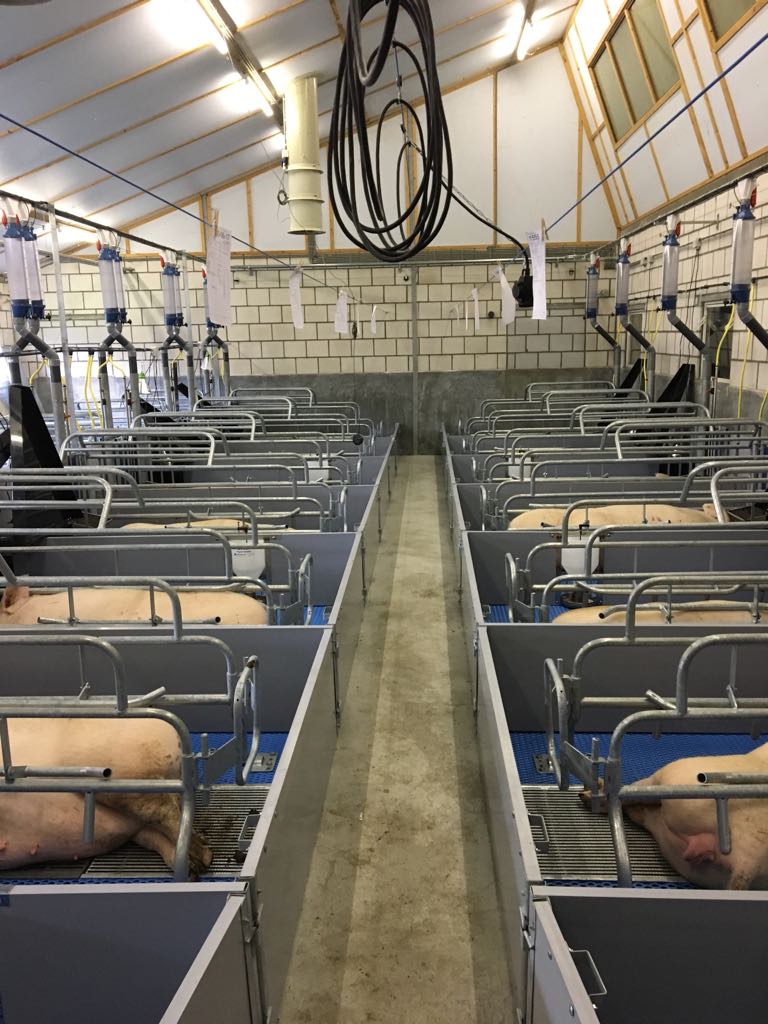
When comparing a traditional farrowing crate with a free farrowing pen, six factors stand out: pen size, how the sow is confined, piglet protection, floor layout, staff workload and investment per farrowing place. In a traditional farrowing crate, the sow remains confined in a crate throughout lactation. In a free farrowing pen, the crate can be opened and the sow can move freely, usually after a short confinement period around farrowing. A farrowing unit typically lasts fifteen years or more. That is why the regulations and market requirements you expect over that period should guide your choice.
Why is choosing between a farrowing crate and a free farrowing pen so difficult?
A free farrowing pen is a farrowing pen where the sow can turn around freely after giving birth, because the crate can be opened or is not present at all. That may sound like the only difference on paper. In the barn, however, it affects far more: the dimensions of the section, the position of the piglet nest, staff access routes, and the balance between solid and slatted flooring.
The challenge is the long investment horizon. A renovation carried out today must still work when regulations and certification requirements are likely to be stricter. Those requirements vary by country and by sales channel. There is no single pen size that will meet every requirement, everywhere, indefinitely.
Then there is the existing barn. Most farrowing sections were originally built for pens with fixed crates. Adding free farrowing pens often means losing farrowing places or redesigning the entire section. It is the same interaction between feed, flooring and equipment found in pen layout for finishing pigs: change one element and the others need to move with it.
How do traditional farrowing crates and free farrowing pens compare? 6 differences
Together, the differences below determine what each farrowing place costs and how the section works day to day.
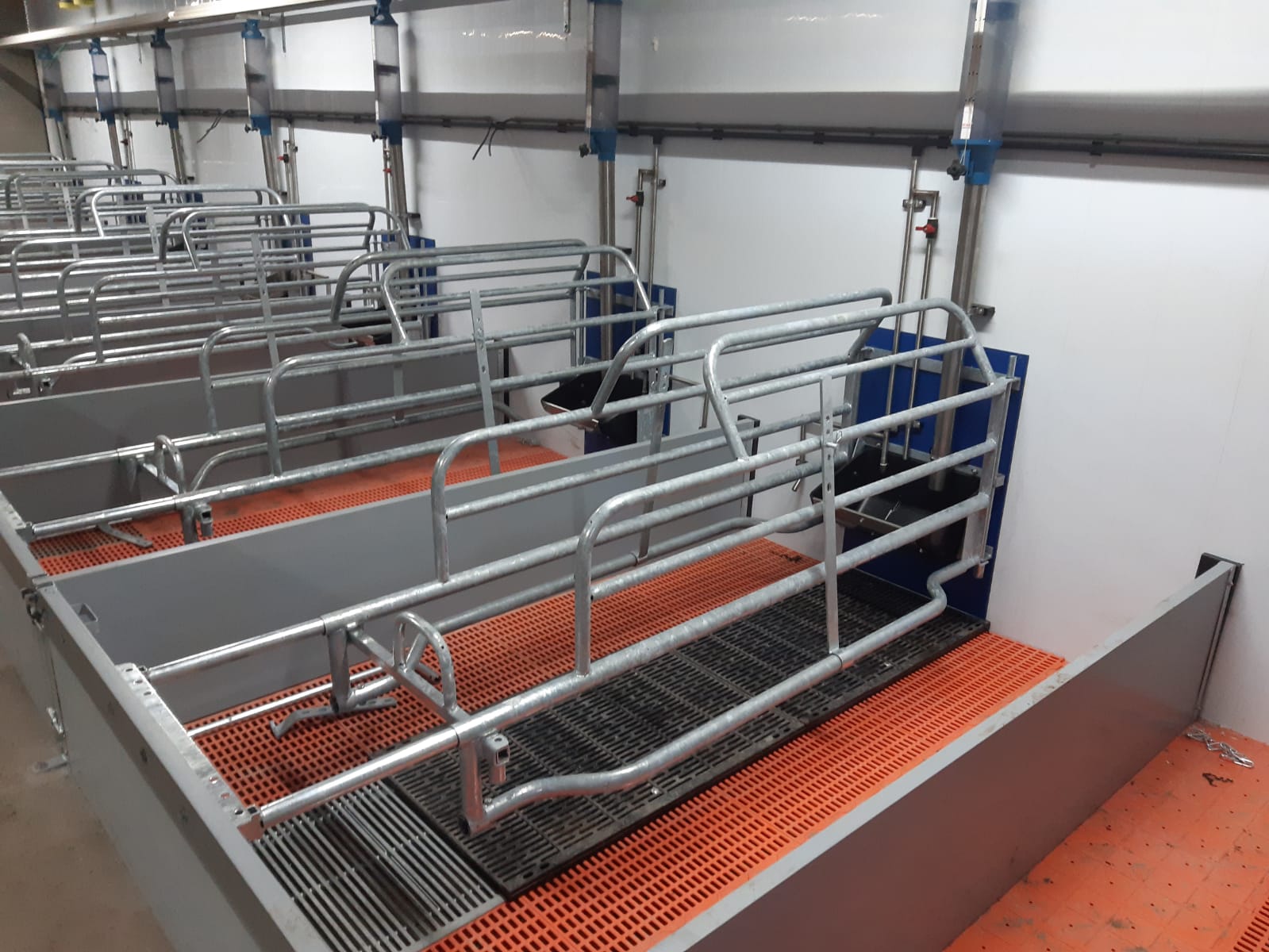
- Space and pen size. A traditional farrowing crate is compact because the sow can only stand and lie lengthways. A free farrowing pen needs room for her to turn around. Regulations and certification schemes generally specify dimensions between 5,5 and 7,5 m². In an existing section with fixed external dimensions, this almost always means fewer pens per section unless you change the layout.
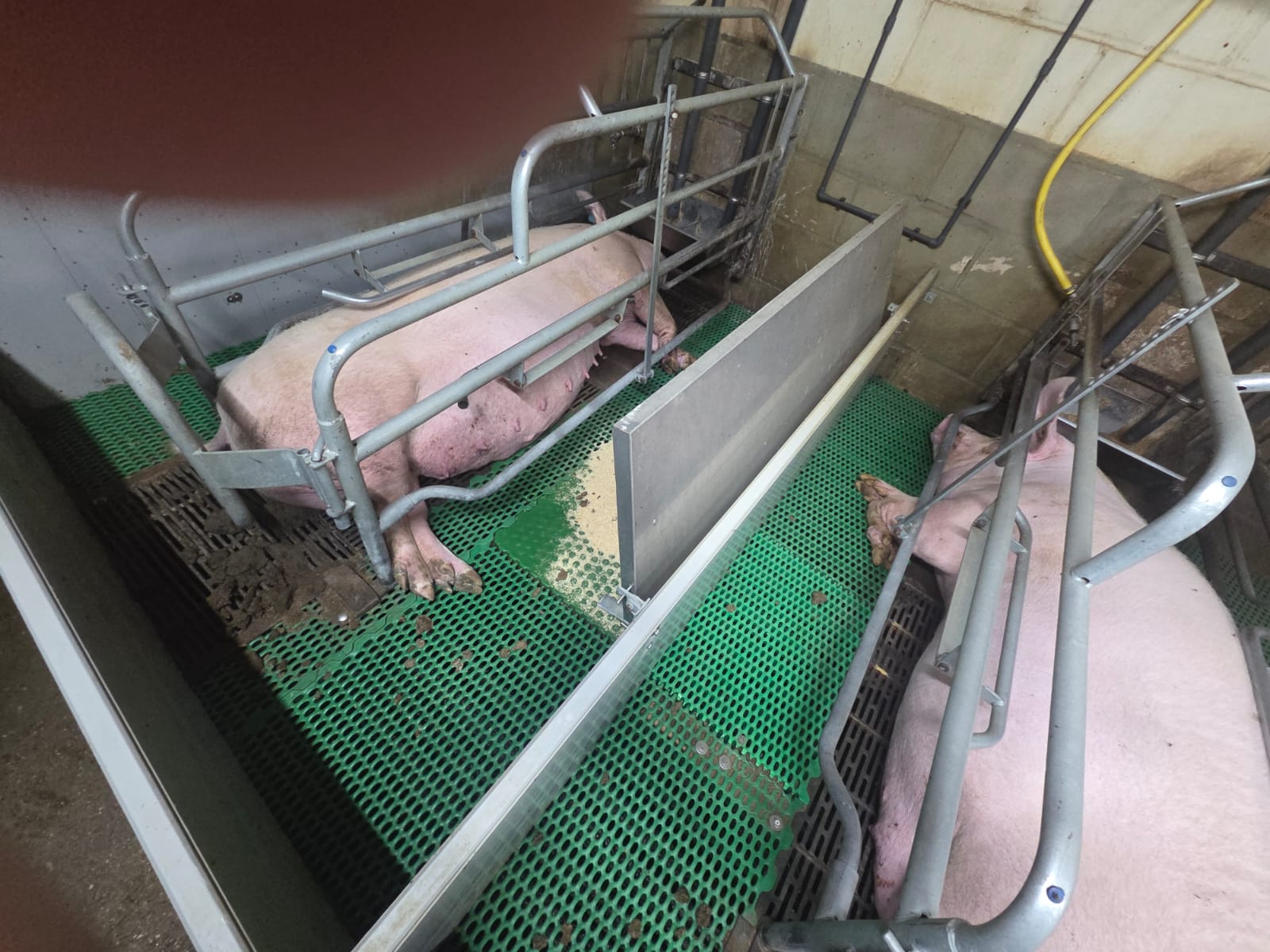
- Sow confinement. In a traditional pen, the sow remains confined in the crate. In a free farrowing pen, you can close the crate around farrowing and during the first few days afterwards, then open it. This allows you to make a deliberate decision for each sow and each stage. It also requires clear procedures on the farm.
- Piglet protection. A fixed crate protects piglets from being crushed by the sow. Without a permanently closed crate, the pen design must provide that protection instead, for example through angled anti crushing panels, a sow rail or a carefully positioned piglet nest. European requirements also address this, as explained in the next section.
- Floor layout and manure handling. A freely moving sow will not always dung in the same place. This makes the ratio between solid and slatted flooring, along with the location of the dunging area, more important. A poor layout leads to dirty pens and more cleaning time.
- Staff workload and safety. With a confined sow, staff can access piglets without obstruction. In a free farrowing pen, they work around a loose sow, for example during treatments, counting or inspections. Lockable sections, an easy to reach piglet nest and a logical working route determine whether the pen is practical in daily use.
- Investment per farrowing place. Additional square metres, hinged or opening crates and extra partitions make a free farrowing place more expensive than a traditional one. When comparing systems, always calculate costs per farrowing place and per section. Lost capacity can have just as much impact as the price of the pen equipment.
What rules apply to farrowing pens in Europe?
The European baseline is less strict than many pig farmers assume. According to the Varkensloket of the Flemish government, Directive 2008/120/EC does not set a minimum floor area for either crated or free farrowing pens. It does require sufficient clear space behind the sow for farrowing, while a free farrowing pen must include piglet protection, such as a sow rail.
National rules go further and differ considerably. Agriculture & Fisheries Flanders provides the following overview:
- Austria will require at least 5,5 m² from 2033.
- Sweden requires at least 6 m² and generally does not permit crates.
- Switzerland has required free farrowing pens without confinement since 2007, with at least 5,5 m² of floor area.
In 2020, Germany made free farrowing pens mandatory from 2036, with a minimum of 6,5 m² and confinement limited to five days around farrowing. One project where Van Osch has gained experience with these German rules is the free farrowing unit in Wolferstedt.
In the Netherlands, certification requirements matter alongside legislation. Under the new Beter Leven criteria, published via OOVB, a 7,5 m² free farrowing pen will be mandatory from 2035 for sow farmers in the 1, 2 and 3 star schemes. Existing smaller free farrowing pens have a transition period until 2045. If you supply this type of programme, 7,5 m² is effectively your design standard, even where legislation requires less.
Which farrowing system suits your farm and investment timeline?
The starting point should not be the newest technology. It should be how long the investment needs to serve your business. In practice, three situations occur most often.
If you are planning a renovation in a section with only a limited remaining lifespan, replacing traditional farrowing crates may be a reasonable choice. The key is to make that choice consciously, with a realistic payback period, rather than simply following established practice.
New builds and major renovations are different. If a barn must operate well beyond 2035, it is best designed from the outset for the dimensions your sales channel or export market is likely to demand. Widening a section later is usually more expensive than getting it right from the beginning. Read more about current designs in free farrowing pens in 2026: requirements, sizes and designs.
The third option is a phased approach: a free farrowing pen that is kept closed more often initially, then opened more frequently over time. This lets staff gradually get used to working around a loose sow while the barn already meets the right size requirement.
One point is often overlooked: the legal minimum is not automatically a practical size. In daily use, 6,5 m² can be tight for larger sows to turn properly. Adding a few tenths of a square metre now costs relatively little. Creating that space later may require rebuilding an entire section.
What should you check before ordering a farrowing system?
A quotation for farrowing pens can look complete at first glance, but the crucial details are often in the connections between components. Review the following points before signing.
Checklist for choosing between traditional farrowing crates and free farrowing pens:
- Design standard confirmed: document the legal or certification requirement the pen is designed to meet, so you do not have to rebuild later.
- Section capacity calculated: compare the number of farrowing places before and after renovation, as this is often the biggest financial difference.
- Piglet protection specified: ask for a clear description of how the pen protects piglets when the crate is open.
- Floor layout drawn for each zone: check the ratio between solid and slatted flooring and the location of the dunging area.
- Working route tested: consider how a staff member reaches the piglets while the sow is loose.
- Materials selected by component: choose stainless steel, galvanised steel or plastic for each component based on wear and cleaning requirements, not for the pen as a whole.
- Feed, water and the piglet nest included: make sure the trough, drinker and piglet feeder are shown in the same design, so they work with the new staff route.
What mistakes do sow farmers make when moving to free farrowing?
The most expensive mistake is fitting a free farrowing pen into an existing section without checking the external dimensions again. A layout that works on a drawing can leave a working aisle too narrow in reality. Or the manure channel may no longer align with the new slatted floor.
A second pitfall is choosing the legal minimum size when your sales channel or a future buyer of the farm is likely to expect more space. That only becomes apparent at a recertification inspection or during a farm sale.
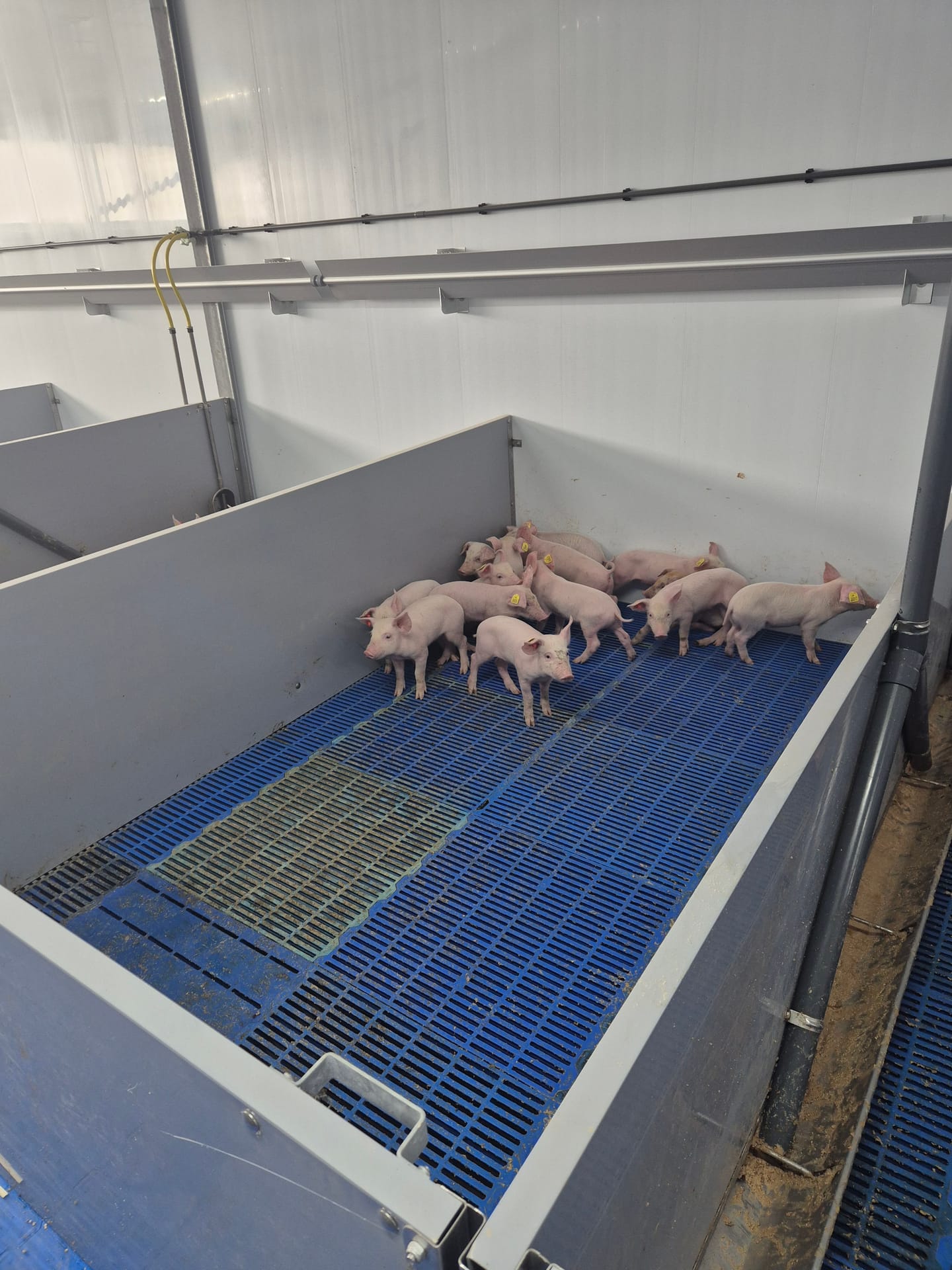
The layout around the piglet nest is also often underestimated. In a traditional farrowing crate, the crate largely determines where piglets lie. With free farrowing, you need to choose that location intentionally. Feeders and heat sources also influence whether piglets actually settle there. Read more in choosing and positioning piglet feeders in free farrowing pens.
Finally, avoid buying components from several suppliers without appointing one party responsible for the complete system. If slats, partitions, troughs and crates come from three suppliers, coordination becomes your responsibility. During a renovation with a tight schedule between two farrowing batches, every dimensional error directly affects production.
Frequently asked questions
Can I still install traditional farrowing crates in the Netherlands?
Legislation At European level, there is no ban on farrowing crates with a fixed crate and no minimum floor area requirement. Certification schemes and buyers may impose stricter requirements, however, including Beter Leven from 2035. Always check current regulations and the requirements of your own sales channel before investing.
How long can a sow be confined in a free farrowing pen?
Confinement period This varies by country. From 2036, Germany will allow a maximum of five days around farrowing, while Switzerland does not allow confinement in free farrowing pens at all. Specify which standard applies to your current and future sales market in your design.
Can an existing traditional farrowing crate be converted into a free farrowing pen?
Conversion Sometimes, but pen width is usually the limiting factor. A free farrowing pen requires more floor area, so conversion often means fewer pens per section. Have a dimensioned layout prepared before ordering components.
What free farrowing pen size makes sense for a new build?
Design size Base your design on the strictest requirement you expect during the life of the barn, not on today’s legal minimum. In practice, farms supplying Beter Leven should design for 7,5 m². In other situations, the usual design range is generally 6,5 to 7,5 m².
Does a free farrowing pen create more work for staff?
Labour That depends heavily on the layout. Accessible piglet nests, lockable sections and a logical working route make the difference between a practical pen and one where staff have to plan every task around the sow.
Where should you start when choosing a farrowing system?
Start by asking how long your farrowing unit needs to last and which requirements it must meet over that period. Only then can you make a meaningful comparison between traditional farrowing crates and free farrowing pens, both per farrowing place and per section.
Van Osch B.V. designs and manufactures both traditional farrowing crates and free farrowing pens in Uden, tailored to your barn dimensions and management system. Share your floor plan and timeline with one of our advisers and request tailored advice for your farrowing unit. Under the Five O’s of Van Osch, you will receive a call back within one working day.
Frequently asked questions about farrowing crates and free farrowing pens
What is the biggest difference between a traditional farrowing crate and a free farrowing pen?
In a traditional farrowing crate, the sow’s movement is restricted around farrowing. In a free farrowing pen, she can move more freely, depending on the system and the stage of lactation. This requires extra attention to piglet protection, pen layout, flooring and daily routines.
How much space does a sow need in a free farrowing pen?
This depends on the chosen concept, sow size, pen layout, and the market or certification requirements you need to meet. As a design guideline, around 6,5 to 7,5 m² per farrowing place is often used. Always look beyond the minimum standard and allow for future requirements.
Can an existing farrowing pen be converted to free farrowing?
Conversion is sometimes possible, but not every existing barn is suitable. Available width and length, the position of manure channels, ventilation, feeding systems and staff routes determine whether there is enough room for a good free farrowing solution. A floor plan and accurate dimensions quickly show what is possible.
Are free farrowing pens safe for piglets?
A well designed free farrowing pen includes features that help protect piglets, such as an appealing warm piglet nest, clear sightlines, protective rails or partitions, and thoughtful placement of feeding and resting areas. Both the design and farm management determine the results.
When is the best time to invest in a new farrowing unit?
The right time depends on more than the technical condition of the current equipment. Future regulations, depreciation, available labour, production results and your desired market position also play a role. For a new build or major renovation, it makes sense to design immediately for the requirements you expect throughout the barn’s full lifespan.
Conclusion
Choosing between a traditional farrowing crate and a free farrowing pen is not simply a question of square metres or purchase price. Animal welfare, piglet safety, labour, technical fit and future regulations all need to come together in one practical design.
If you are building or renovating now, assess both the total investment per farrowing place and how the system will work in the barn every day. By comparing traditional farrowing crates with free farrowing pens properly, you can create a farrowing unit that suits your farm, staff and sales channel today, while leaving room for the future.
Sources
- Varkensloket van de Vlaamse overheid — Varkensloket
- nieuwe Beter Leven-criteria, gepubliceerd via OOVB — Oovb
- Normen voor (vrijloop)kraamhokken? — Varkensloket (Vlaamse overheid, Departement Landbouw en Visserij)
- Normen voor (vrijloop)kraamhokken — Landbouw & Visserij Vlaanderen
- Nieuwe criteria Beter Leven keurmerk varkens — OOVB (via Dierenbescherming)