


If you have explored the latest EuroTier free farrowing pen innovations and are looking to buy a free farrowing pen for sows, choose the pen before choosing the technology. Pen size, temporary confinement around farrowing and slatted flooring will determine whether your investment fits the plans for 2032 and 2035. Cameras and AI systems can often be added later. At EuroTier 2026 (10 to 13 November, Hanover), you can compare these options side by side. The actual purchase usually happens months later, once you have received a quote for your own unit.
What are you actually buying when you invest in a free farrowing pen for sows?
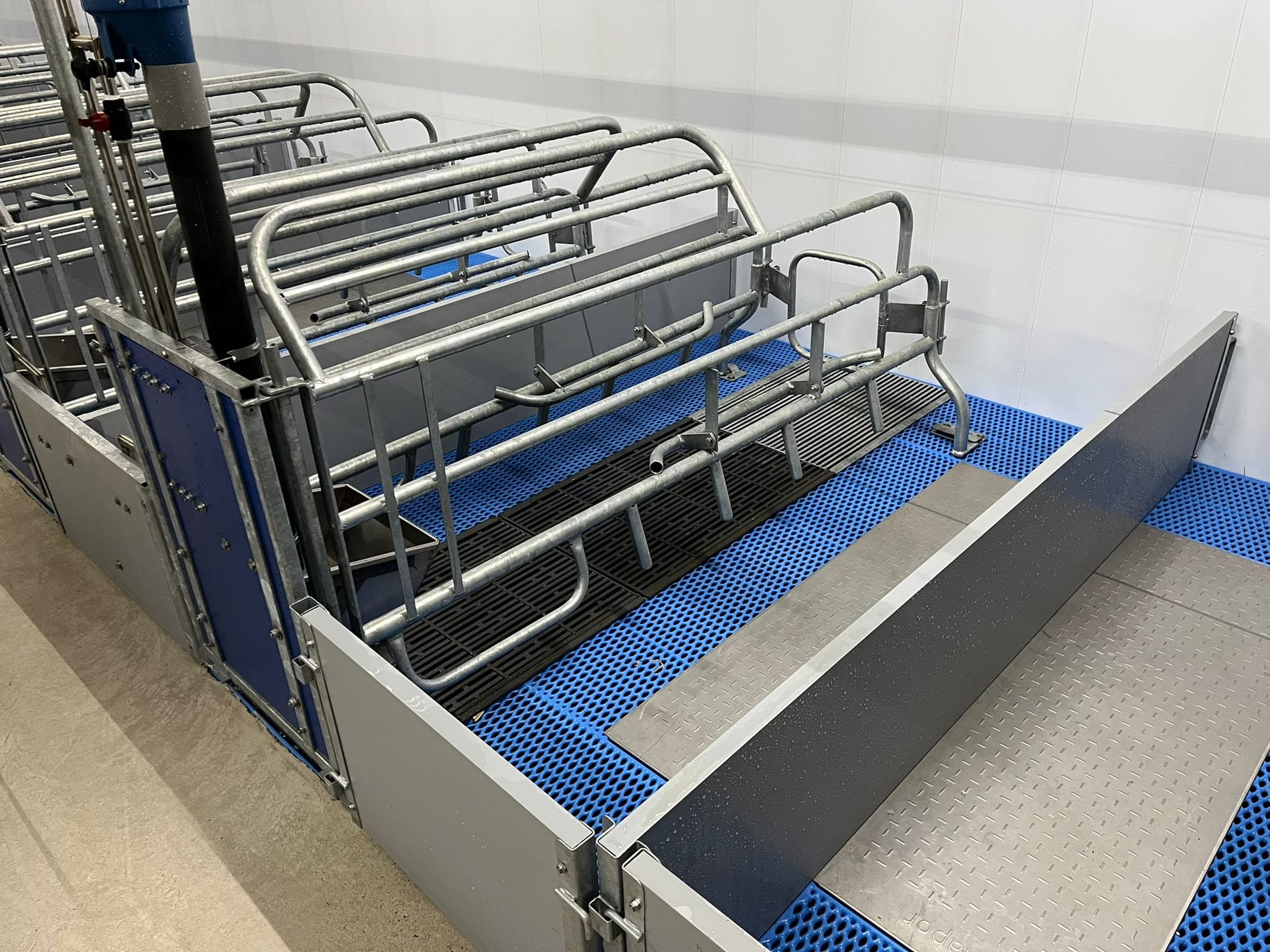
A free farrowing pen is a farrowing system that allows the sow to move freely after farrowing, with a crate that can be closed temporarily around farrowing or while work is being carried out. In a conventional farrowing crate, the sow remains confined throughout the entire lactation period. In a free farrowing pen, the crate can be opened to give her room to turn around.
So, you are not simply buying a crate. You are investing in a complete pen system, which will usually include:
- pen divisions and an opening and closing mechanism for the sow crate;
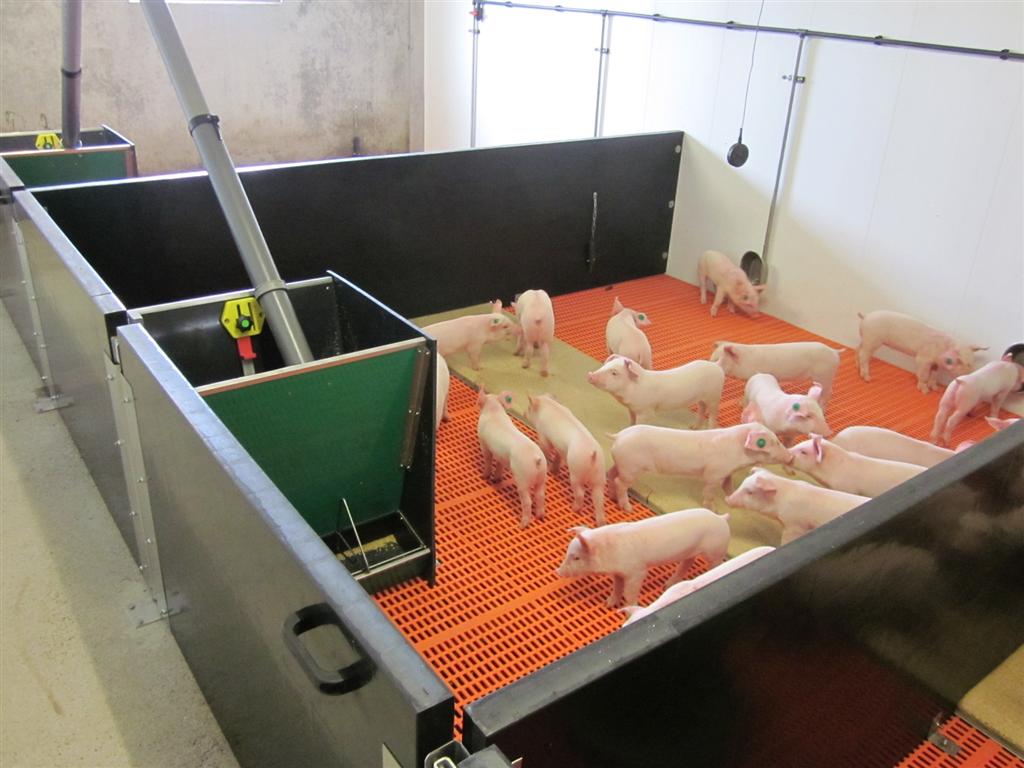
- a covered piglet nest with space for heating;
- rails or angled panels to protect piglets when the sow lies down;
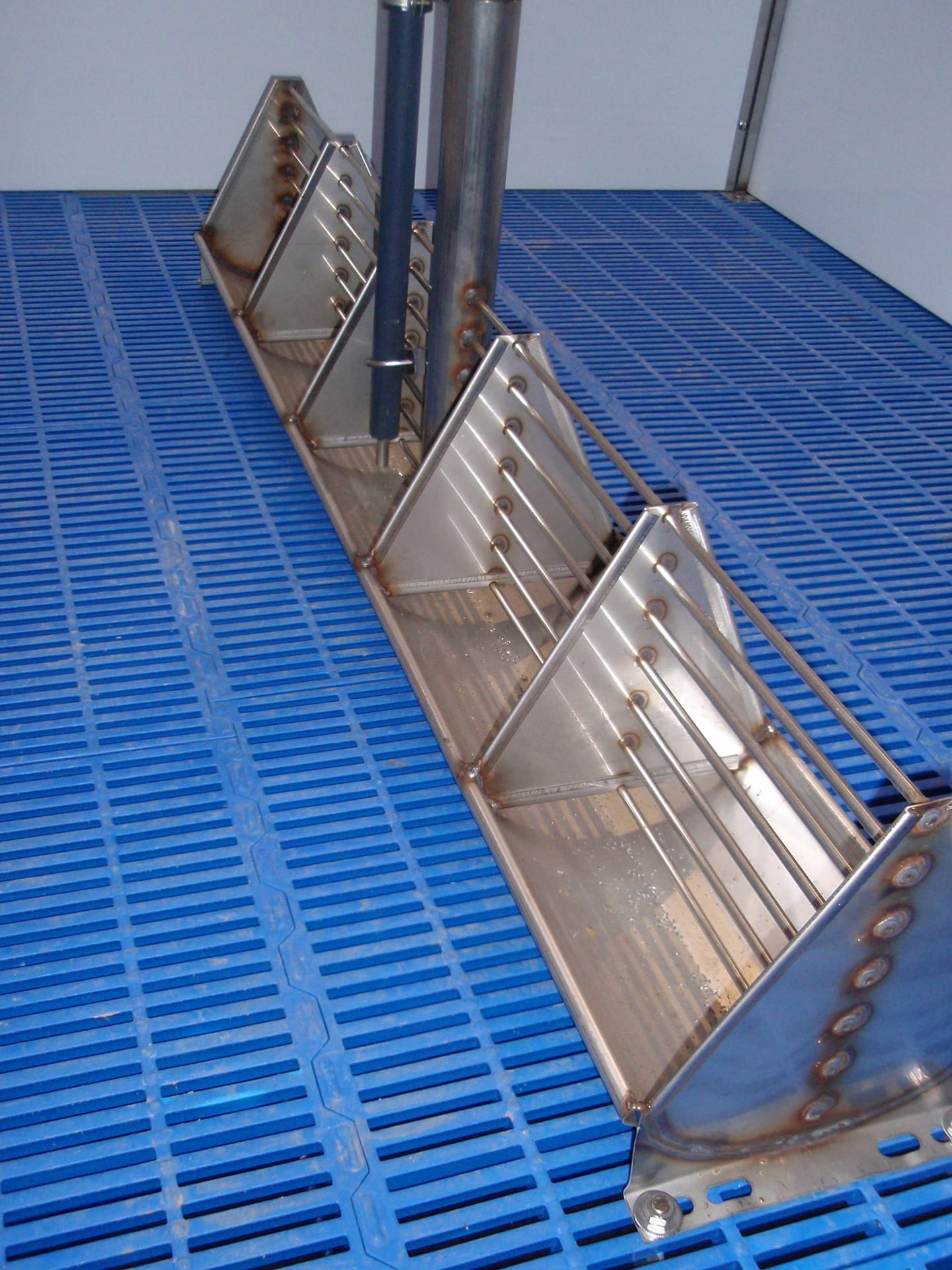
- feeding and drinking equipment for the sow and piglets;
- slatted flooring, often combining cast iron, plastic or coated materials.
What is included in a price or quotation varies widely between suppliers and manufacturers. Only compare two offers once you know exactly what is included in each component. In refurbishment projects, your existing building will also shape the options available. The width of the room, slurry pit layout and slat dimensions can all limit which pen layout will fit. In those cases, a bespoke farrowing sow housing system is often a better choice than a standard catalogue size that almost fits your building.
Why are pig farmers already choosing free farrowing pens?
Free farrowing pens are available in several configurations.
The direction of travel is clear, although the timeline is not yet fully confirmed. According to the Dutch government, the government is working towards more welfare-focused livestock farming by 2040. The first new rules are expected to take effect in 2028, followed by phased implementation.
The plans for pig farming are more specific. The Stappen naar een Dierwaardige Veehouderij agreement of 24 June 2025 identifies free farrowing pens as one of the sector commitments, reports Nieuwe Oogst (2025). The associated action plan includes specific target years. According to Varkens.nl (2025), free farrowing pens will become mandatory from 2032, while conventional farrowing crates will be phased out from 2035. The weaning age for all farms will also increase to 28 days.
It is important to remember that these are targets set out in an action plan. Until they are enshrined in legislation, details may still change. Before making an investment, always check the latest position with your adviser or industry body. Requirements can differ outside the Netherlands, so check the current rules whenever you operate across borders.
What does that mean for your decision? A farrowing pen will normally last well beyond ten years. Farmers installing conventional farrowing crates in 2026 risk having to adapt them before the end of their working life. There is also a production case to consider. Research by Wageningen Livestock Research found that piglets may be up to 500 grams heavier at weaning when the sow has greater freedom of movement (Nieuwe Oogst, 2020).
The move to a 28-day weaning age is often overlooked when budgets are being calculated. A longer lactation period means each sow occupies a farrowing place for longer. Depending on your production cycle, you may need more farrowing places to accommodate the same number of sows. Factor this in before confirming the number of pens in your quotation.
EuroTier free farrowing pen innovations: which ones matter when buying in 2026?
There is plenty to see at the show. According to Nieuwe Oogst (2026), DLG’s independent innovation commission assessed 176 new developments. Four received gold medals and 27 received silver. In pig farming, two gold and eleven silver medals were awarded, writes Boerderij (2026). One of the gold medals, along with the Animal Welfare Award 2026, went to a camera-based, AI-powered farrowing pen support system that can be retrofitted.
For buyers, that last point is the most interesting. If the most highly awarded technology can be retrofitted, you do not need to buy it now to future-proof your setup. Split your investment into two layers: the pen itself, which will last for years, and the technology on top of it, which changes more quickly. To see what has changed since earlier editions of the show, read this comparison of EuroTier 2026 and previous editions.
Pen size and layout
Pen size determines how many farrowing places fit into a room, and therefore your construction cost per place. At this edition, the benchmark is moving towards 7.5 m², which is more generous than the legal minimum of 6.5 m². Do not just look at the total area. Consider how that space is divided between the sow and the piglet nest.
Confinement and operation
You will use the opening and closing mechanism every cycle, in every pen. A task that takes a few extra seconds can add up significantly across a room and over a year. Ask to operate the mechanism yourself at the stand, ideally with the employee who will be using it day to day. Some stands show free farrowing pens operating live, which tells you far more than a drawing ever can.
Slatted flooring and materials
The show will feature, among other developments, coated slatted floors designed to prevent dirt from sticking. What matters most for your operation is cleaning time per cycle and durability in a damp, corrosive environment. Stainless steel, galvanised steel and plastic partitions differ in purchase price, ease of cleaning and wear resistance. Ask which parts are likely to need replacing first for each material.
Sensors and software
If you may want to add cameras or controls later, ask now whether the pen is designed to accommodate them. Consider mounting points, cable ducts and power supplies for each pen. These additions cost little during construction and can save disruptive alterations later.
How should you approach buying a free farrowing pen after the show?
You do not buy a farrowing unit from a trade show stand. The show is the starting point of the process. Following a clear sequence helps prevent expensive surprises later.
- Bring your own figures. Take a building layout with room dimensions, your number of sows and your production cycle. Plan your visit using the practical information on EuroTier 2026 dates and halls, so you can visit the right stands with purpose.
- Compare daily tasks, not just the standalone pen price. Count how many times per cycle you need to open, close, clean and inspect each pen. That is where your labour costs lie.
- Ask for a working farm reference. A pen that has already completed several cycles on a farm will show how well the mechanism and slatted floor perform in real conditions.
- Have the show price converted into a quote for the complete room. Installation, slatted flooring, slurry pit alterations, piglet nest heating and removal of the existing equipment are often excluded from a show price. Find out how large the gap can be in show price versus quotation price for a free farrowing pen.
- Check planning permission and timing. After the show, it usually takes six to eighteen months before a free farrowing pen is operational, largely depending on whether you need an environmental permit. See the timeline from EuroTier to installation on your farm.
- Agree on service before signing. Confirm how quickly parts can be supplied, who your contact will be after installation and how quickly calls will be returned.
The same applies to dealers, with one extra consideration: make sure the manufacturer can also support your end customer during the design phase. A free farrowing pen that does not fit the building dimensions properly will always come back to the dealer after installation.
One common mistake is getting the order wrong: falling in love with a clever system first, then checking whether the pen beneath it will fit. With the free farrowing pen innovations at EuroTier, the right approach is the opposite. Choose the pen for its dimensions, space and ease of operation, then keep the technology as an option for later.
Frequently asked questions
Can you still buy a conventional farrowing crate in 2026?
Conventional farrowing crates are not prohibited in the Netherlands in 2026. However, the pig farming action plan aims to phase them out from 2035. That means a newly installed conventional crate may have a shorter useful life than its technical lifespan would suggest.
How much space does a free farrowing pen need?
Pen area at EuroTier 2026 is moving towards 7.5 m². The right size for your farm depends on room width, the slurry pit and the number of places you need.
Can an existing farrowing unit be converted into free farrowing pens?
Conversion is often possible, but a free farrowing pen is usually larger than a conventional crate. That means fewer places may fit in the same room unless you alter the layout. Have the remaining capacity calculated in advance, and check whether the slurry pit and slatted flooring need to be adapted.
Do you need cameras or AI to meet the new requirements?
AI systems are not part of the proposed requirements for free farrowing pens. The system that won gold at EuroTier 2026 was specifically designed for retrofit installation. You can therefore add it later, provided the pen has been prepared for it.
What does a 28-day weaning age mean for your farrowing unit?
A longer lactation period keeps each farrowing place occupied for longer in every cycle. Depending on your production schedule, you may need more farrowing places for the same sow herd. Run the figures before finalising the number of pens.
A robust pen or smart technology: where should you invest first?
The EuroTier free farrowing pen innovations showcase plenty of smart technology, but the success of your investment depends on the pen itself. Start by choosing pen dimensions, confinement and slatted flooring that fit the plans for 2032 and 2035, while leaving scope for technology you can add later.
Van Osch designs and manufactures free farrowing pens in Uden, tailoring every farrowing unit to the dimensions and working routine of your farm. Commitments are honoured according to the Vijf O’s, including a call-back guarantee within one working day. Bring your farm layout to hall 14/15, stand 15J26 at EuroTier, or request advice on a bespoke free farrowing unit for your own project.
Sources
- Rijksoverheid
- meldt Nieuwe Oogst — Nieuweoogst
- Varkens.nl — Varkens
- schrijft Boerderij — Boerderij
- Dierenwelzijn landbouwdieren — Rijksoverheid
- Kabinet werkt nog steeds ‘keihard’ aan Convenant dierwaardige veehouderij — Nieuwe Oogst
- Plan van aanpak helpt dierwaardigheid in varkenshouderij vooruit — Varkens.nl
- Het ideale vrijloopkraamhok is er nog niet — Nieuwe Oogst