


Steel and stainless steel pig housing is made in five clear stages: engineering, sheet and tube processing, welding, finishing such as pickling or galvanising, and assembly with final inspection. What you later see in the barn, from clean welds and accurately fitting pen sections to stainless steel free from rust spots, is determined during these stages. Long before anything is installed on site.
Knowing where quality is created in the process helps pig farmers and dealers compare quotations properly and ask more useful questions during a workshop visit.
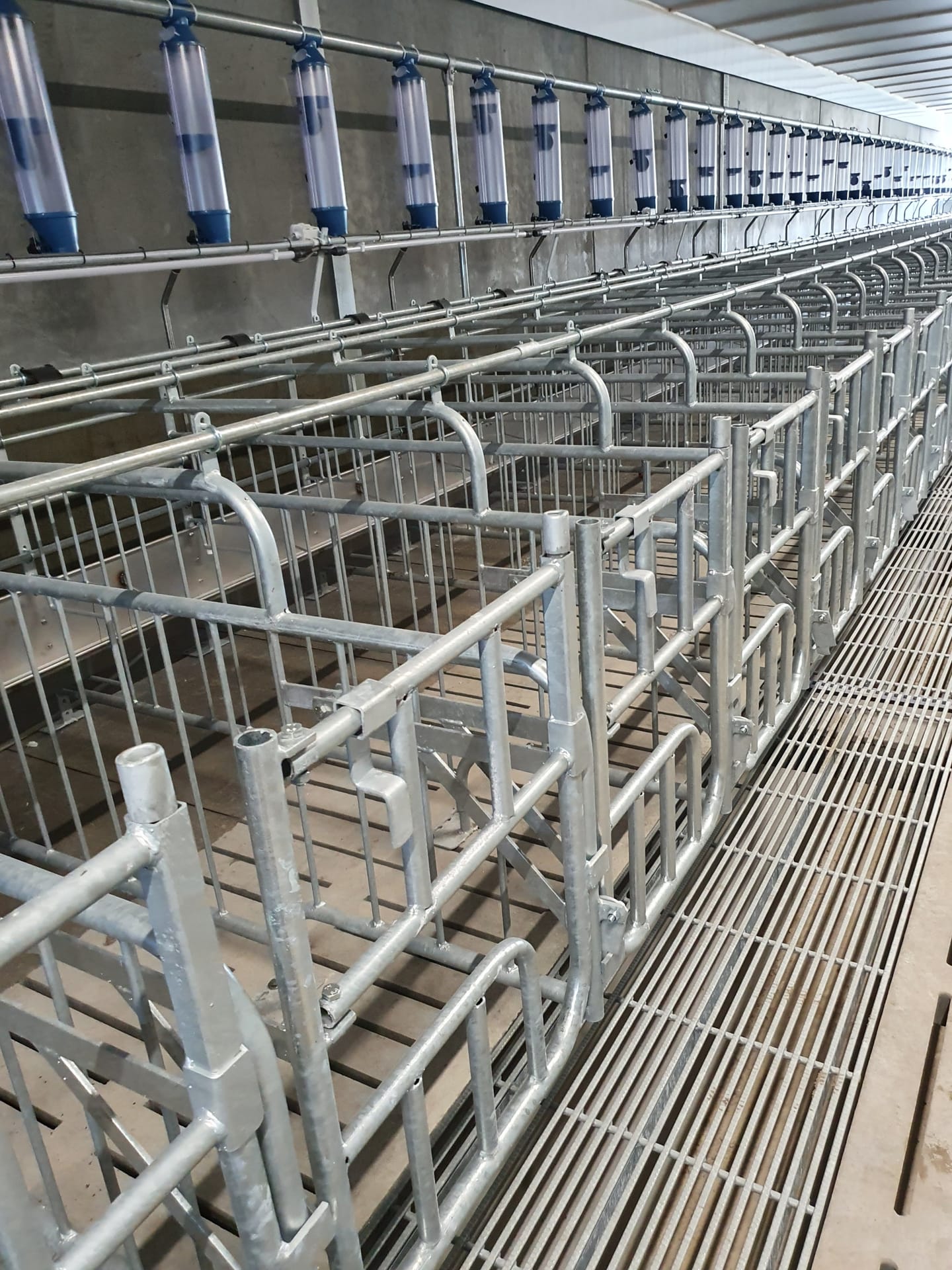
Why does a quotation not tell you how your pig housing will be made?
A quotation may list materials and dimensions: 304 stainless steel, hot dip galvanised steel, or a pen width of a certain number of centimetres. Yet two quotes with the same specification can produce very different results in practice. How have the welds been finished? What is the wall thickness of the tube? How accurately have components been cut? Has the stainless steel come into contact with steel dust from elsewhere in the workshop?
You may not notice these differences until the equipment has been in use for several years. Rust can appear around welds, or pen sections may not fit the dimensions of an existing barn during a refurbishment. Installers then need to grind and drill on site. That adds installation hours and damages the zinc coating right where it is needed most.
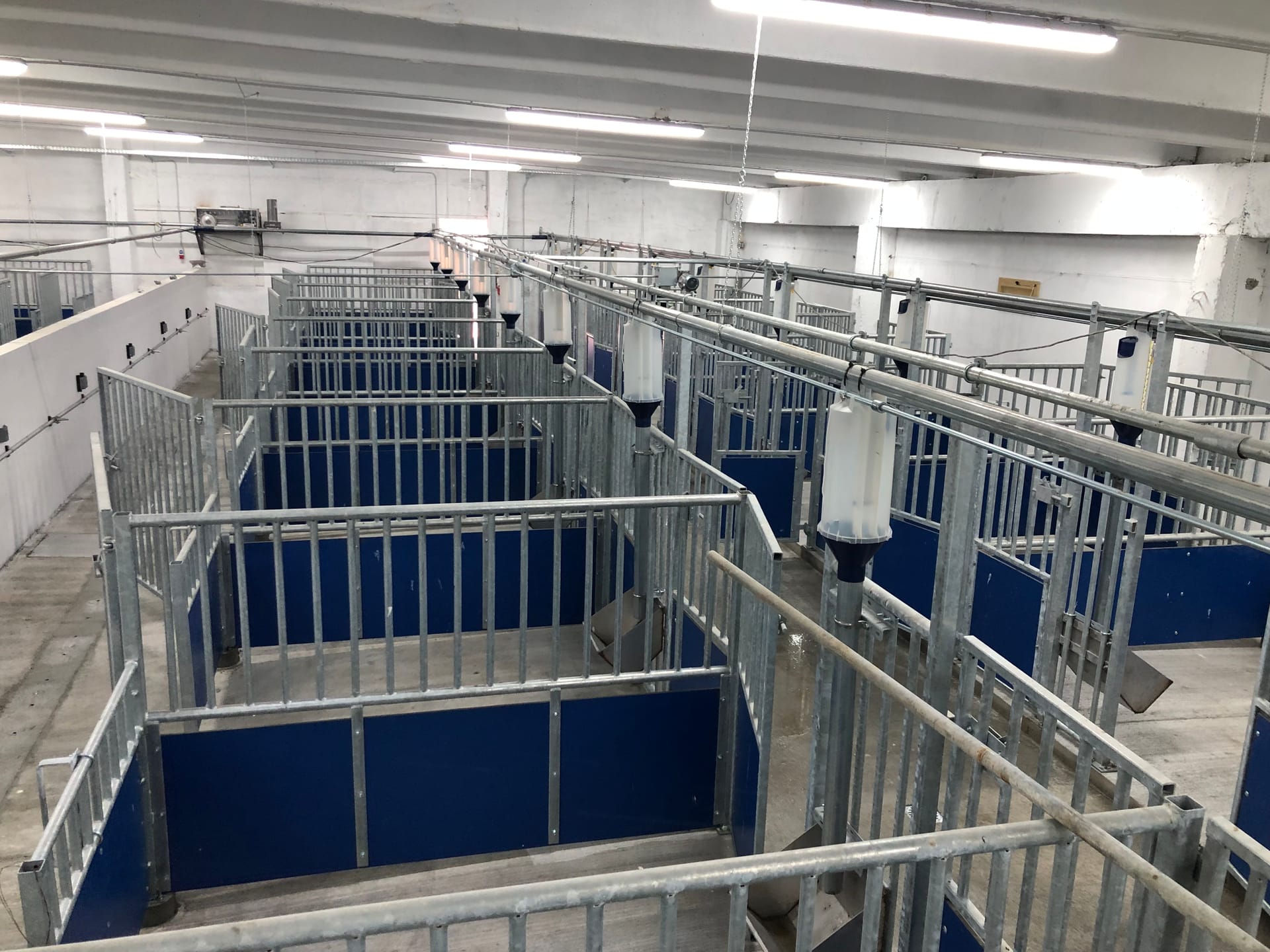
This matters even more in piglet and farrowing areas, where many small components are repeated dozens of times. A deviation of just a few millimetres per pen adds up across an entire unit. In a loose housing farrowing pen, for example, dimensions determine whether piglet feed troughs connect correctly with the partitions and slatted floor. Production quality is not simply a workshop detail. It directly affects how your barn performs every day.
How is steel and stainless steel pig housing produced in 2026?
At a modern pig housing manufacturer, every pen component follows the same route. The order is fixed, although the way each stage is carried out can vary between companies:
- Engineering: The barn is measured and developed in a 3D model. This produces the drawings and cutting programmes.
- Sheet and tube processing: Sheet metal and tube are laser cut, then folded, bent or sawn.
- Welding: This is carried out manually or by a welding robot, depending on the production run and the shape of the component.
- Finishing: Stainless steel is pickled and passivated, while steel is hot dip galvanised.
- Assembly and inspection: Components are assembled, checked for dimensional accuracy, and packed by pen or by barn section.
Everything starts with the material. The European standard NEN-EN 10088-1 defines the chemical composition of stainless steel grades and classifies them as corrosion resistant, heat resistant or creep resistant. For pig housing, only the corrosion resistant category is relevant. For tubes, bars and profiles, NEN-EN 10088-3 sets out the technical delivery requirements. A manufacturer working to these standards can demonstrate exactly which material has been used in each batch of pens.
There is a common misconception that rust spots on stainless steel automatically mean poor quality material. More often, the issue starts in the workshop. Iron particles from grinding steel can settle on stainless steel, or heat discolouration around welds may not be pickled off. In both cases, the stainless steel’s protective oxide layer is compromised. Good workshops therefore keep steel and stainless steel processing strictly separate, using dedicated tools and work areas. As a buyer, do not just ask which steel grade is used. Ask how it is handled.
The sector is under pressure. According to CBS (2025), basic metal and metal product manufacturing declined in 2024, while metal industry producers were the most negative about their competitive position within the EU in October 2024. Dutch metal companies are responding mainly through automation and precision, rather than higher production volumes.
Which developments are changing pig housing production?
Five developments are shaping pig housing workshops today and in the years ahead.
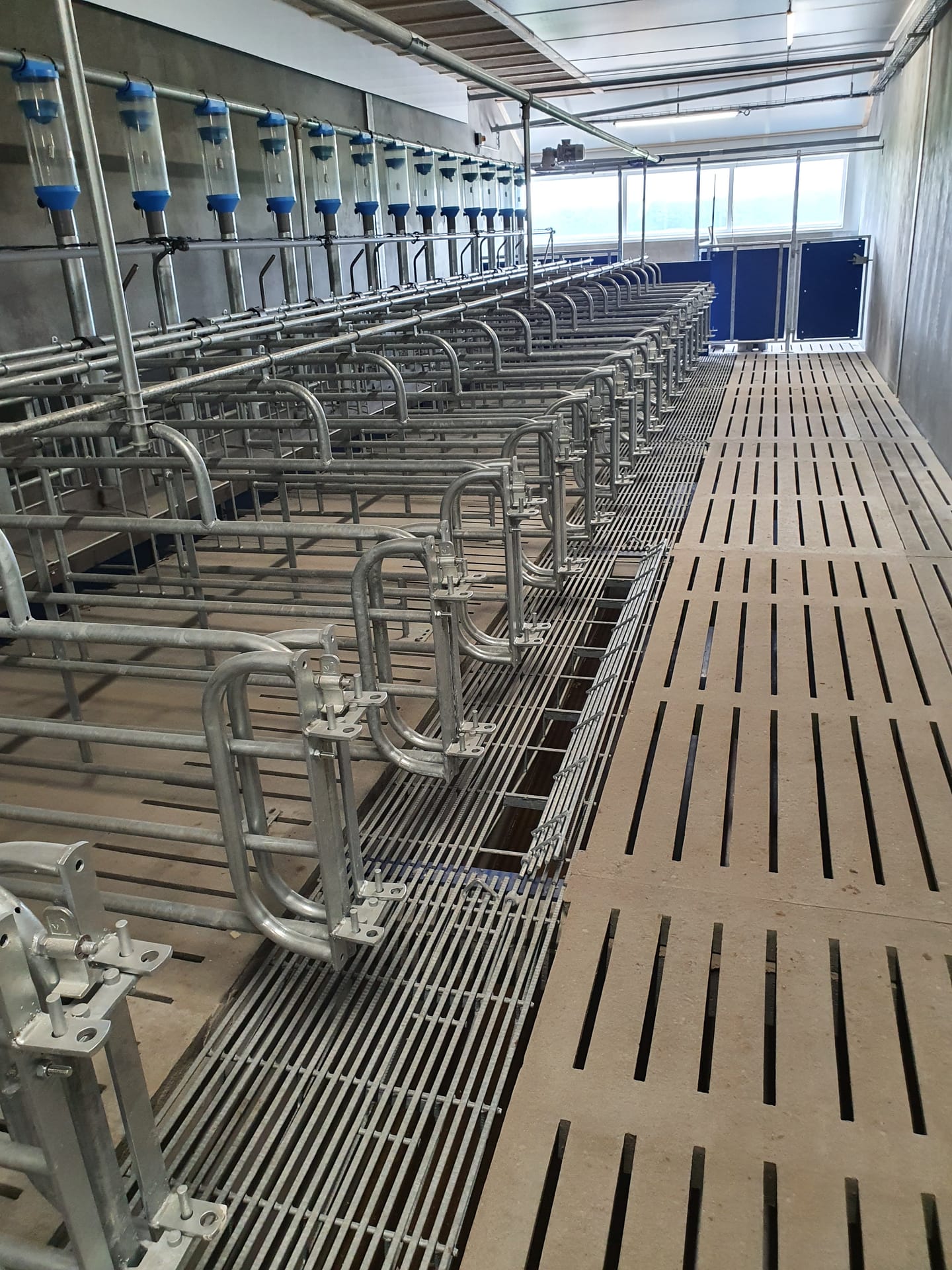
Trend 1: Tube laser cutting
A tube laser cuts holes, cutouts and joints directly into the tube in a single operation. Much of the drilling, sawing and deburring that once followed is no longer necessary. Tubes fit together more accurately before welding, delivering a cleaner fit for gates and frames in farrowing and piglet pens.
Trend 2: Welding robots, including for custom work
Welding robots were once only economical for large production runs. As programmes are increasingly created in advance on a computer, robots now make sense for smaller quantities too. The result is a weld that is consistent from the first pen to the fortieth. Complex or unusual parts still require the skill of experienced manual welders.
Trend 3: A digital link from drawing to machine
More manufacturers are linking the 3D model directly to cutting and folding machines, as well as their business software. Dimensions no longer need to be entered again manually, which is where many errors occur. There is another benefit too: every component remains on file and can be reproduced later.
Trend 4: Combining materials by area
Within a single pen, it is increasingly common to see stainless steel at floor level, galvanised steel higher in the structure, and plastic in the partitions. The workshop must be able to process these materials side by side without contaminating them. For guidance on selecting materials for each area, see stainless steel, plastic or cast iron for your pig barn.
Trend 5: More factory preassembly
Components that once arrived at the barn individually are increasingly supplied as assembled units or complete pen kits. More of the work is moving from the barn to the workshop, where conditions are controlled.
What do these developments mean for your barn project?
In a refurbishment, an existing barn is rarely perfectly square or the same width throughout. Tube laser cutting and a digital production process make it more practical to manufacture pen sections to the actual dimensions of each barn section, rather than relying on catalogue sizes that need adjusting on site. This reduces the risk of additional installation work, which is often one of the biggest unknown costs in refurbishment budgets.
A welding robot is about consistency. If you order forty farrowing pens, you want the final pen to have the same weld quality as the first. Consistent welds are also easier to pickle or galvanise properly, which contributes to a longer service life.
The digital process delivers its greatest value years later. If a gate section or hinge breaks, a manufacturer that has retained the original drawings can reproduce the component without first visiting the site to measure it. For dealers serving several farms, this saves coordination and waiting time.
Using different materials by area lets you focus your budget where it matters: stainless steel where manure, urine and wash water meet, and other materials where the demands are lower. However, this only works if the manufacturer keeps stainless steel and steel processing strictly separate. Otherwise, you could pay for premium stainless steel that still becomes discoloured.
Preassembly reduces the time a barn section needs to remain empty. During a refurbishment in a barn that continues operating, that is often the most important scheduling factor. The process for a farrowing pen is explained step by step in the seven production stages of a custom farrowing pen.
How do you assess a pig housing manufacturer during a workshop visit?
A workshop visit tells you far more than a brochure. You do not need to be a welder to ask the right questions. Look for the following:
- Separate processing areas: Are steel and stainless steel stored and processed separately, with dedicated grinding and cutting tools?
- Weld finishing: Is stainless steel pickled and passivated after welding, and how does the manufacturer check this? Discoloured welds on finished components are a warning sign.
- Material traceability: Can the manufacturer provide a material certificate for each batch, showing a steel grade in line with NEN-EN 10088?
- Galvanising sequence: Is steel hot dip galvanised only after all welding and drilling have been completed, in accordance with NEN-EN ISO 1461? Welding after galvanising damages the zinc coating.
- Measuring and engineering: Who measures your barn and who produces the design? When engineering and production are in the same facility, changes can be handled more quickly.
- Replacement parts: Can the manufacturer later produce custom components from the original drawing?
Also ask to see a preassembled pen or a trial setup. You can immediately see how gates close, how barriers connect and how neatly edges and corners are finished. Bring someone who works in the barn every day. They are more likely to spot whether a latch can be operated easily while wearing gloves.
Frequently asked questions
What is the difference between 304 and 316 stainless steel in pig housing?
316 stainless steel contains molybdenum, making it more resistant to chlorides and aggressive liquids than 304 stainless steel. In pig housing, 304 is widely used for gates and structural components, while 316 is more often chosen for parts that are continually exposed to manure, urine or cleaning agents. The additional cost is therefore most worthwhile at floor level.
Why is steel hot dip galvanised only after welding?
Hot dip galvanising after welding ensures that welds, the inside of tubes and drilled holes all receive a zinc coating. If you weld or drill after galvanising, the coating is burnt away or damaged locally, creating the first point where rust can develop. Always ask whether all processing is complete before galvanising.
What are pickling and passivation for stainless steel?
Pickling removes the heat discolouration and affected surface layer created during welding. Passivation helps restore the stainless steel’s protective oxide layer. Without these steps, a stainless steel weld is exactly where corrosion is most likely to begin.
Can a welding robot handle custom work?
Welding robots can produce custom work when the programme is created in advance on a computer, which is becoming increasingly common for smaller production runs. They work best for components that are repeated, such as frames and gate sections. Unique or difficult to reach welds are usually completed manually.
How long does it take to manufacture custom pig housing?
Lead time depends on the size of the project, the engineering required and material availability. For refurbishments, measuring the barn and approving drawings often takes longer than the production itself. Agree a schedule with clear milestones: drawing approval, production completion and delivery.
Where should you start with your own barn project?
When choosing new pig housing, look beyond the steel grade shown in the quotation. Ask how the steel and stainless steel production process is organised, from site measurement through to finishing. This is where fit and service life are created.
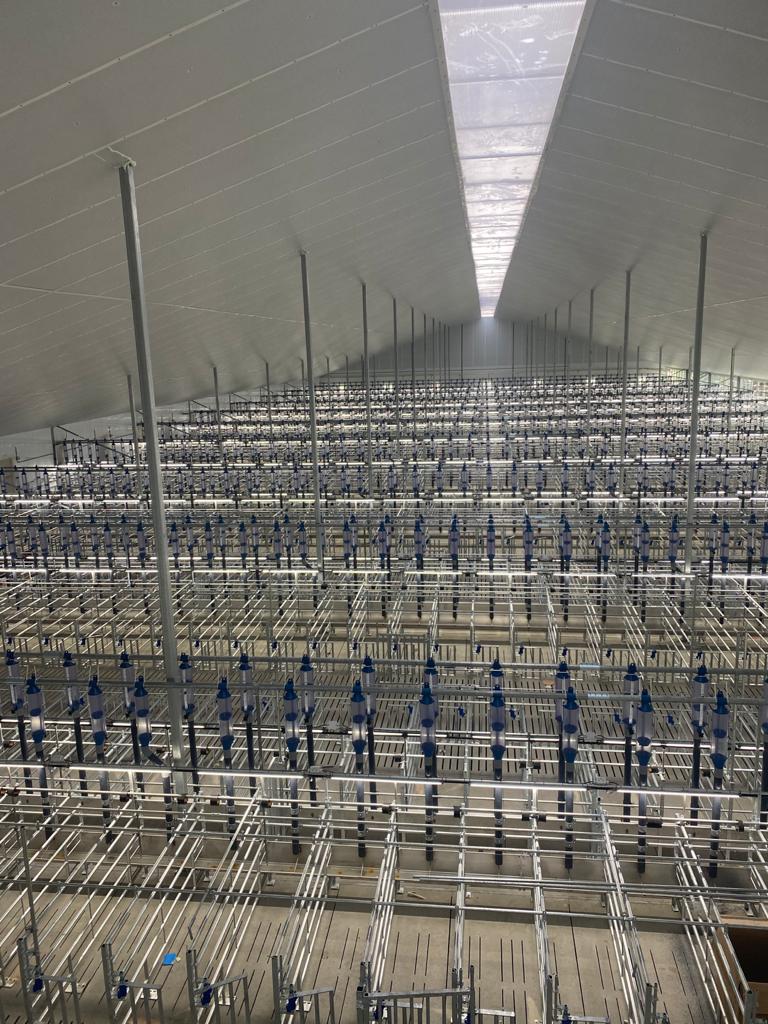
Van Osch B.V. designs, manufactures and assembles pig housing in house in Uden. Its own specialists work with welding robots, sheet and tube processing, and, since 2024, Adige tube laser technology to produce steel, galvanised steel and stainless steel equipment. Would you like advice about your own project? Arrange a consultation about custom pig housing and discuss your barn dimensions with an adviser.
Frequently asked questions about pig housing production
Can pig housing be made entirely to measure?
Yes. Custom pig housing starts with the available space, animal category, movement routes and preferred specification. Pen dimensions, gates, feed fronts, partitions and fixing points are then developed around these requirements. The design can also account for connections to existing walls, floors or installations.
What is the difference between galvanised steel and stainless steel?
Galvanised steel has a zinc coating that protects the base material against corrosion and is a practical choice for many applications. Stainless steel is particularly suitable for components that are cleaned frequently, exposed to moisture for long periods, or used in areas where hygiene is especially important. The right choice depends on conditions in the barn and how the component will be used.
Is an existing barn suitable for new pig housing?
In many cases, yes. Accurate measurement is essential during a refurbishment because floors, walls and dimensions in existing buildings may vary. A thorough technical survey makes it possible to design new pens, gates and partitions that fit the existing situation.
What information is needed for a quotation?
For an initial proposal, it helps to provide a floor plan, internal barn dimensions, photos of the current setup and information about the type of animals. Requirements for capacity, materials, gates, feeding and drinking systems, and installation are also relevant. The more complete the starting information, the more accurately the quotation and schedule can be prepared.
Can installation be arranged as well?
This can vary by project. Alongside production, it is important to agree in advance who is responsible for transport, installation, anchoring and any connection to other systems. This ensures that production and installation work smoothly together.
Conclusion
Durable pig housing depends on more than good materials. It relies on a carefully controlled production process. In steel and stainless steel pig housing, accurate measurement, thoughtful engineering, appropriate processing techniques, skilled welding and thorough final inspection work together to create pens and components that continue to perform in daily use.
By paying attention to dimensions, material selection and the manufacturing method before work begins, you reduce the risk of adjustments during installation and invest in housing that suits your barn, your animals and your day to day operation.
Sources
- NEN-EN 10088-1 — Nen
- het CBS (2025) — Cbs
- NEN-EN 10088-1:2024 en — NEN (Nederlands Normalisatie-instituut)
- NEN-EN 10088-3:2024 en — NEN (Nederlands Normalisatie-instituut)
- Nederlandse industrie herstelt in 2024 — Centraal Bureau voor de Statistiek (CBS)