


Quick summary
Van Osch B.V. designs farrowing houses with an expected lifespan of around twenty years, while requirements for farrowing sows could start changing as early as 2028. That is why we already recommend planning for larger pens and flexible confinement options. Waiting until every rule is final can cost valuable construction time without making the investment any more certain. That uncertainty is exactly why many sow producers delay their plans.
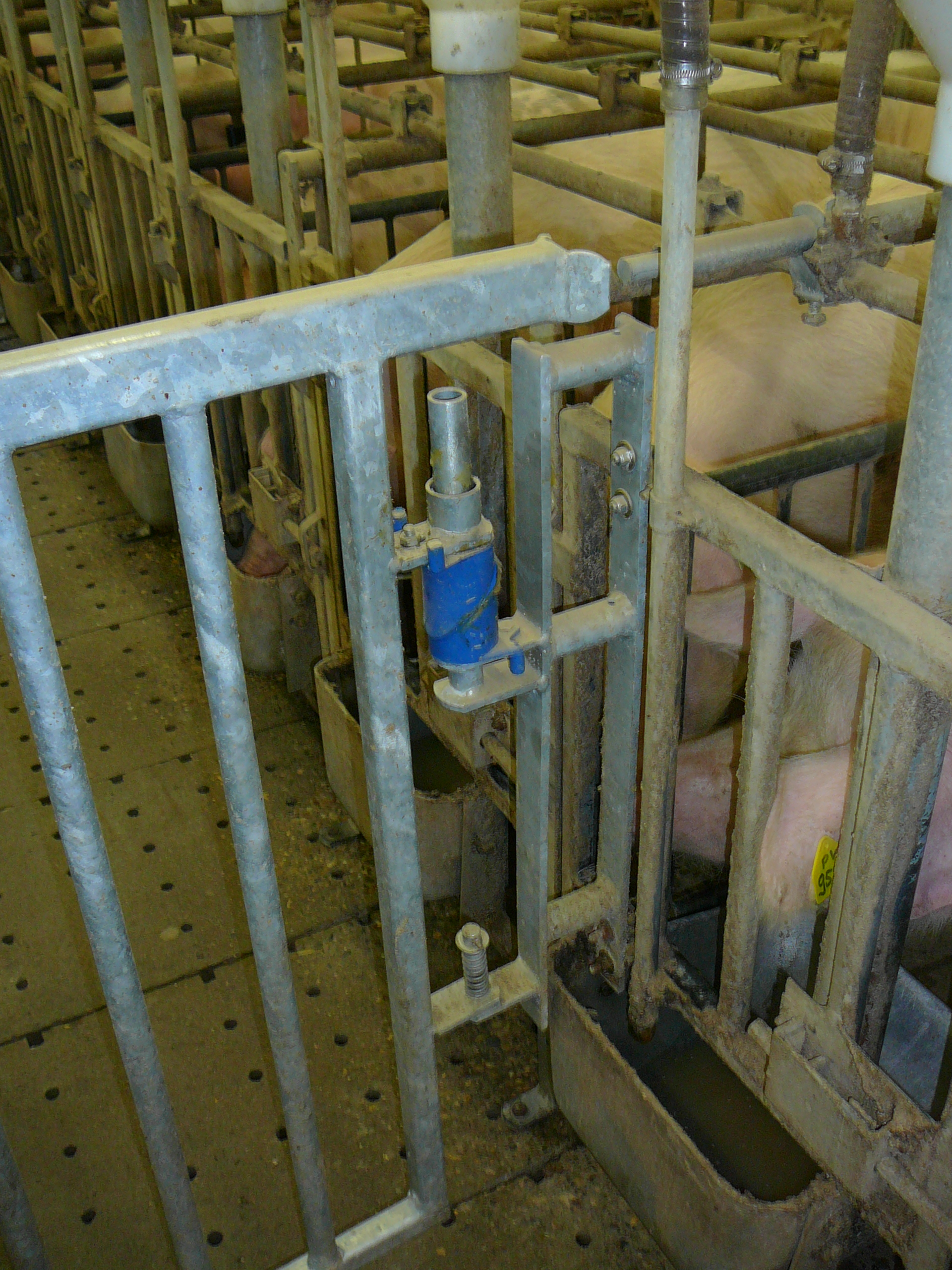
- Free farrowing pens have been proposed as a requirement for new builds from 2028, with 2030 set out in the covenant
- Germany requires 6.5 m² per sow in new farrowing pens, while Austria will require 5.5 m² from 2033
- Beter Leven participants must move to 7.5 m² per pen by 2035 at the latest
- Temporary confinement around farrowing remains permitted under almost all current frameworks
- Design around the size of the whole room and slurry pit layout, not the pen in isolation
Why are sow producers delaying investment in their farrowing houses?
Van Osch B.V. hears the same concern in almost every farrowing house conversation: “I do not want to build a facility that will be non compliant in three years.” That is a perfectly reasonable concern. A farrowing unit will typically last for twenty years, while requirements for farrowing sows may change several times during that period.
The result is stagnation. Existing farrowing pens are patched up rather than replaced, while labour efficiency, piglet survival and day to day working conditions suffer. And every year of delay does not make the final investment any cheaper.
The problem lies in the starting point. Producers who wait for final rules are waiting for something that is rarely fully settled in this sector. A more useful question is: which design choices will remain sound across several possible scenarios? That question can be answered, because the broad direction of regulation is already becoming clear. The Netherlands, Germany, Austria and quality schemes are all moving in the same direction: more floor space and less confinement. What differs is the pace and the exact specification.
What is already known about free farrowing pen requirements in 2026?
Start with the information currently available. According to Nieuwe Oogst, free farrowing pens will become mandatory in new builds from 2030 under the Covenant for Animal Worthy Livestock Farming. The covenant also raises weaning age to 28 days. In the legislative process for animal worthy livestock farming, an earlier date of 2028 has also been mentioned for new housing where farrowing sows can move freely.
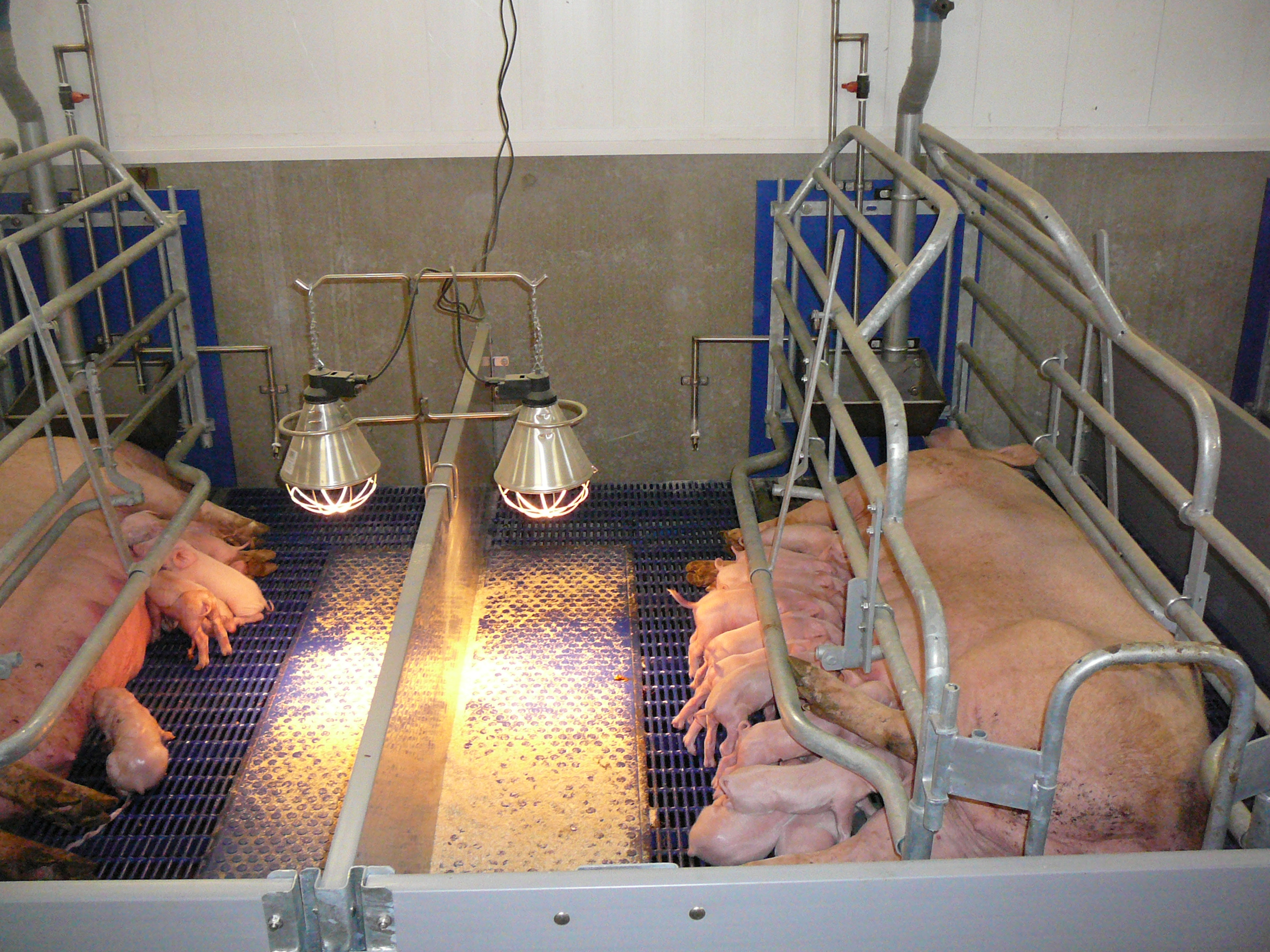
A free farrowing pen is a farrowing pen where the sow can move freely and is not permanently confined, with a movable or temporarily closable crate around farrowing. That distinction matters. Under almost all current frameworks, free farrowing does not mean confinement disappears completely.
Across the border, the specifications are already established. According to the Department of Agriculture and Fisheries of the Flemish Government, Germany’s Tierschutz-Nutztierhaltungsverordnung requires at least 6.5 m² per sow for new farrowing pens, permits a maximum of five days of confinement and includes a fifteen year transition period. Austria will ban conventional farrowing crates from 2033, requiring at least 5.5 m² and allowing temporary confinement during the critical period after birth.
The market is moving ahead of legislation too. For participants in the Beter Leven welfare scheme, free farrowing pens will be mandatory by 2035 at the latest, with 7.5 m² per pen. If you supply a chain with welfare scheme requirements, you are working to a second timeline alongside the legal one.
What does this range mean for your design?
The stated sizes range from roughly 5.5 to 7.5 m² per farrowing pen. That is not chaos. It is a design range. If you design the room around the upper end of that range, you are covered for every scenario within it. If you design around the lower end, you limit your options from the outset.
| Starting point | Pen area | Farrowing pens per 100 m² of room space, indicative | Confinement | Timeline |
|---|---|---|---|---|
| Conventional farrowing pen | approx. 4 m² | approx. 20 | permanent confinement possible | existing situation |
| Austrian standard | 5.5 m² | approx. 15 | temporary around farrowing | 2033 |
| German standard | 6.5 m² | approx. 13 | maximum 5 days | 15 year transition period |
| Beter Leven | 7.5 m² | approx. 11 | temporary confinement allowed | by 2035 at the latest |
The figures per room are indicative and exclude walkways and technical space. Actual capacity depends on room dimensions and the slurry pit layout.
How can you make a farrowing house decision now that will still work in 2030?
Step 1: establish your own firm timeline
Find out which date matters most for your business. If you are building new, the new build date is key. If you supply a chain with welfare scheme requirements, 2035 may arrive sooner than you think. Put both dates on paper and work backwards. Permits, design, production and installation together usually take more than a year.
Step 2: test your room against the largest likely scenario
Use 7.5 m² per pen as the upper limit and check how many pens will still fit into your existing room. If this leaves you with fewer pens than your farrowing group requires, renovating within the current walls is not an option. The discussion then shifts to expansion or a different batch arrangement. It is better to know that now than after receiving your first quotation.
Step 3: check the slurry pit and slatted floor before designing the pen
A larger pen changes the balance between solid flooring, slatted flooring and the slurry channel. In refurbishment projects, the pit layout is more often the limiting factor than the steelwork. Have the existing pits and beam positions measured before a pen drawing is produced, just as Van Osch B.V. does when developing a bespoke sow house.
Step 4: choose a system with flexible confinement
Avoid a system with no confinement option at all, but also avoid one with a permanently fixed crate. The most durable solutions have a movable crate that can be closed for a few days around farrowing and opened afterwards. This keeps you within Germany’s five day approach and Austria’s exemption, without having to replace the system if requirements become stricter.
Step 5: protect piglets through the floor design, not just the crate
In the new sow house in Egchel, completed in 2021, Van Osch B.V. used coated movable slats in the farrowing pens. This makes it much harder for the sow to lie on piglets. As confinement periods become shorter, this principle becomes increasingly important. Protection shifts from the crate to the floor layout and pen design.
Step 6: build operation and labour into the design
A larger pen means more walking distance per animal. Count the number of daily tasks per sow in your current room and use that to assess every new design. Controls on the walkway side, a single action to close the crate, and feed and water points that can be reached from the walkway all save labour time day after day.
Step 7: compare the financial scenarios side by side
Do not compare just two quotations. Compare three scenarios: continuing with the current pens, refurbishing with free farrowing pens, and building new. For each scenario, calculate the number of pens per room, weekly labour hours and the remaining depreciation period before the next relevant deadline identified in step 1.
Put this into practice:
- Measure your room and divide the net pen area by 7.5 m². If that gives you fewer pens than your farrowing group needs, expansion must be part of the plan
- Ask every supplier to state the usable internal pen area in m², not the external dimensions of the structure
- Check whether the crate in the proposed system can be replaced later without breaking up the floor
- Add the next relevant deadline for your supply chain to your business plan, then allow at least twelve months of preparation time
Future developments in free farrowing pens: why confinement is not disappearing
This is where the conversation often goes wrong. Many sow producers hear “free farrowing” and think it means no more confinement at all, followed by higher piglet losses. Research from the three year German InnoPig project at the University of Kiel shows that this concern is not unfounded. Piglet mortality caused by crushing was significantly higher in systems where sows farrowed freely without confinement than in systems where sows could be confined around birth.
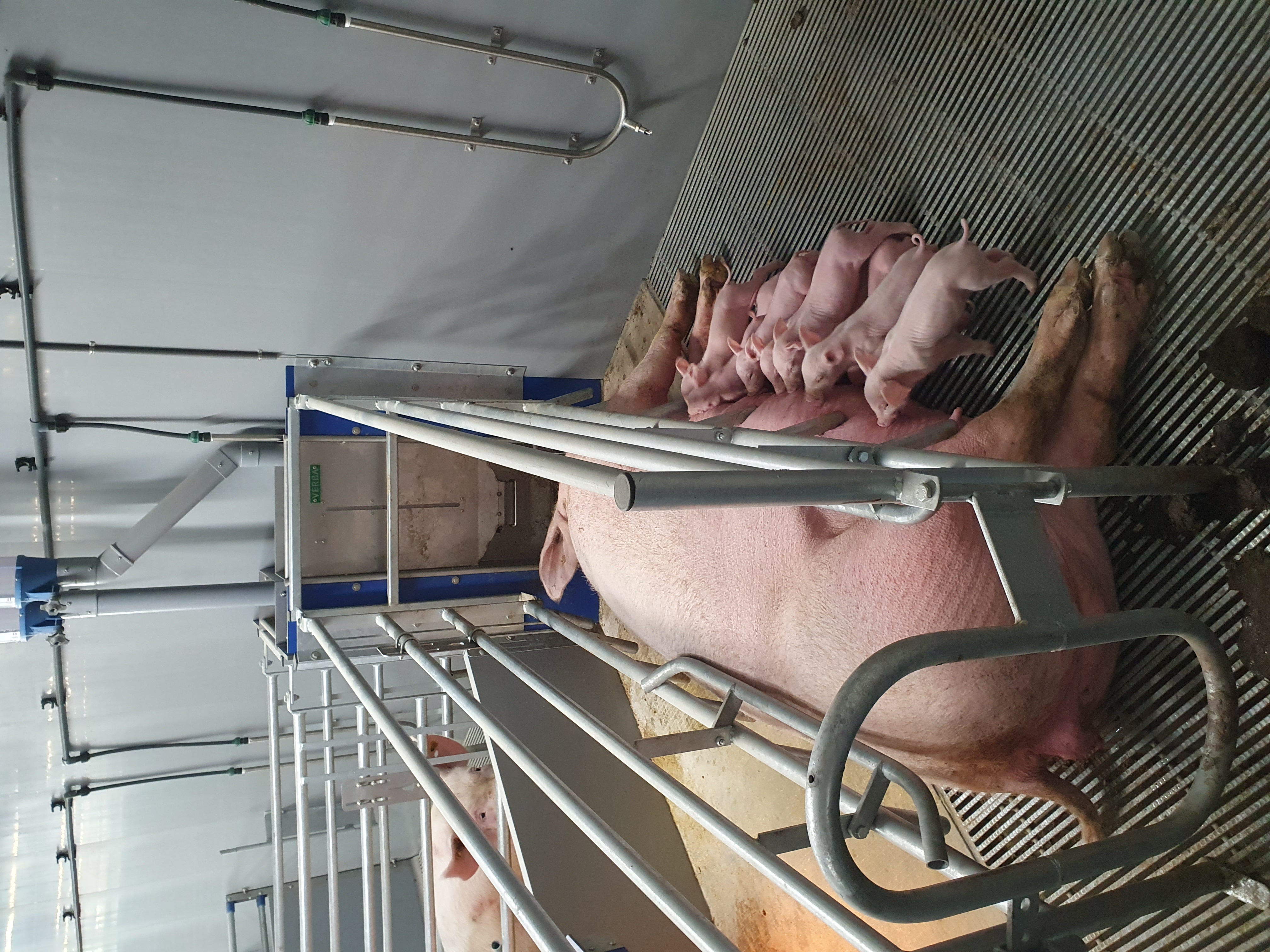
That is precisely why regulations are not heading in that direction. Germany allows five days of confinement, while Austria permits it during the critical piglet survival period. The trend is toward less confinement for a shorter period, not no confinement at all. A design based on that principle can support both welfare requirements and piglet survival.
The key design question is therefore not whether confinement will still be allowed, but how quickly and easily it can be applied. A crate that can be closed in one action while the sow is lying down is often worth more in practice than a few extra centimetres of pen space.
What should you look for when reviewing a quotation for a free farrowing house?
One concern comes up regularly: suppliers promise everything during the quotation stage, then become hard to reach when something goes wrong during installation. When a farrowing house conversion has to fit into a tight empty period, that is not a minor detail.
There are three things you can check now. Ask to see completed free farrowing projects and call one of the customers. Van Osch B.V. completed a free farrowing house in Wolferstedt, Germany, where German requirements for pen size and confinement shaped the design. Also ask who manufactures the equipment. When a supplier has its own production, dimensional issues and replacement parts can usually be resolved faster than with bought in packages. Finally, ask what happens when you call after handover. Van Osch B.V.’s service commitment, set out in the Five O’s, includes a promise to call customers back within one working day.
Finally, check whether the supplier provides one complete package. Ordering slats, troughs, drinkers and partitions from four different parties creates coordination work and often leads to disputes when dimensions do not match.
What mistakes do sow producers make when switching to free farrowing?
The first and most expensive mistake is designing only the pen. A free farrowing pen is larger, so it affects the room, walkway, slurry pit layout and often the ventilation system. Producers who design the pen separately may discover during installation that the number of pens no longer works.
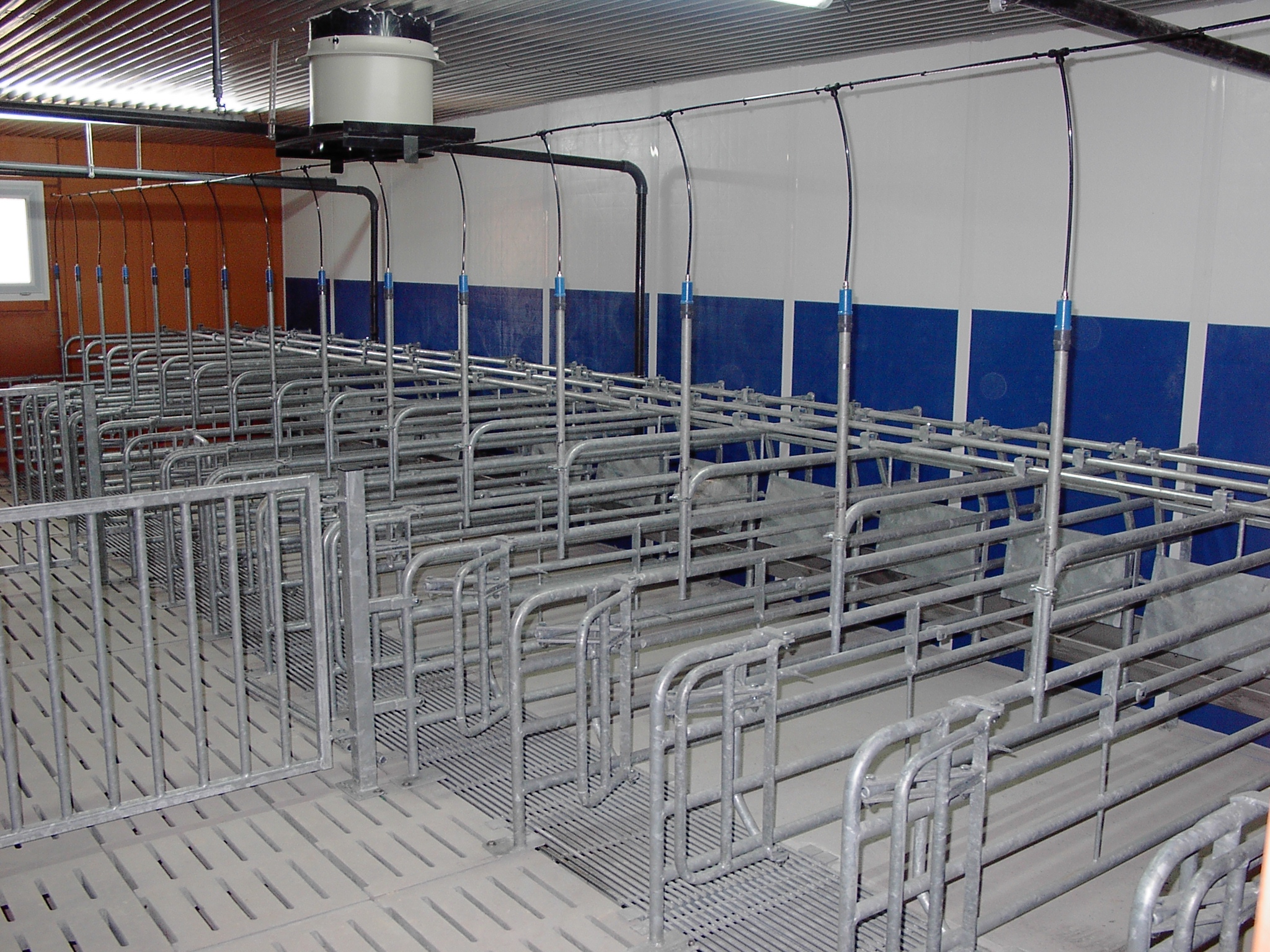
The second mistake is choosing a system without a practical confinement option because of concerns that confinement may be banned completely. Both the InnoPig study and German and Austrian rules point in the opposite direction.
The third mistake is relying on catalogue dimensions. Existing sow houses rarely have perfectly standard dimensions, and with larger farrowing pens every centimetre affects the final pen count. That is why work on a farrowing house layout designed for calm conditions and stronger piglets starts with accurate on site measurements.
The fourth mistake is starting too late. Permits, design, production and installation during the empty period cannot be squeezed into a few months.
Put this into practice:
- Have the entire room drawn out, including the walkway, slurry pit and ventilation, before choosing a pen type
- Require a confinement position that can be reached in one action
- Arrange an on site survey rather than relying on old archived building drawings
- Schedule installation during an empty period and work backwards from that week in your calendar
Frequently asked questions
When will free farrowing pens become mandatory in the Netherlands?
For new builds. Under the Covenant for Animal Worthy Livestock Farming, free farrowing pens will be mandatory for new builds from 2030, while 2028 has also been mentioned for newly built facilities in the legislative process. Different deadlines apply to existing buildings. For your own planning, work from the earliest date that could apply to your project.
How large does a free farrowing pen need to be?
Plan for 5.5 to 7.5 m² per pen. Germany requires at least 6.5 m² per sow in new farrowing pens, Austria will require 5.5 m² from 2033, and the Beter Leven scheme requires 7.5 m² by 2035 at the latest. Design your room around the upper end of that range so the layout remains viable if the standard changes.
Can a sow still be confined in a free farrowing pen?
Yes, temporarily. Germany allows confinement for a maximum of five days, while Austria permits it during the critical survival period for newborn piglets. German research from the InnoPig project found that piglet mortality due to crushing was significantly higher without temporary confinement.
Can I convert an existing farrowing house to free farrowing?
Often, yes, provided the room and slurry pit layout allow it. The deciding factors are the net room dimensions, the pit layout and the number of pens remaining once pen area increases. Divide the net pen space by the proposed pen size. If the result is smaller than your farrowing group, you will need expansion or a different batch arrangement.
How does Van Osch B.V. help me choose between conventional and free farrowing pens?
With a design process that starts with measurements, not a catalogue. Founded in 1939, with in house engineering and production in Uden, the company develops the room layout, slurry pit configuration and working routine right down to pen level. It has delivered free farrowing houses designed to meet German requirements, among others. The available options are listed on the farrowing sow housing page.
Conclusion
The uncertainty surrounding future developments in free farrowing pens is smaller than it may feel. The likely pen sizes range from roughly 5.5 to 7.5 m², temporary confinement remains part of almost every framework, and the first new build dates fall between 2028 and 2030. That is enough to build a sound design around.
So do not start by asking whether you should invest. Start with three practical steps: have your room measured, calculate how many 7.5 m² pens it can accommodate, and add the next relevant deadline for your supply chain to your business plan. If refurbishment within the current walls is not feasible, it is better to know now than in 2029.
This approach is not a gamble. It is designing for a realistic range of future requirements. That is what keeps a farrowing house usable for twenty years.
Sources
- Nieuwe Oogst — Nieuweoogst
- een eerdere datum genoemd, per 2028 — Varkensbedrijf
- de biggensterfte door dooddrukken lag aanzienlijk hoger — Pigbusiness
- Convenant dierwaardige veehouderij basis onder haalbare maatregelen — Nieuwe Oogst
- Nota wet wijziging dierwaardige veehouderij in Tweede Kamer: gevolgen varkenshouderij — Varkensbedrijf.nl
- Normen voor (vrijloop)kraamhokken? — Departement Landbouw en Visserij, Vlaamse Overheid
- Europa loopt voorop met vrijloop kraamzeugen — Nieuwe Oogst
- Varkenscriteria Beter Leven-keurmerk worden aangescherpt — Nieuwe Oogst