


In pig production, a pig’s lifespan is best understood in stages, not as a single number. Piglets generally stay in the farrowing pen for around four weeks, as weaning is normally only permitted from 28 days of age under the Dutch Decree on the Keeping of Animals. In practice, they then spend five to seven weeks in a nursery pen before moving to the finishing barn at around 25 kg. That time in each section, multiplied by the number of piglets per sow, determines how many nursery places you need and how intensively the equipment will be used.
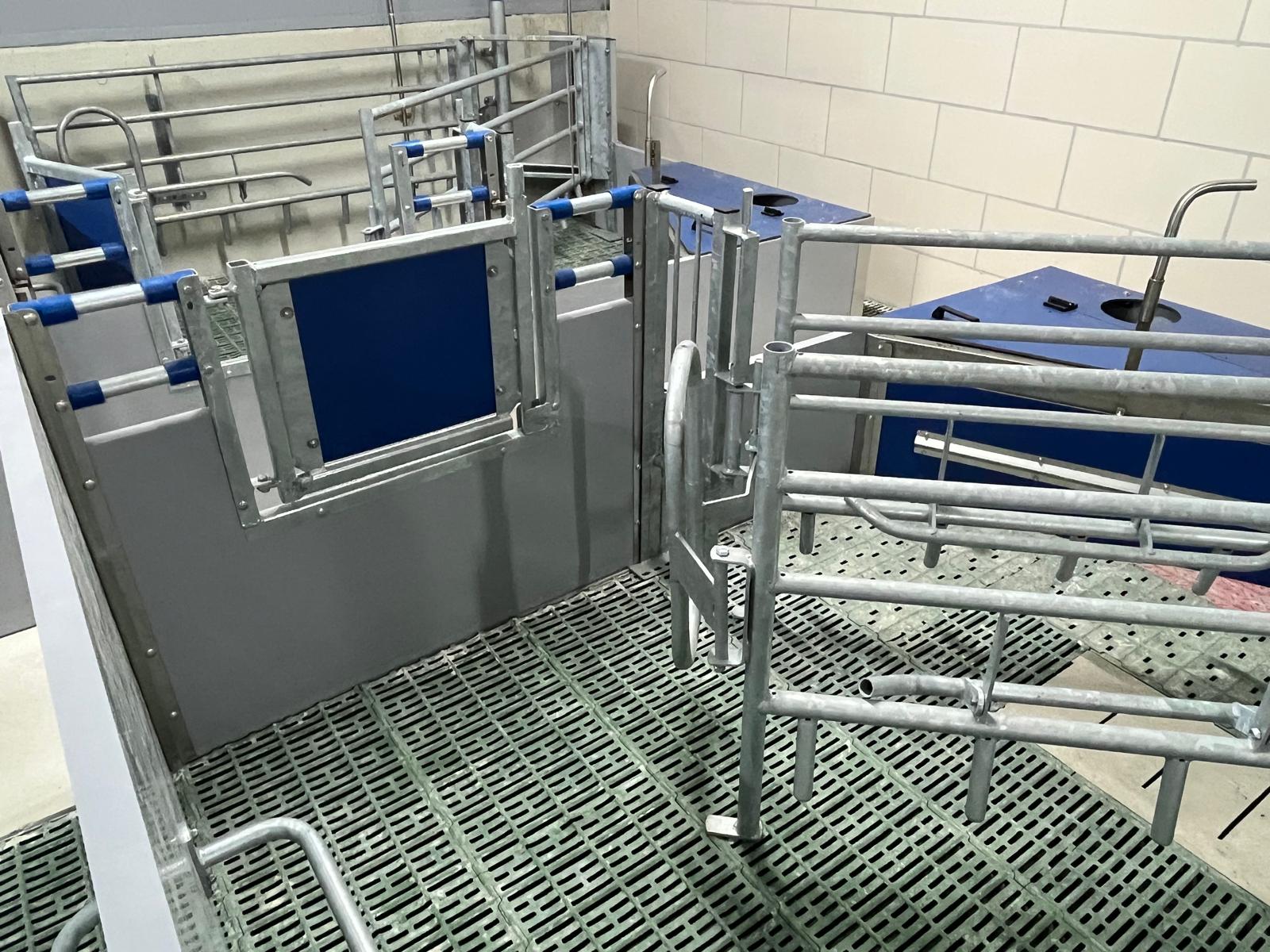
Pig lifespan by stage: how long does a piglet stay in each pen?
When people search for a pig’s lifespan, they usually want one figure. That figure is not especially useful when planning a barn. What matters is how long an animal stays in each section and how often that section is filled, emptied and cleaned every year.
| Stage | Section | Length of stay | What the facility needs to provide |
|---|---|---|---|
| Suckling piglet | Farrowing pen or loose farrowing pen | Usually around 28 days | Solid floor or rubber mat with at least 0.6 m² per litter |
| Weaned piglet | Nursery pen | Often 5 to 7 weeks in practice | At least 0.20 m² per piglet up to 15 kg, 0.30 m² from 15 to 30 kg |
| Finishing pig | Finishing pen | Usually several months until market weight | Separate space requirements for each weight category |
| Sow | Gestation unit and farrowing unit | Multiple litters, with roughly 40 to 45 percent replaced each year | Flooring and pen design that protect leg health |
The space and flooring requirements are set out in the Dutch Decree on the Keeping of Animals, as published in the Official Gazette (2014). According to Pigbusiness, sow replacement rates have remained between 40 and 45 percent for decades.
The nursery section has the shortest stay, but the fastest turnover. If you allow five to seven weeks of occupancy plus, for example, one week empty for cleaning and drying, a section completes roughly six to nine cycles a year. Every cycle involves a full washdown with a pressure washer, manure residue and disinfectant. For the service life of gates, feeders and flooring, that cleaning frequency usually matters more than the number of years the barn has been in use.
What legal requirements apply to nursery pens in 2026?
Bas
The former Dutch Pig Decree is no longer a separate piece of legislation. Its requirements are now included in the Dutch Decree on the Keeping of Animals at wetten.overheid.nl, with Article 2.16 covering general barn design, Article 2.17 covering available floor space and Article 2.18 covering floors. Article 2.16 requires, among other things, that all pigs can lie down at the same time, rest and stand up without obstruction, and see other pigs. The explanatory notes in the Official Gazette state that this article implements requirements from the European pig welfare directive that apply to all pigs.
For weaned pigs, the original text specifies a maximum gap width of 14 mm for concrete slatted floors and 15 mm for other slatted floors. The minimum slat width for piglets and weaned pigs is 50 mm. Laws and regulations can change, so always check the consolidated version in force when construction begins.
Inspection data also has implications for pen design. According to the NVWA pig inspection results for 2025, inadequate enrichment was again the most common breach. The Dutch Food and Consumer Product Safety Authority also found violations involving lighting (40 lux), nesting material in farrowing units and available floor space.
The final point often starts on the drawing board. A pen may look large enough on its gross dimensions, while an automatic feeder, drinker or enrichment holder in the corner reduces the net usable floor area. With enrichment, the issue is rarely the material itself. More often, it is the holder and where it is positioned in the pen.
Which developments are changing nursery pen design?
Five developments are shaping how pig farmers and equipment dealers view the nursery section today.
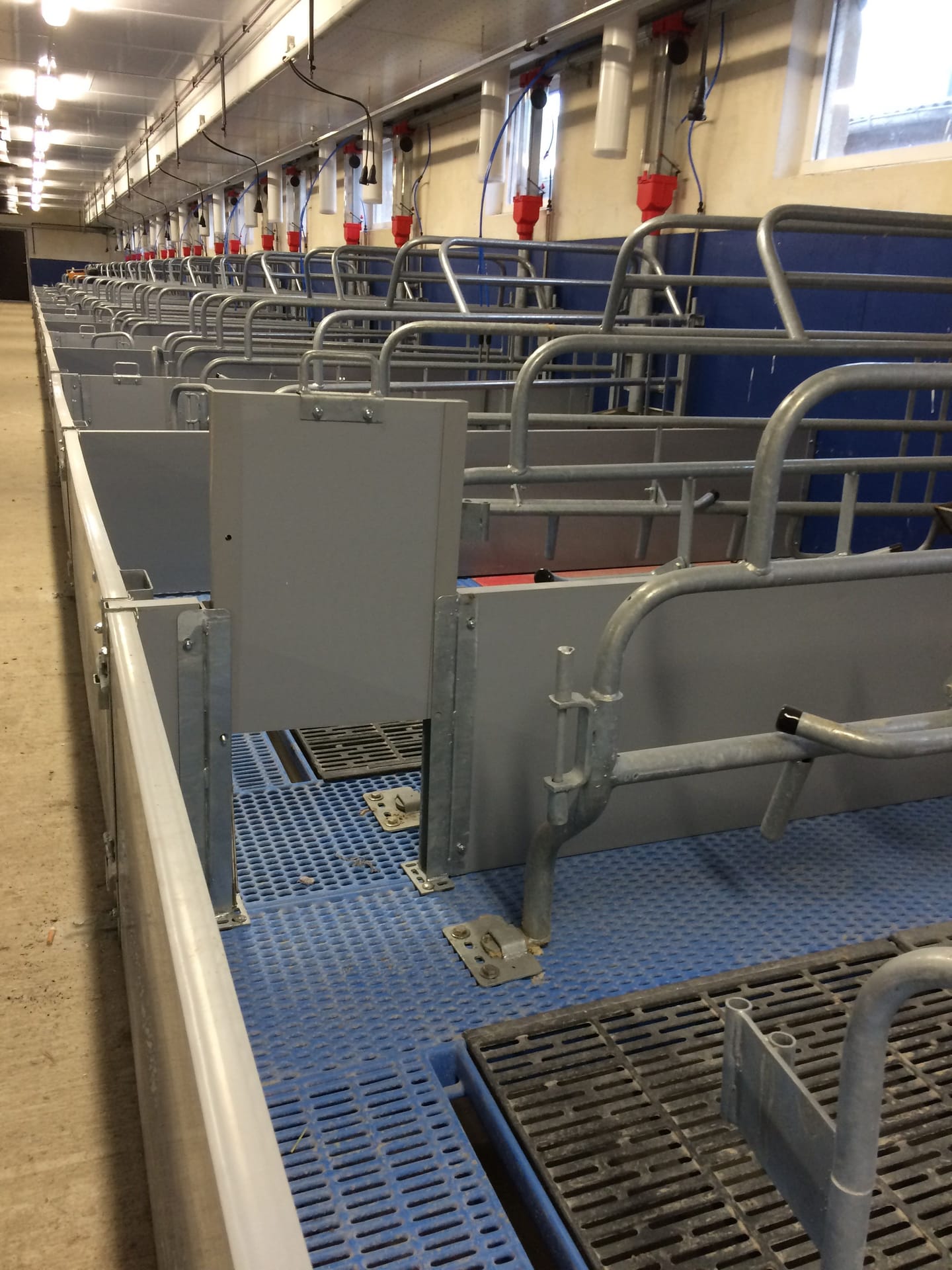
Trend 1: larger litters and more piglets per sow. According to Varkens.nl, around 32 piglets were reared per average sow in 2023, based on the Agrimatie database from Wageningen Economic Research. As a result, a section designed years ago can reach capacity much sooner. More feeding spaces and drinkers are also needed in every pen.
Trend 2: weaning without moving piglets. Some farms leave piglets in the farrowing pen after weaning. Boerderij describes a breeding farm that weans at 28 days using loose farrowing and nursery pens: the sows leave while the piglets stay put. The farrowing pen then also serves as a nursery pen, which calls for different decisions on feeders and resting areas. Find out how to approach this in our guide to choosing and positioning piglet feeders in loose farrowing pens.
Trend 3: enrichment is becoming part of the design. The Dutch Food and Consumer Product Safety Authority reports that an updated Wageningen University & Research guide on pen enrichment and nesting material was published in January 2026. Enrichment added to pen gates afterwards is often placed awkwardly. Including the holder in the original layout prevents that problem.
Trend 4: flooring as a design decision. Research by Wageningen University & Research Livestock Research on group housing for sows identifies floor quality as an important factor in leg problems and sow longevity. The study concerns sows, not piglets. Even so, it is a good reason not to treat flooring as an afterthought in the nursery section.
Trend 5: equipment that can be reconfigured. Production schedules, group sizes and market weights change more often than the building itself, especially when a farm changes hands. Moveable gates allow you to change pen widths without building an entirely new section.
How many nursery places do you need, and what does that mean for your investment?
Take a farm with 500 sows that achieves the national average of 32 piglets reared per sow. That equates to around 16,000 weaned piglets a year. With six weeks of occupancy plus one week empty, each place turns over about 7.4 times. You would need just over 2,150 nursery places, rising quickly to 2,300 once you allow for weekly production patterns and fluctuations in litter size.
Calculate the required floor area using the heaviest weight reached in the pen. If piglets leave at around 25 kg, the 15 to 30 kg category applies, requiring at least 0.30 m² per piglet. A pen for 24 piglets therefore needs at least 7.2 m² of net available floor area. For 2,300 places, that is approximately 690 m² net.
That is the legal minimum, not the actual pen size. The practical dimensions also depend on usable floor space after installing feeders and drinkers, the balance between solid and slatted flooring, and any additional standards set by a quality scheme or supply contract. Read more about the calculations in nursery pens in the sow unit: determining capacity, flooring and animal flow.
These trends also affect your budget. Larger litters require more spaces. Weaning in the farrowing pen shifts part of the capacity requirement from the nursery section to the farrowing unit. Enrichment and flooring choices belong in the first design drawing, because retrofitting after completion is usually more expensive than planning properly from the start.
How should you prepare for a nursery renovation or new build?
Good preparation starts with how your farm operates, not with a catalogue. This sequence helps avoid costly adjustments later:
- Set your production schedule. Define weaning age, weekly system, group size and target weight. Those four decisions determine the length of stay and, in turn, every dimension.
- Calculate capacity. Use your own piglets per sow, length of stay and downtime, and build in a margin for peak periods.
- Check net floor area. Compare your drawing with the current Dutch Decree on the Keeping of Animals and any quality scheme requirements.
- Include feeding spaces, drinkers and enrichment in the layout. This shows in advance whether they take up valuable space or end up in an impractical location.
- Choose materials for each component. Factor in the number of cleaning cycles per year, as components exposed to manure and water wear differently from upper pen gates.
- Start with the standard range. Custom work is generally more expensive. Use it where your existing building dimensions or layout make it necessary.
The guide to complete nursery pens outlines the components and options included in a complete pen.
Frequently asked questions
At what age are finishing pigs typically sent to market?
Market age is usually around six months, depending on growth rate and target weight. Of that time, the animal spends roughly two to two and a half months in the farrowing pen and nursery combined. The remaining time is spent in the finishing barn.
Can piglets be weaned before 28 days?
Weaning age may be 21 days under Article 1.20 of the Dutch Decree on the Keeping of Animals, provided the piglets are moved to specialised facilities. Earlier weaning is only permitted in exceptional circumstances. For your design, a lower weaning age means lighter piglets in the nursery, with greater demands on the resting area and climate control.
Can a nursery pen have a fully slatted floor?
Slatted flooring may not cover the entire available floor area under the original wording of the decree. The exception applies to floors intended for weaned pigs or nursing sows with piglets, provided they are not made of concrete. Check the current text before selecting a floor type.
How long does a sow typically remain on a farm?
The replacement rate has been between 40 and 45 percent for decades. In practical terms, roughly two out of every five sows are replaced each year. This determines gilt intake and therefore affects planning for both the farrowing unit and nursery section.
How long does nursery pen equipment last?
Service life depends on the material, the number of cleaning cycles per year, exposure to manure and mechanical wear. There is no fixed lifespan that applies to every barn. Ask the manufacturer for the expected lifespan of each component and which parts can be replaced individually.
Get your nursery layout and occupancy plan ready
A pig’s lifespan at each production stage translates directly into pen spaces, square metres and cleaning cycles. Establish your production schedule and capacity first, then select pen dimensions and materials.
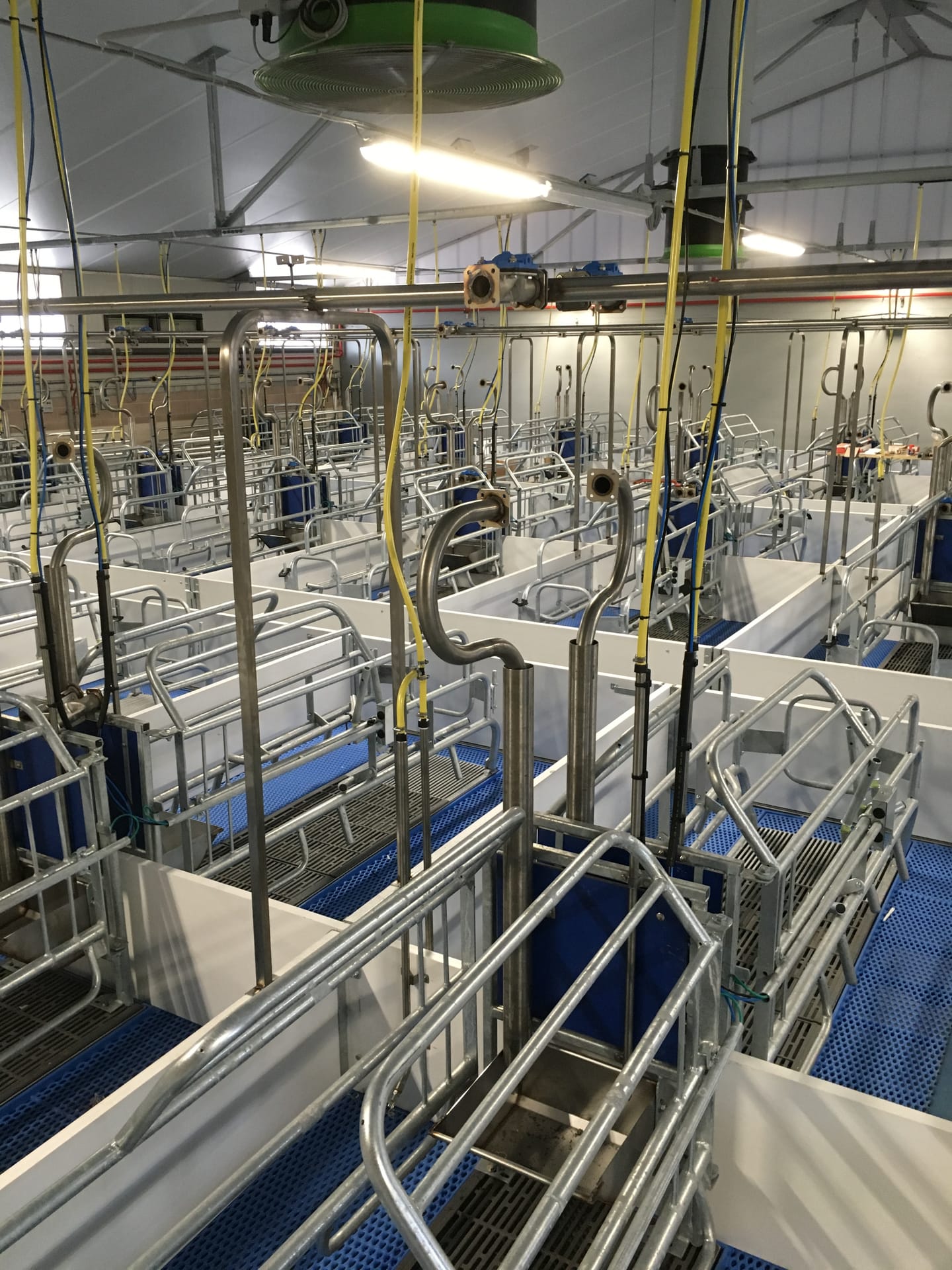
Van Osch designs and manufactures nursery pens in Uden using steel, galvanised steel, stainless steel and plastic, tailored to your farm’s dimensions and production schedule. Send your layout and occupancy plan, including weaning age, group size and target weight, through the Van Osch piglet housing page and receive tailored advice for your nursery section.
Sources
- in de regel pas op 28 dagen mag — Openkamer
- Besluit houders van dieren zoals gepubliceerd in het Staatsblad — Zoek
- Pigbusiness
- Besluit houders van dieren op wetten.overheid.nl — Wetten
- NVWA-inspectieresultaten varkens over 2025 — Nvwa
- Varkens.nl — Varkens
- Boerderij beschrijft een subfokbedrijf — Boerderij
- Wageningen UR Livestock Research — Edepot