


The farrowing crate manufacturing process has six stages. Engineering produces the drawings, a laser cuts tube and sheet metal to size, a press brake shapes the sheet components, a welding robot or skilled welder joins the frames, the steel is galvanised or the stainless steel is pickled, and assembly and final inspection complete the job. Farrowing crates are made in small, customised batches, so machines take care of repeatable work while experienced people keep a close eye on dimensions, weld quality and finishing. If you are considering a career in this sector, it helps to know that every stage is a trade in its own right, with different machinery and a different learning path.
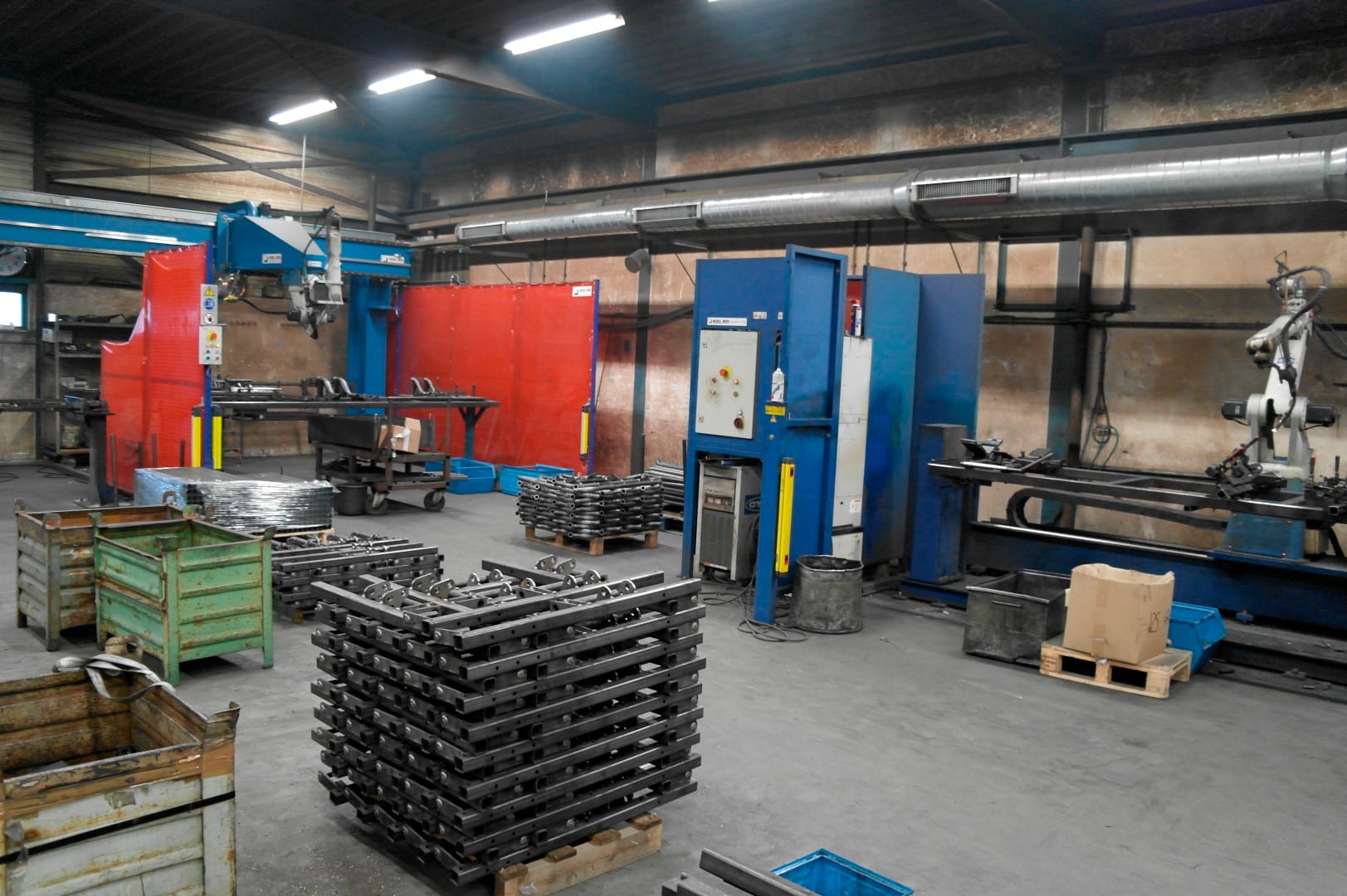
What is it like to work in a factory that makes farrowing crates?
When people apply for a metalworking job, they often picture one of two extremes. Either it is a production line where you repeat the same task all day, or it is an old fashioned workshop where everything is made by hand. A factory producing livestock housing equipment sits somewhere in between, for good reason.
A farrowing crate does not come in one standard size. According to the Flemish Government’s Varkensloket, there are relatively few statutory dimension requirements for farrowing crates compared with many other parts of a pig unit. As a result, every barn has its own crate width, crate length, aisle width and slatted floor layout. The drawing on your workstation may well differ from the one you worked on last week.
The type of farrowing crate is changing too. The policy note on the amendment to the animal welfare livestock farming legislation identifies 2028 as the point at which farrowing sows will be housed in systems that allow them to move freely, such as free access farrowing pens. These pens include movable gates, hinges and latches that fixed crates do not need. That means more components, more variants and more measuring and fitting work. To learn what these requirements mean for the design, read free access farrowing pens in 2026: turning requirements into one coherent barn plan.
For employees, that creates varied work. You set up machinery for short production runs, regularly work from new drawings, and by the end of the week you can see complete crates ready to be transported to a pig farm.
What are the stages in the farrowing crate manufacturing process?
A farrowing crate consists of many individual parts: tubes for the gates, sheet metal components for partitions and feed trough brackets, plus hinges, pins and latches. They come together in six stages.
- Engineering and production planning. The designer turns the barn dimensions supplied by the pig farmer or dealer into workshop drawings and cutting programmes. A dimensional error at this stage can cost hours later on, so quality checks start at the desk.
- Laser cutting tube and sheet metal. A tube laser cuts tubes to length and creates holes, slots and angled cuts in the same operation. A sheet laser does the equivalent for flat components. Jobs that once required separate sawing, punching and drilling now leave the machine as accurately cut parts in one go.
- Press braking and forming. Sheet components are shaped on the press brake, creating details such as the raised edge of a partition or the angle of a feed trough bracket. The sheet metal worker decides the order of the bends. Get that sequence wrong and the final bend may no longer fit beneath the upper beam.
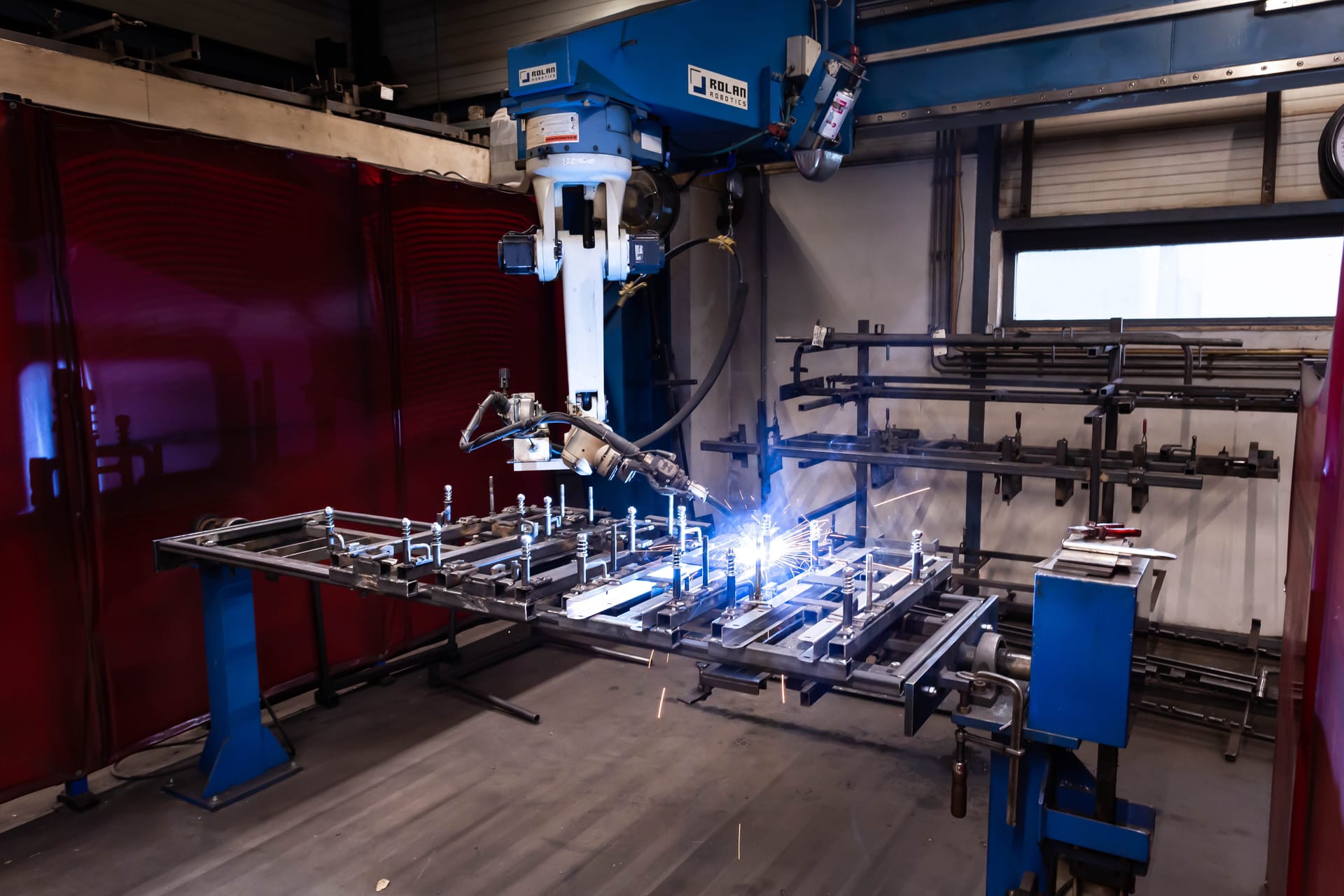
- Welding. Frames and gate sections that are produced in larger volumes go into a jig for robotic welding. Bespoke components, fitting pieces and stainless steel parts with hard to reach welds are welded by hand by a skilled fabricator.
- Finishing. Welded steel goes to the galvaniser for a zinc coating that protects it against corrosion. Stainless steel is pickled to remove discolouration around the weld and restore its protective surface layer.
- Assembly and final inspection. Assemblers build gates, doors and hinges into complete farrowing crates, or into kits that can be installed quickly on site. Moving parts are checked for smooth operation before the products leave the factory.
One thing that often surprises new colleagues is how closely connected the stages are. A tube cut just slightly too short will not sit properly in the welding jig. A sheet component bent a little too far can leave a gap during assembly. That is why everyone in the factory measures and checks their work, not just the quality department. For a more detailed explanation of every stage, see the manufacture of steel and stainless steel livestock housing equipment, from engineering to final inspection.
Robotic welding or hand welding: how does it change your job?
“Once a welding robot arrives, welders are no longer needed.” It is a common assumption, but livestock housing manufacturing works differently. A welding robot can only perform well when the incoming parts are dimensionally accurate and the jig is correct. The skill involved therefore moves further up the process, into cutting, building and setting up jigs, and inspecting the first item in a production run.
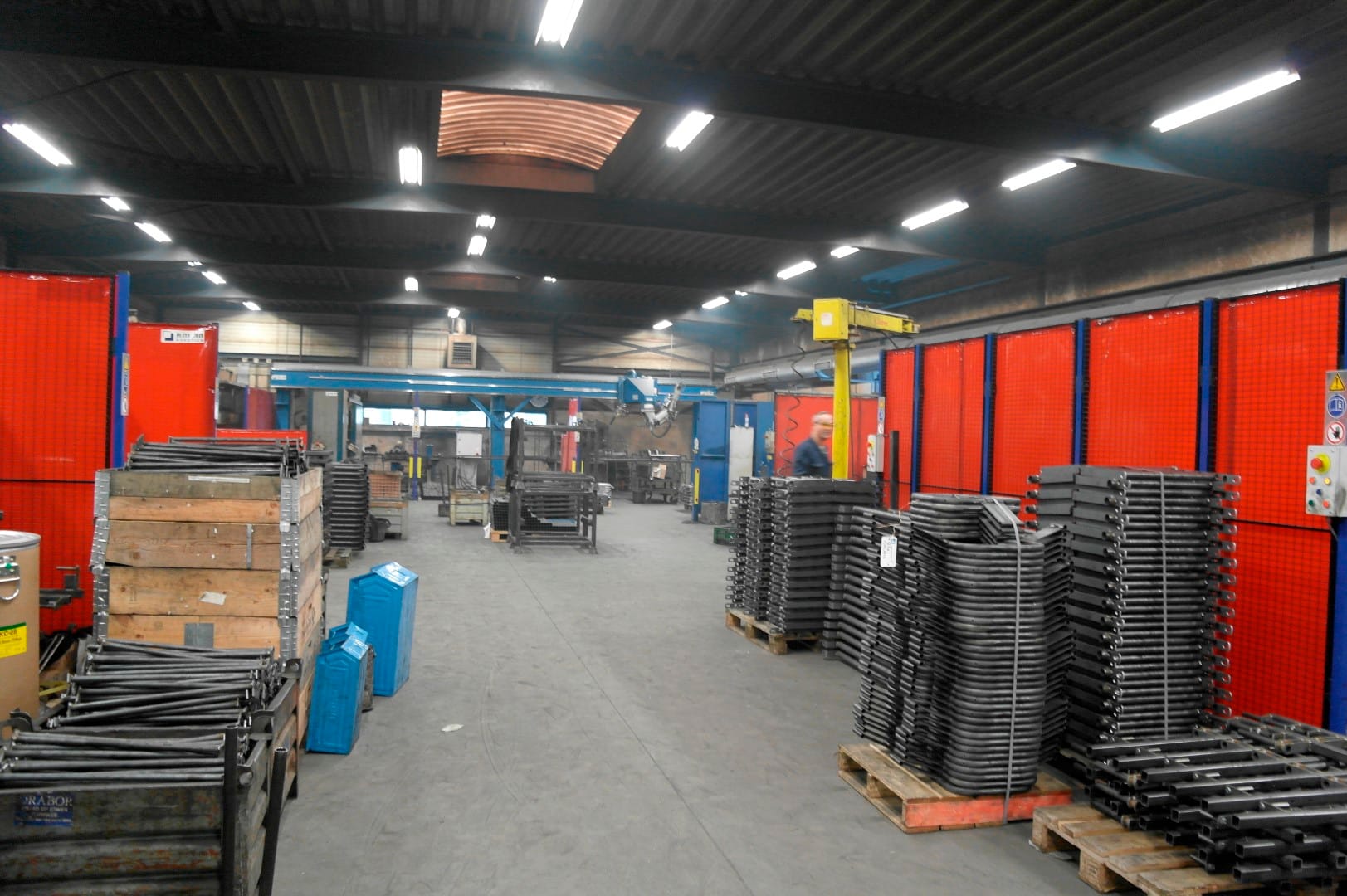
A welder working with a robot also becomes an operator to some extent. They load the jig, start the programme, inspect the welds and finish any areas the robot cannot reach. At the same time, hand welding remains essential for anything outside the standard pattern: a gate section for a barn with an uneven wall, a fitting piece for a renovation, or a stainless steel component that is only made a few times.
Tube laser and welding robot
- Repeat production: ✅ Every item is consistent.
- Short bespoke production runs: ⚠️ Setup time is needed for each run.
- Non standard fitting pieces: ❌ A jig and programme are required.
- Hard to reach stainless steel welds: ⚠️ Possible only where access is good.
- Physical strain: ✅ Less lifting and turning.
- What it requires from you: Setup, programming and inspection.
Sawing, drilling and hand welding
- Repeat production: ⚠️ Results depend on the individual fabricator.
- Short bespoke production runs: ✅ You can get started straight away.
- Non standard fitting pieces: ✅ Highly flexible.
- Hard to reach stainless steel welds: ✅ The fabricator can adapt as needed.
- Physical strain: ⚠️ More demanding physical work.
- What it requires from you: Welding skills, drawing interpretation and fitting work.
Both approaches have a place on the factory floor. The robot takes over repetitive jobs that can tire a person or introduce small inconsistencies. Skilled fabricators retain the work that calls for judgement. In practice, many welders switch between the two, spending one day at the robot cell and the next at the welding bench.
This distinction matters to dealers too. Components made in a jig using a fixed programme can generally be reproduced identically years later. That makes replacement parts more predictable to supply. Hand fabrication also ensures that unusual barn dimensions do not become a problem.
Which farrowing crate production role is right for you?
The best place to start is with a simple question: what type of work gives you energy? Is it setting up a machine until everything is exactly right, producing a clean weld, or watching a complete crate come together? Your answer will help you find the role that best suits you in farrowing crate manufacturing.
Sheet metal worker: laser cutting and press braking
As a sheet metal worker, you are at the start of the production process. You load cutting programmes, check the first parts for accuracy and form sheet metal on the press brake. Good spatial awareness is useful because you need to picture the finished component while it is still a flat piece of steel. Any mistakes become clear in the next stage, and so does quality work.
Welder and assembler
The welder joins components into frames and gate sections, either with a robot or by hand. The assembler turns those parts into a working product, checking hinges, latches and clearance for movement. In many livestock housing factories, these roles are combined, as in this welder and assembler vacancy. Experience with MIG/MAG or TIG welding is an advantage, but the specialist knowledge needed for livestock housing is usually learned on the job.
Apprentice metalworker through work based vocational training
You can start without experience through a work based vocational training route. You work for an approved training employer while also attending college. Koning Willem I College offers an all round fabrication worker programme at level 3, lasting three years, with teaching locations in Den Bosch, Oss and Veghel. According to the programme, you work three or four days a week at your placement and earn your own income through your employment contract from the outset. A livestock housing factory is an excellent training environment because you quickly see every process, including cutting, forming, welding and assembly. See, for example, the apprentice metalworker vacancy.
If you already know which direction you want to take, you will usually begin in your own trade and progress from there. A sheet metal worker who learns to build jigs becomes a valuable asset in the robot cell. A welder who learns to create technical drawings can move into production planning.
Frequently asked questions
Do you need experience to start work in a livestock housing factory?
Experience is welcome, but it is not always essential. For newcomers without qualifications, a work based vocational training route is common, allowing you to learn on the job while attending college one day a week. Technical aptitude and attention to detail often matter more than your CV.
Do you need a welding certificate to weld farrowing crates?
Welding certificates are not mandatory for every welding job, but they do demonstrate your capability. Load bearing structures are different. According to TÜV NORD Netherlands, certification to NEN-EN 1090 has been mandatory since 1 July 2014 for applying CE marking to load bearing steel and aluminium structures. Anyone who wants to move into structural steelwork later on will benefit from certificates and knowledge of this standard.
What is the difference between welding stainless steel and mild steel?
Stainless steel requires more care than ordinary steel. It discolours around the weld and needs to be pickled afterwards. Contamination from steel particles on tools can also cause rust spots later. That is why stainless steel work generally requires separate tools and a clean working area.
What does work based vocational metalworking training involve?
Work based vocational training combines employment with college study. You work for an approved training employer and attend classes alongside your job. At the ROC van Amsterdam, you must already have a placement of at least 24 hours a week before you can start. Find a training employer first, then enrol with the college.
Will welding robots replace welders?
Welding robots mainly take over repeat work, such as frames that are made in larger volumes. Bespoke work, fitting pieces and difficult stainless steel welds remain manual work. Robots also need people to build jigs, set up programmes and assess weld quality.
Where should you start if you want to work in this type of manufacturing?
First, decide which stage of the farrowing crate manufacturing process appeals to you most: laser cutting and press braking, welding, or assembly. Then visit the factory floor. You can learn more in an hour there than from ten job adverts.
In Uden, Van Osch produces farrowing crates and free access farrowing pens with in house engineering, manufacturing and assembly under one roof. The company works with welding robots, modern sheet and tube processing equipment, and Adige tube laser technology since 2024. This family business has been building livestock housing equipment for pig farms since 1939. View the current vacancies and join Van Osch.
What qualities do you need for metal manufacturing?
Accuracy is important. A difference of just a few millimetres can cause problems during assembly. It also helps to have technical aptitude, a willingness to learn how to read drawings, and a safe approach to machinery, tools and lifting equipment. You do not need to know everything on day one. Motivation and a willingness to learn the trade matter just as much.
Can you start work in a factory without technical qualifications?
Yes, some roles offer in house training. For supporting production work, assembly or logistics in particular, practical experience can be more important than a qualification. If you want to progress into welding, press braking, machine operation or production planning, you can later take a course, follow a work based vocational training route or complete further study.
Is metalworking physically demanding?
The job can be physical, particularly when moving components, assembling products and working on a factory floor. At the same time, modern machinery, lifting equipment and welding robots take over much of the heavy and repetitive work. Good posture, safe lifting and proper use of equipment remain important.
How much can you earn as a beginner in metalworking?
That depends on your role, age, experience and qualifications. New starters are often paid according to the Dutch collective labour agreement for metalworking and engineering, or a similar arrangement. With certificates, experience and skills in areas such as welding, CNC machinery or robot operation, you can progress in both role and salary.
Conclusion
A farrowing crate may look like a straightforward steel product at first glance, but its manufacture relies on skill in design, sheet metal work, tube processing, welding, assembly and quality control. Because every stage connects to the next, the sector offers room for a wide range of technical careers.
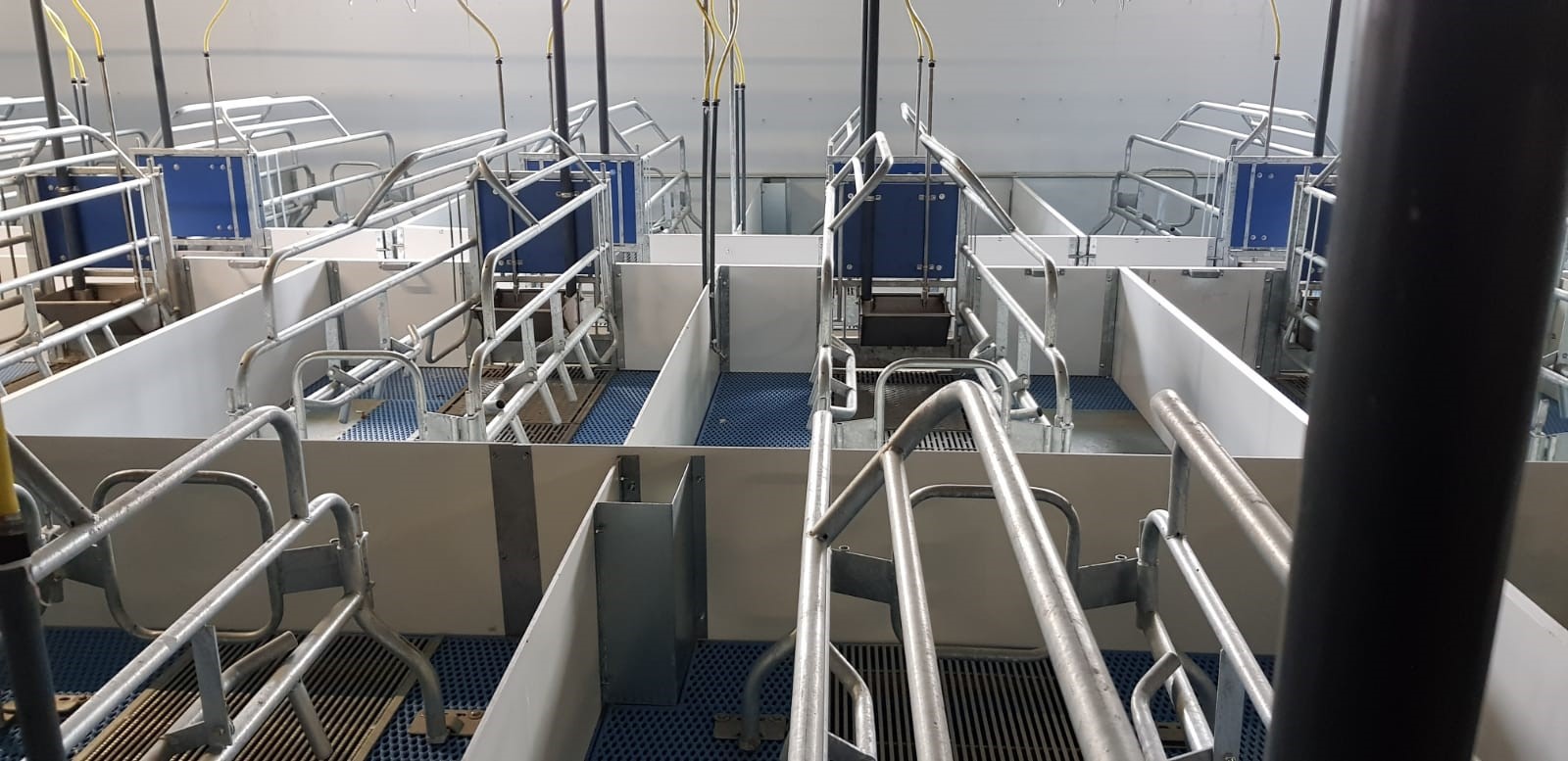
Whether you enjoy hands on work, setting up machinery, reading technical drawings or building a complete finished product, metal manufacturing for livestock housing gives you the opportunity to learn a trade and see the results of your work.
Sources
- Varkensloket van de Vlaamse overheid — Varkensloket
- nota bij de wet wijziging dierwaardige veehouderij — Varkensbedrijf
- TÜV NORD Nederland — Tuv
- ROC van Amsterdam — Rocva
- Afmetingen kraamhok — Varkensloket (Vlaamse overheid)
- Nota wet wijziging dierwaardige veehouderij in Tweede Kamer: gevolgen varkenshouderij — Varkensbedrijf.nl
- NEN-EN 1090 certificaat — TÜV NORD Nederland